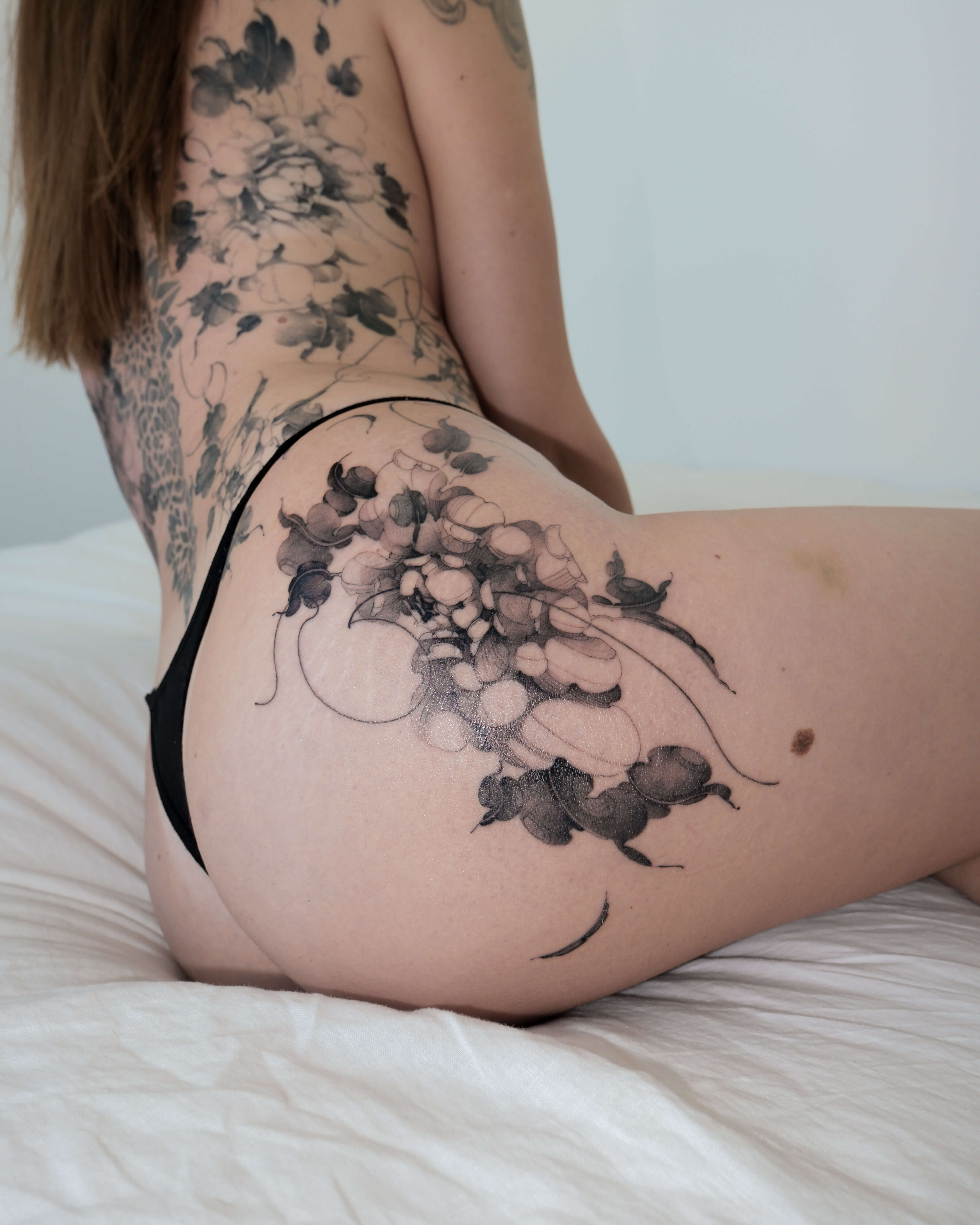
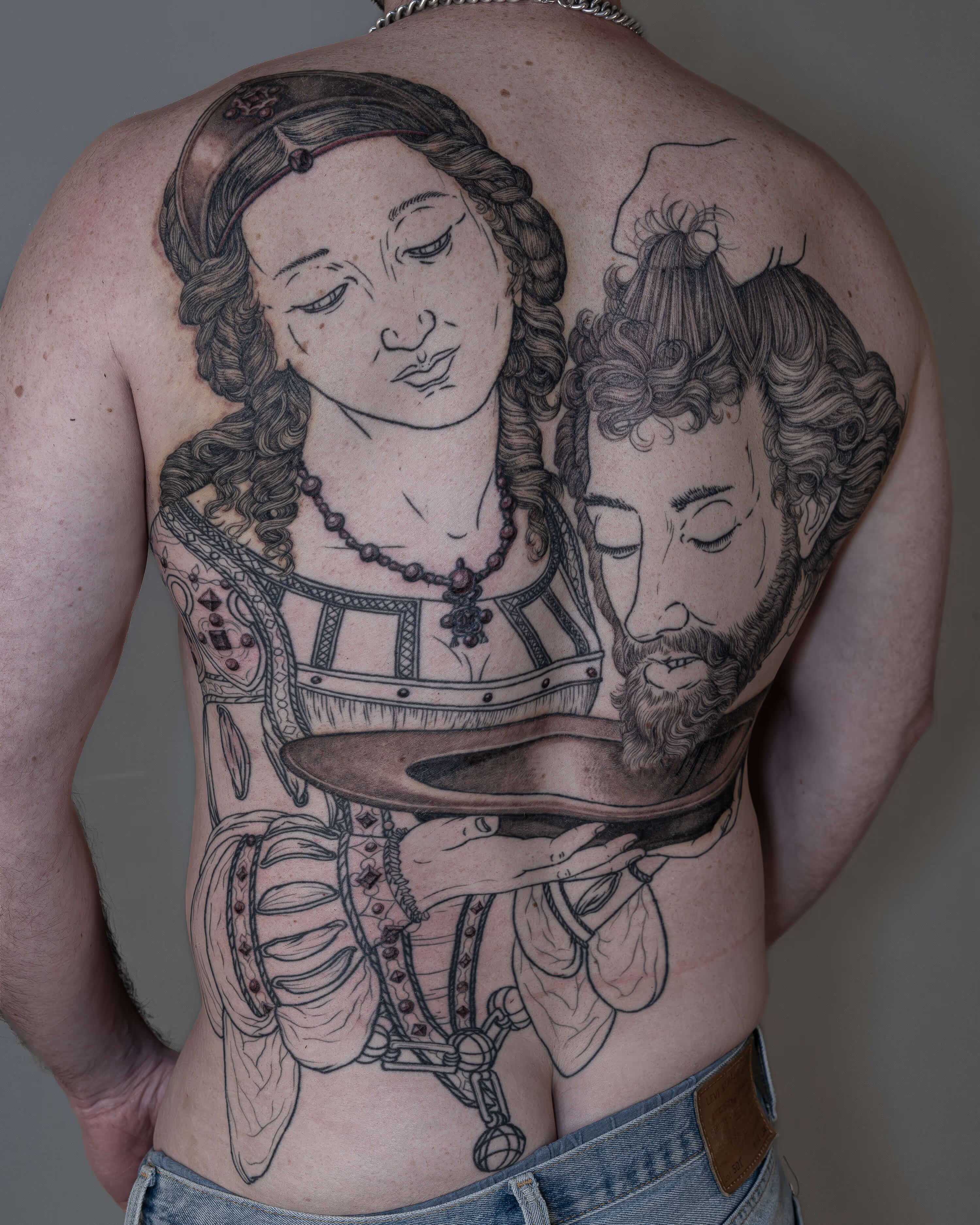
Tattoo Lettering
What is Tattoo Lettering?

Tattoo Lettering Styles
Tattoo lettering encompasses a wide range of visual traditions, each with its own technical demands and aesthetic character. The choice of lettering style is as significant as the choice of words — it determines the emotional register of the piece, how it reads at a distance, and how it ages. Here are the most important tattoo lettering styles:
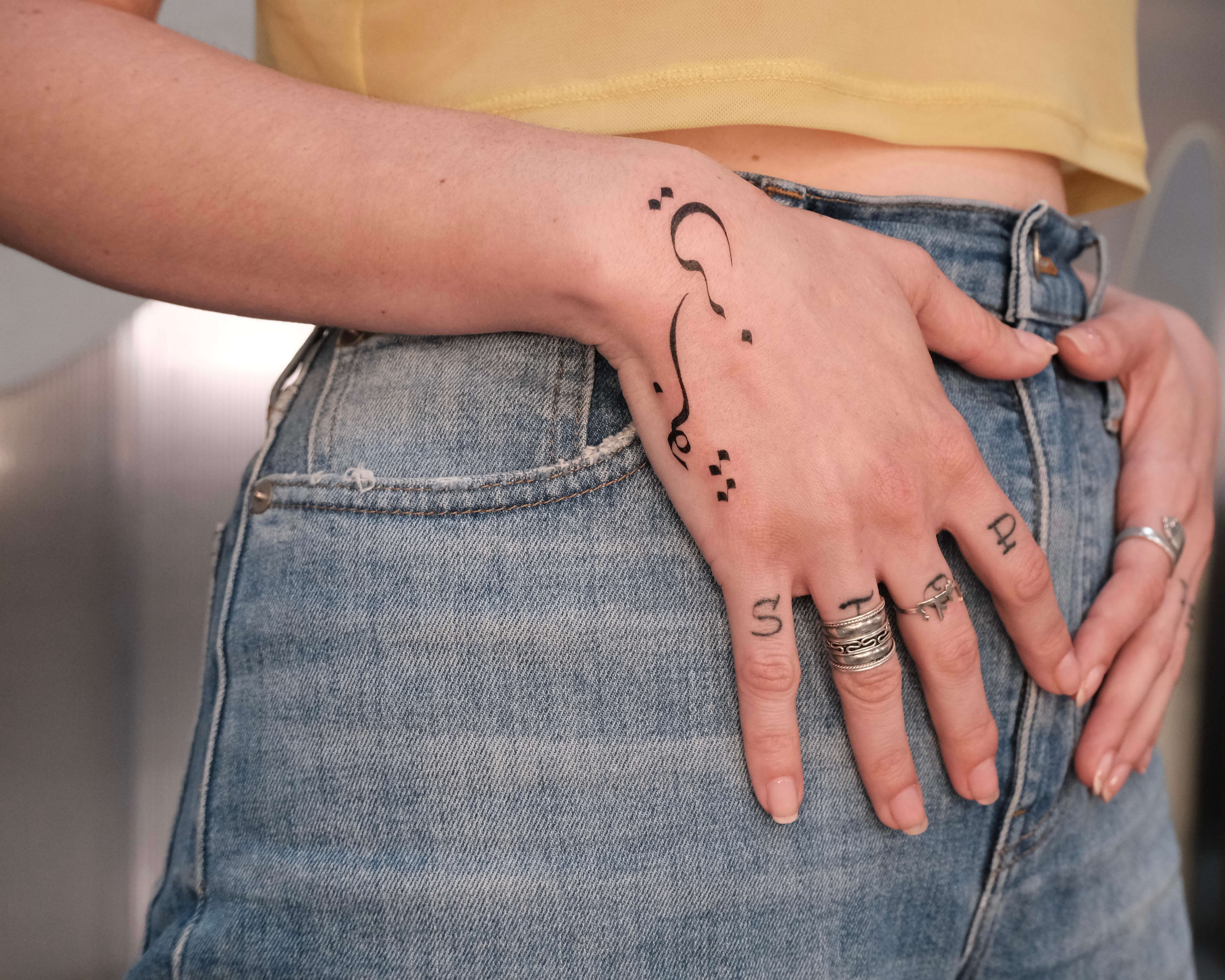
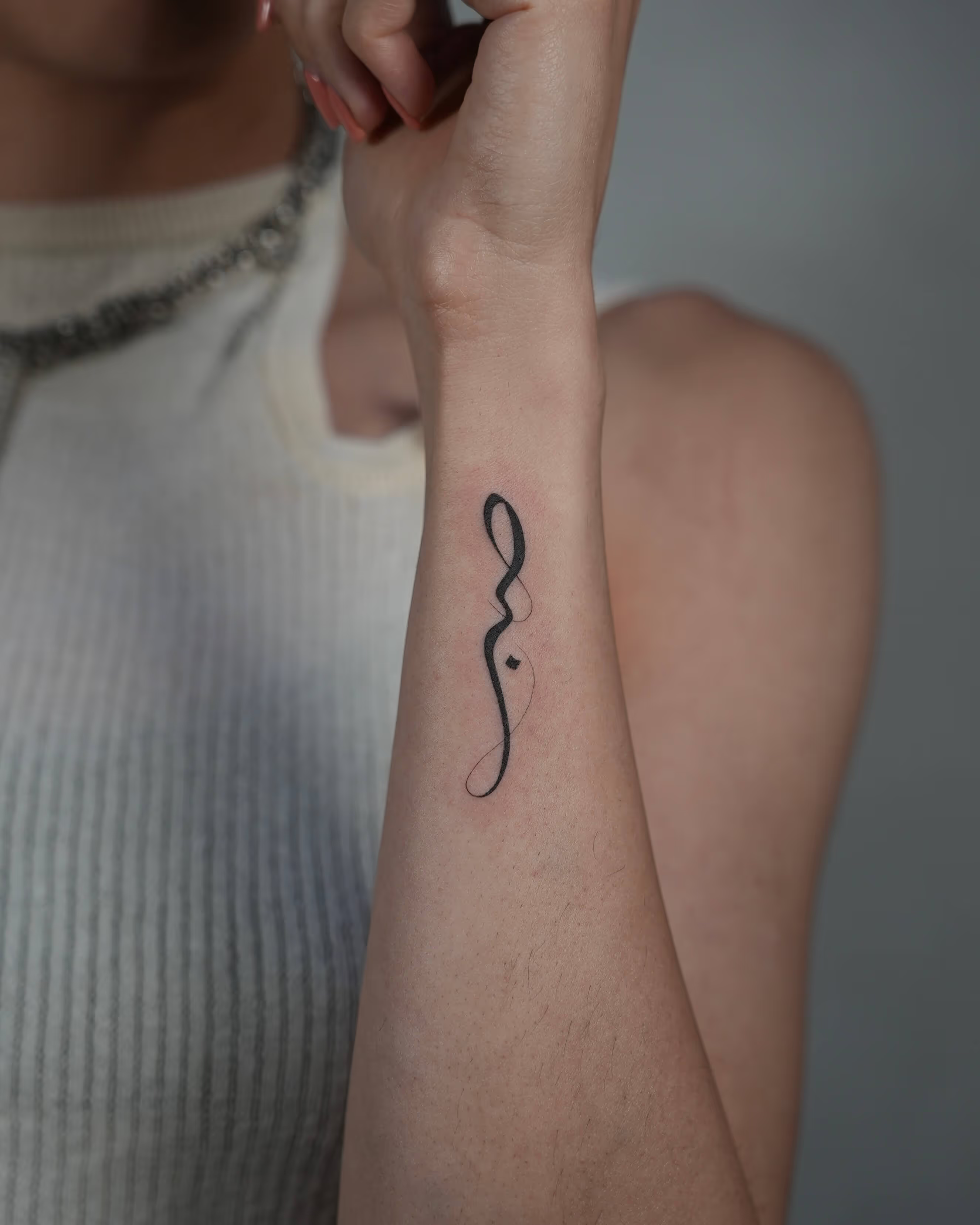
Script and calligraphy tattoo lettering: Flowing, connected letterforms derived from handwriting and calligraphic traditions. Script lettering is the most popular category in tattooing, ranging from loose, casual handwriting to formal Copperplate and Spencerian calligraphy. Script lettering suits personal names, short quotes, and phrases where an intimate, handwritten quality is desired.
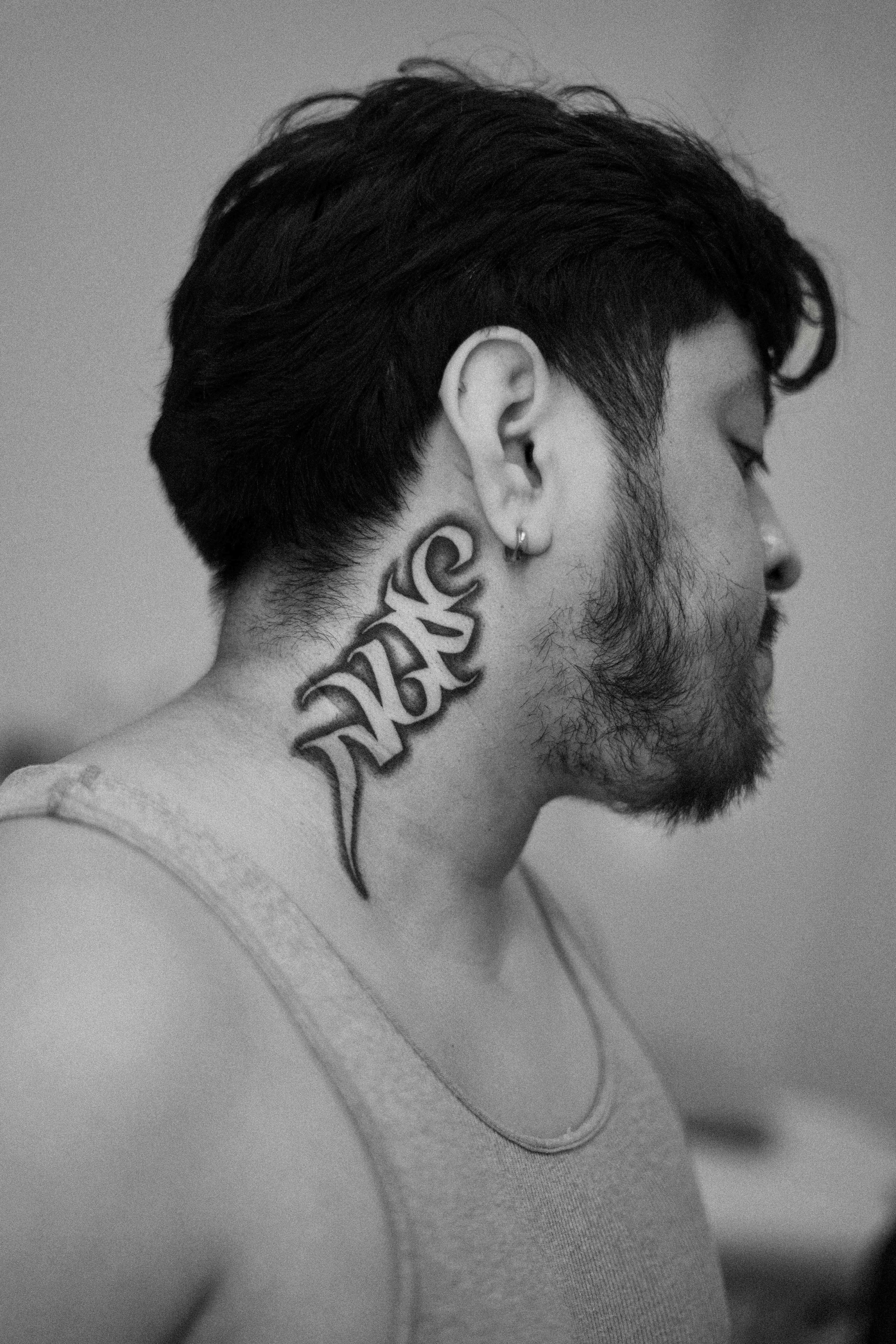
Chicano lettering tattoos: One of the most distinctive and technically demanding lettering traditions in tattooing. Chicano script — rooted in the Chicano movement of the 1960s and 1970s — is characterized by its ornate, heavily stylized letterforms, often with elaborate flourishes, shadows, and shading. Chicano lettering carries deep cultural significance and is executed by artists with specific expertise in the tradition.
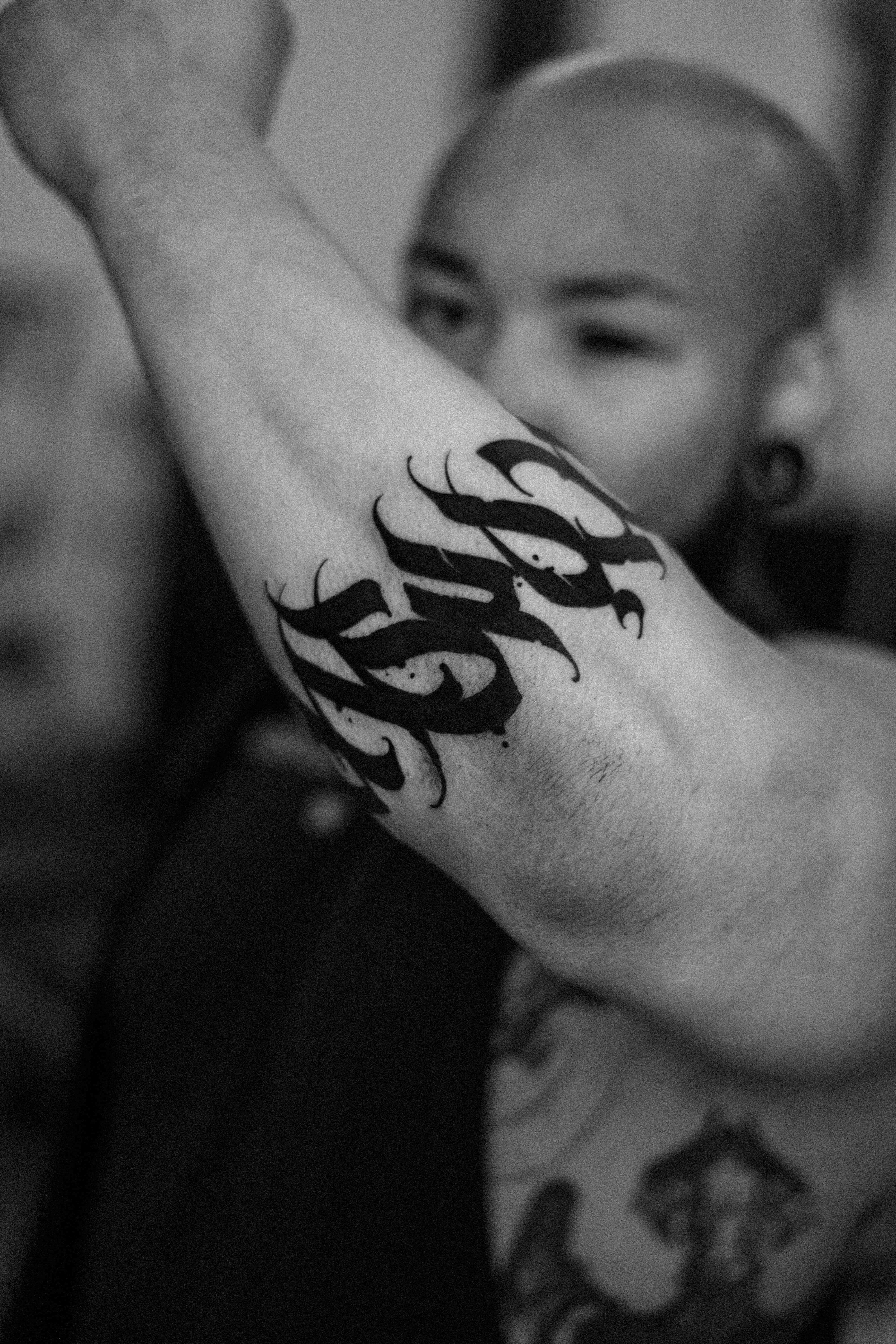
Gothic and blackletter tattoo fonts: Drawing from medieval European manuscript traditions, gothic lettering uses dense, angular strokes and ornate serifs to create letterforms of extraordinary visual weight. Gothic tattoo fonts suit names, single words, and short phrases where visual power is the primary goal.
Serif and Roman tattoo lettering: Clean, architectural letterforms derived from classical Roman inscriptions. Serif lettering reads with clarity and formality, suiting quotes and phrases where legibility is paramount. Single-needle serif lettering is among the most elegant and technically demanding forms of the style.
Minimalist and fine line lettering: Clean, thin letterforms executed with a single needle or very fine needles. Minimalist lettering tattoos emphasize simplicity and precision — the beauty is in the quality of the line and the composition of the text, not in decorative embellishment.

Tattoo Lettering Fonts and Designs
The choice of font for a lettering tattoo is one of the most important design decisions in the process. Different fonts for tattoos convey completely different emotional registers — the same words in gothic blackletter and Copperplate script are two entirely different tattoos. Here are the most significant tattoo letter fonts:
Script Tattoo Fonts
Script fonts are the most widely requested in tattooing — flowing, connected letterforms that range from loose cursive to formal calligraphic scripts. The best script lettering tattoos are drawn entirely by hand, not generated from a digital font and printed as a stencil. A hand-lettered script has a quality of line and a compositional intelligence that font-based work cannot match.
Gothic Tattoo Fonts
Gothic and blackletter fonts bring medieval visual weight to tattoo lettering. Bold, angular, and visually commanding, gothic lettering tattoos are among the most striking in all of tattooing. They suit single words or short names particularly well — where the density of the letterforms can be fully appreciated without compromising legibility.
Chicano Lettering Tattoo Styles
Chicano lettering is its own complete tradition within tattooing — not simply a font but a visual language with specific historical and cultural roots. Characterized by elaborate flourishes, extended strokes, ornate shading, and a characteristic combination of lightness and weight, Chicano script requires artists with deep specific knowledge of the tradition. The calligraphy tattoo lettering style of Chicano work is among the most visually sophisticated in all of tattooing.
Lettering Name Tattoo Designs
Name tattoos are among the most personal and most commonly requested lettering pieces. Whether a partner's name, a child's name, or a parent's name — a name tattoo requires the artist to create a composition that gives the name visual weight and elegance beyond simply transcribing letters. The choice of font, size, placement, and any decorative elements all contribute to whether a name tattoo achieves genuine beauty or merely legibility.
Tattoo Lettering Shading Styles
Advanced lettering tattoos incorporate shading techniques that give letterforms three-dimensional weight and visual depth — drop shadows, inner highlights, gradient fills. Tattoo lettering shading styles range from subtle single-needle gradients to bold Chicano-style dramatic shadows. These techniques require significant additional skill beyond basic lettering execution.
Different Tattoo Fonts and Unique Lettering
The most memorable lettering tattoos are those where the artist creates something genuinely new — drawing on multiple typographic traditions to produce a letterform unique to the specific piece. Different tattoo fonts can be combined, modified, and invented. The best lettering tattoo artists are, fundamentally, type designers working in ink.
Tattoo Lettering Ideas and What to Consider
Beyond font choice, a lettering tattoo requires thoughtful decisions about content, placement, and composition. Here are the most important considerations:
Length and readability: A short phrase or name reads clearly across a wide range of font choices and placements. Longer quotes require careful composition to maintain legibility — line breaks, letter spacing, and size must all be balanced.
Placement and curvature: Lettering placed on curved body parts — the forearm, the ribcage, the collar — must account for how text flows with the body's natural lines. Straight text on a curved surface reads awkwardly. The best lettering artists compose text that works with the body's architecture.
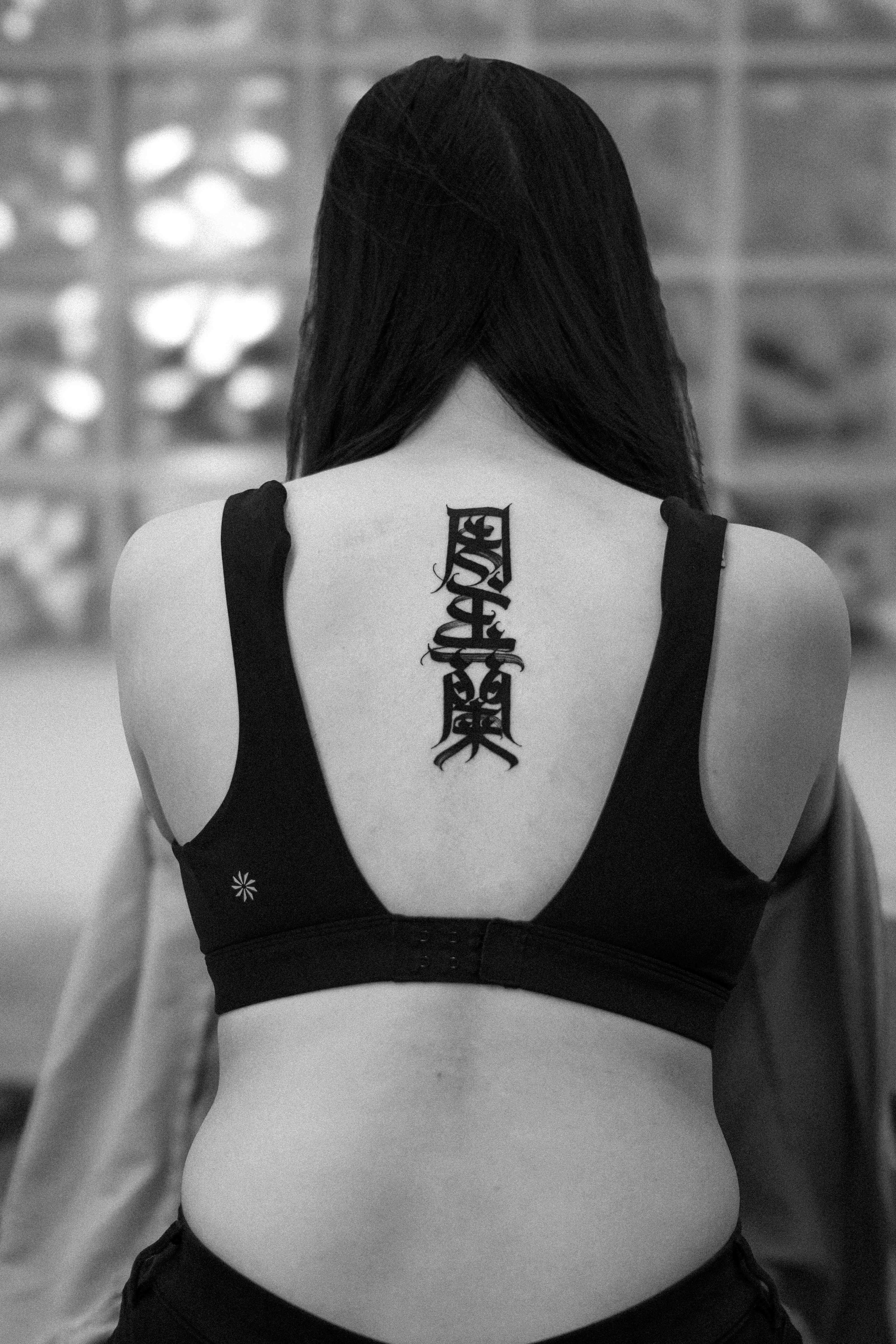
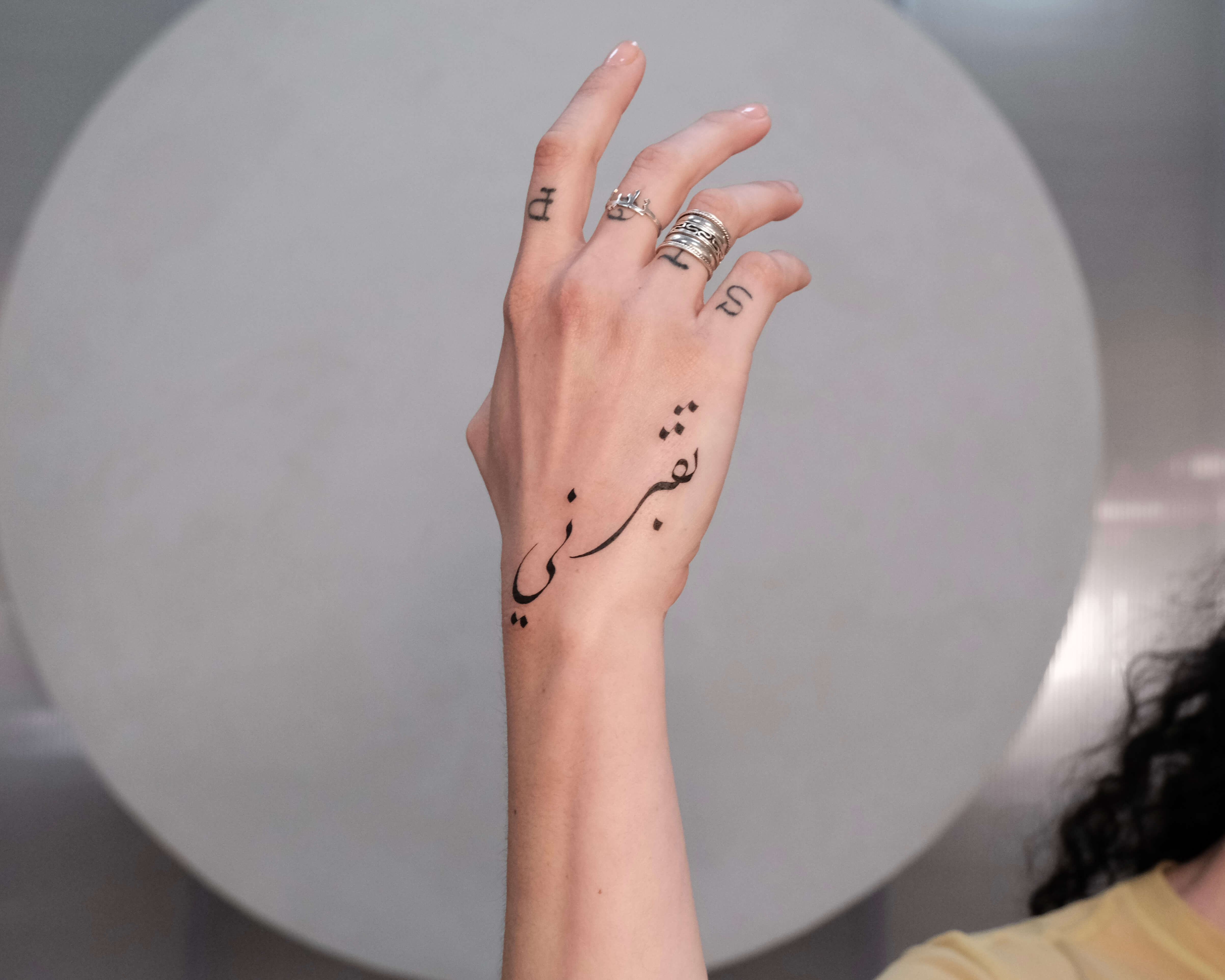
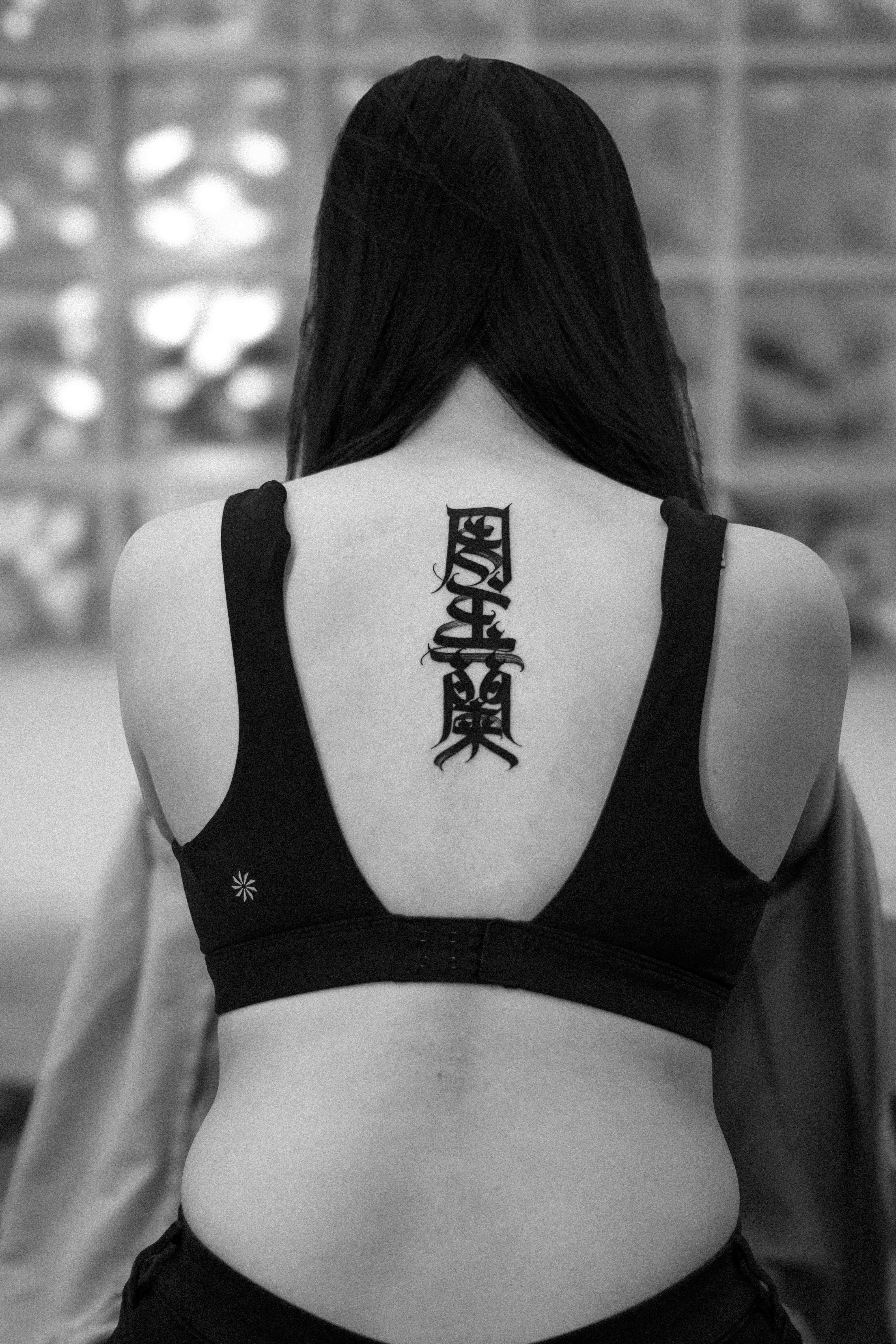
Language and script: Lettering tattoos in languages other than English — Arabic calligraphy, Japanese kanji, Sanskrit, Hebrew, Greek — require artists with specific knowledge of those scripts. A beautiful Arabic calligraphy tattoo requires an artist who understands Arabic letterforms, not one who is copying characters from a reference image.
Aging and maintenance: Fine lettering tattoos — particularly those using very thin lines — require more careful sun protection and touch-up attention over time than bold lettering pieces. Thicker letterforms in bolder fonts age more reliably. Your artist will advise on which approach is most appropriate for your placement and skin type.
The History of Chicano Lettering Tattoos
Chicano lettering tattoos have their roots in the Chicano movement of the 1960s and 1970s, developing in the prisons and barrios of East Los Angeles and spreading through the American West. The style draws on Old English blackletter, Mexican artistic traditions, and the specific visual culture of Chicano communities to create a letterform of extraordinary elaborateness and cultural depth. Today, Chicano lettering is practiced by specialist artists worldwide and remains one of the most technically demanding and culturally specific styles in all of tattooing.


Tattoo Lettering Placement Guide
Forearm and inner arm: The most popular placement for lettering tattoos. The flat inner forearm provides an excellent canvas for horizontal text compositions — names, short phrases, dates. The outer forearm suits bolder lettering styles including gothic and Chicano script.
Ribcage and side: A classic placement for longer phrases and quotes. The elongated surface of the ribs suits text that follows the body's natural lines. This placement is more painful but produces striking results — the intimacy of the placement suits the personal nature of lettering tattoos.
Collarbone and chest: Short names and single words sit elegantly across the collarbone or chest. These placements are highly visible and suit bold lettering styles with visual impact at a distance.
Fingers and knuckles: Single letters or very short words on fingers or knuckles — a classic placement with specific associations. These placements require bold, simple letterforms that remain legible at small scale and hold up to the wear these areas experience.
Back and spine: Longer quotes and phrases sit beautifully along the spine or across the upper or lower back. The spine in particular suits a single column of text — a quote that reads vertically from neck to lower back can be one of the most striking lettering compositions possible.
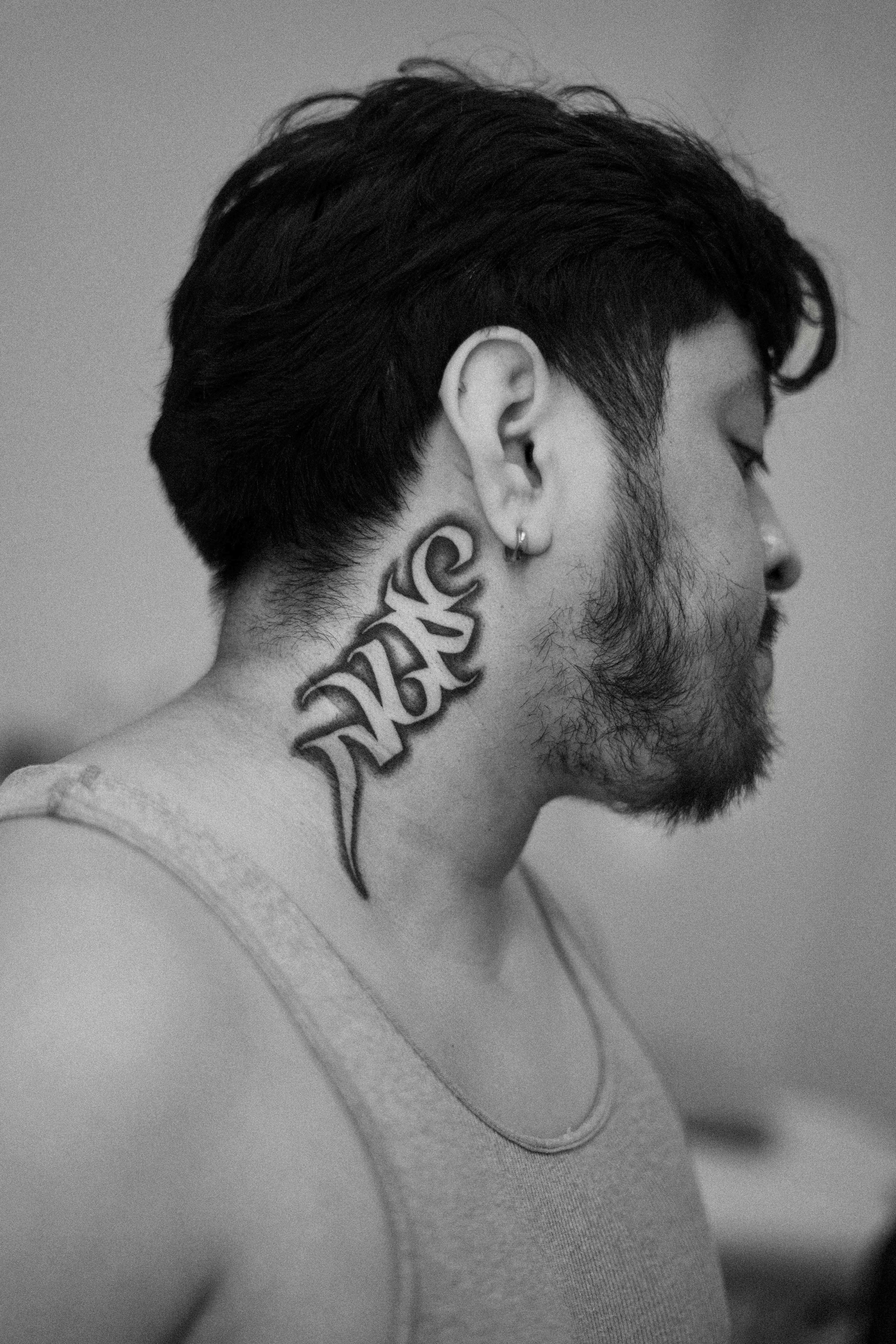
Neck and behind the ear: High-visibility and intimate placements respectively. Neck lettering demands bold, clear letterforms. Behind-the-ear lettering suits very small, precise script or single words.
How Long Does a Lettering Tattoo Take?
Different Fonts for Tattoos: Which Is Right for You?
The single most important decision in a lettering tattoo is font choice. Gothic lettering is bold and visually commanding; script lettering is intimate and personal; Chicano script is culturally specific and elaborately ornate. For styles closely related to lettering in their demand for precision, see our fine line tattoo guide, single line tattoo guide, and minimalist tattoo guide. Browse all tattoo styles at Monolith Studio.
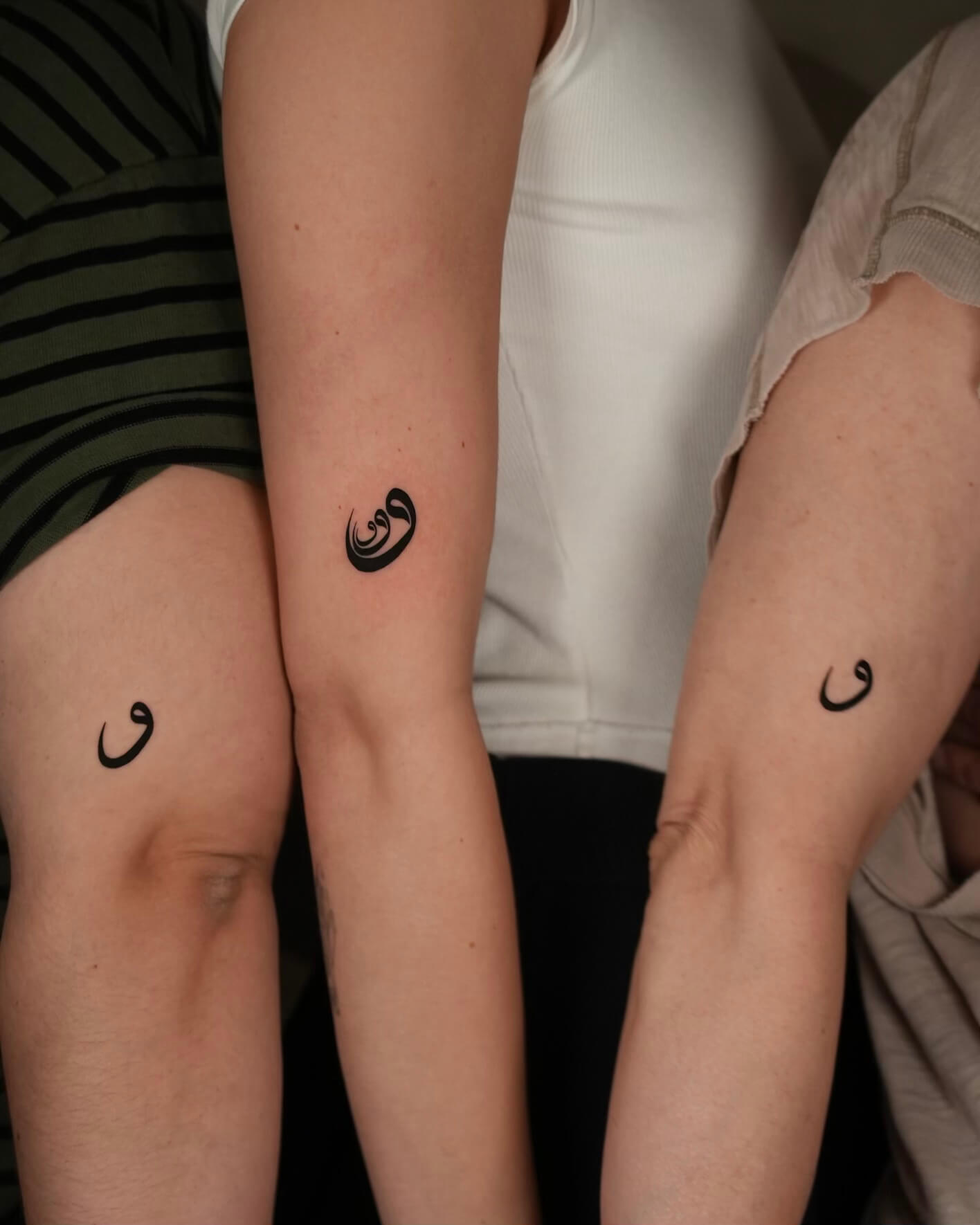
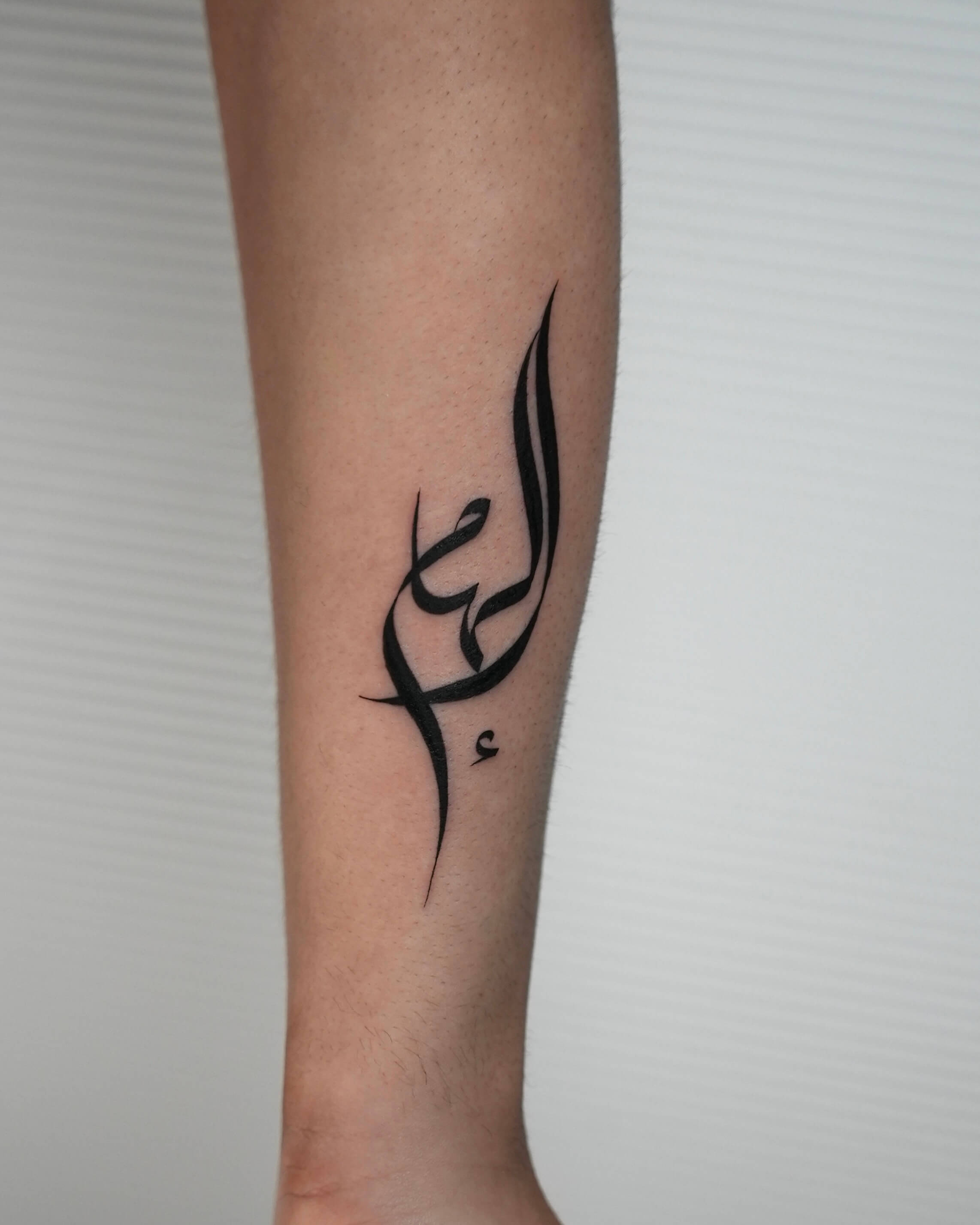
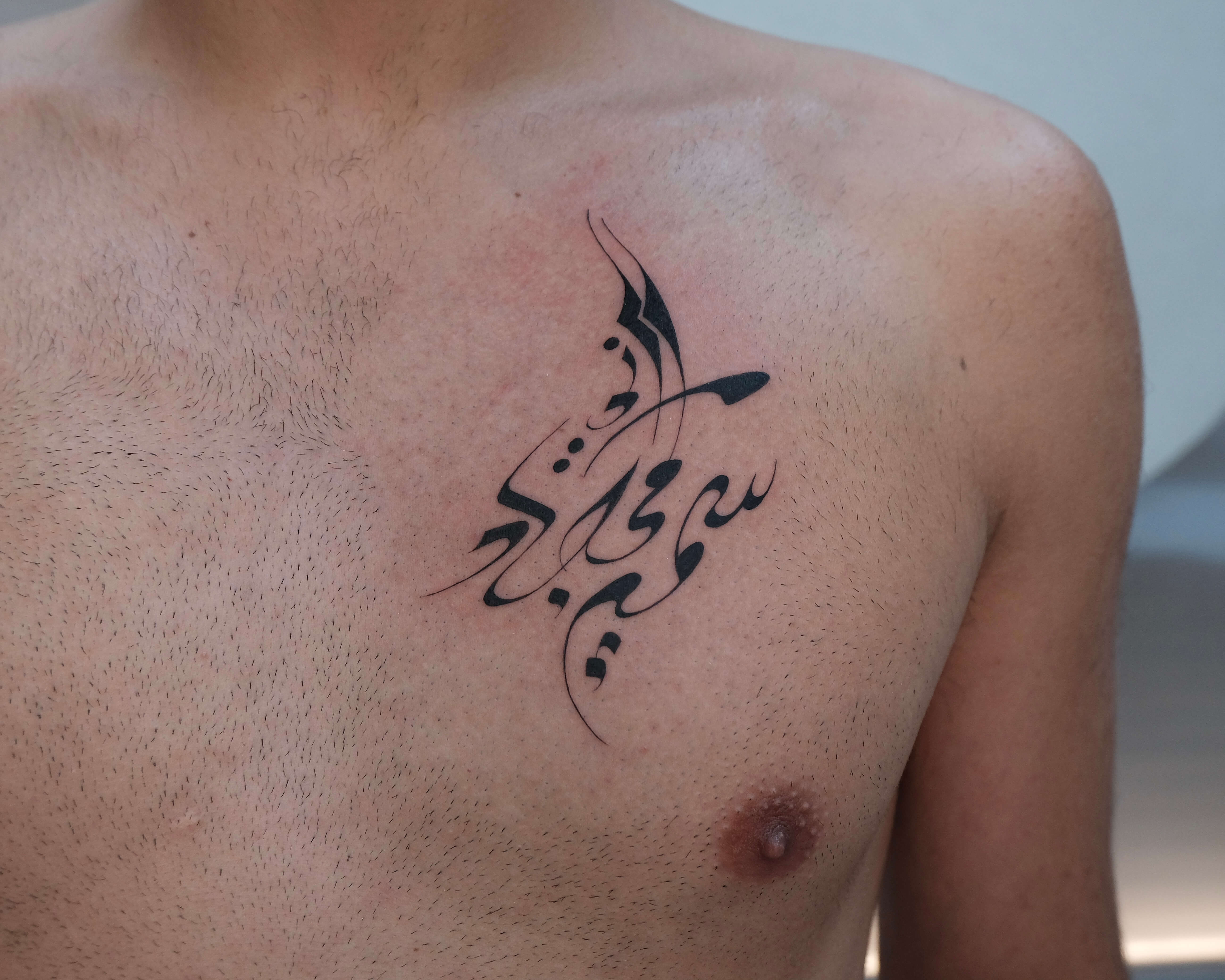
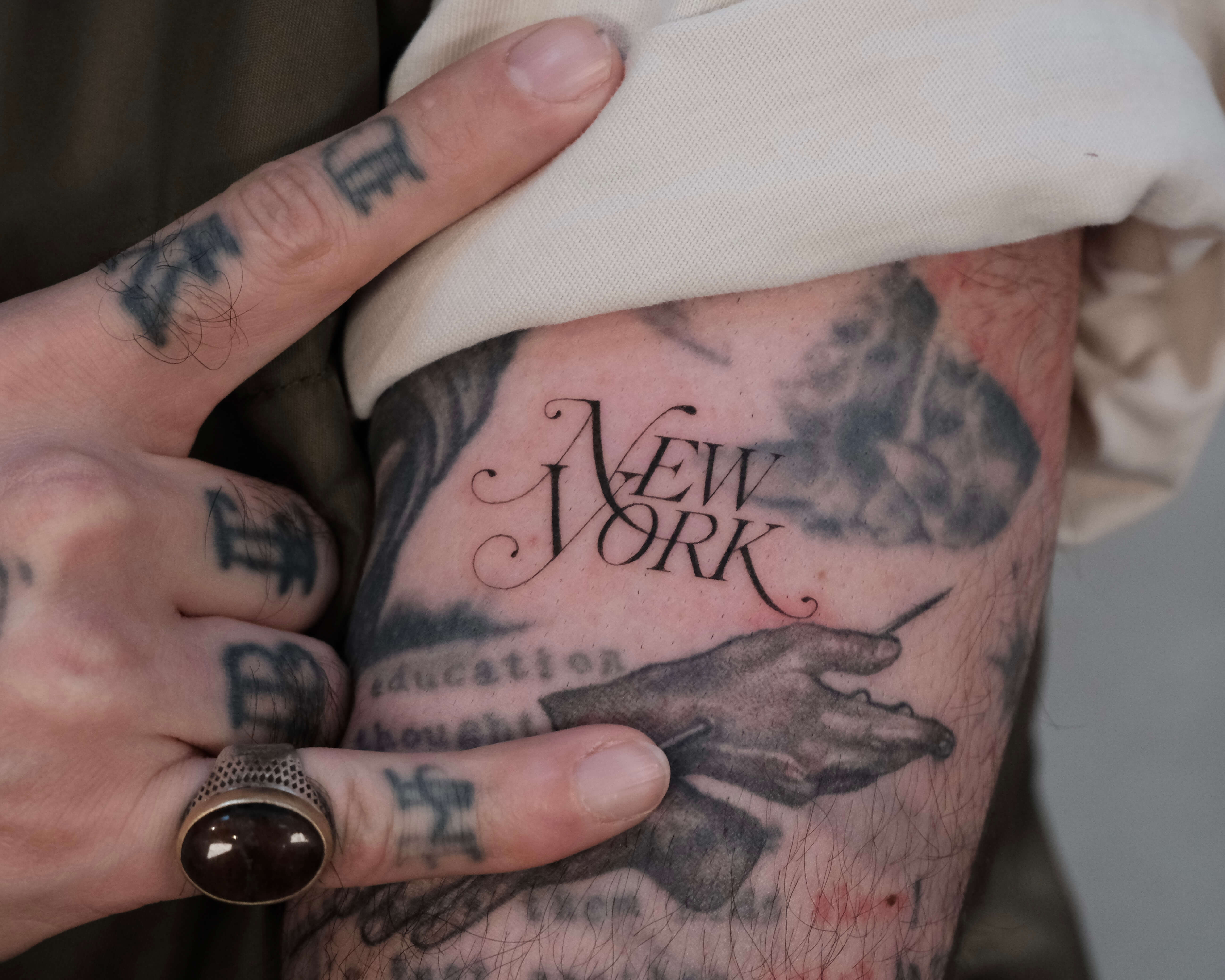
Tattoo Lettering Studio in Brooklyn, NYC — Monolith Studio
For collectors searching for the best tattoo lettering studio in New York City, Monolith Studio in Brooklyn brings together artists with deep expertise across every major lettering tradition — script, Chicano, gothic, fine line, and custom hand-lettering. Located at 77 Washington Avenue, Brooklyn, NYC 11205, every lettering piece at Monolith is drawn entirely by hand — no digital font printing, no shortcuts.
What sets Monolith's lettering apart:
- All lettering drawn by hand — no font-based stencils
- Specialists in script, Chicano lettering, gothic fonts, fine line, and custom typography
- Name tattoos, quotes, dates, and single-word compositions
- Expertise in non-Latin scripts: Arabic calligraphy, Japanese, Sanskrit, Hebrew
- Brooklyn studio — accessible from all five boroughs and Manhattan
Looking for the best tattoo lettering artist in NYC? Book your consultation at Monolith Studio and let's create something worth reading forever.
Tattoo Lettering Tips for Collectors
1. Test the Design: Ask your artist to create a temporary stencil so you can see how the tattoo will look on your body.
2. Double-Check Spelling: Always confirm the spelling of your text before getting it tattooed.
3. Consider the Longevity: Fine-line lettering can fade over time, so discuss options with your artist for ensuring durability.


A lettering tattoo is permanent language — words chosen carefully, rendered beautifully, carried for a lifetime. The difference between a great lettering tattoo and a mediocre one is entirely in the skill and knowledge of the artist. At Monolith Studio in Brooklyn, lettering is taken seriously as a craft — hand-drawn, precisely composed, and executed with the full technical skill the style demands. Book a consultation and let's find the right words.
FAQ
Tattoo lettering is a tattoo style that focuses on text-based designs, including quotes, names, script, and typography in various artistic fonts.
Tattoo lettering can be as small as ¼ inch in height, but extremely small text may blur over time. For readability, most artists recommend letters at least ½ inch tall.
To design tattoo lettering:
- Choose a legible font that complements the meaning.
- Consider spacing and placement for readability.
Test different script, gothic, or calligraphy styles before inking.
To design tattoo lettering:
- Choose a legible font that complements the meaning.
- Consider spacing and placement for readability.
Test different script, gothic, or calligraphy styles before inking.
Tattoo script lettering is drawn with fluid, connected strokes. Using guidelines helps maintain consistent letter size and spacing.
Look for tattoo artists with experience in calligraphy, script, and fine-line work. Check portfolios and social media reviews before booking.
Tattoo lettering prices vary based on complexity, size, artist expertise, and location. It is best to consult with an artist for an accurate quote.
Choose bold, high-quality ink.
Avoid high-friction areas (fingers, palms).
Use sunscreen and proper aftercare.
Artists



Related Styles
.jpg)