Stick and Poke Tattoo
What is a Stick and Poke Tattoo?

What is a Stick and Poke Tattoo?
A stick and poke tattoo — also known as a hand poke tattoo or hand-poked tattoo — is a tattooing method in which ink is deposited into the skin manually, using a single needle without the aid of an electric machine. The artist dips the needle in ink and punctures the skin repeatedly by hand, building up the design dot by dot and line by line.
The technique is fundamentally different from machine tattooing not just in its tools but in its quality of experience. Machine tattooing deposits ink quickly and consistently through the mechanical action of the machine. Hand poke tattooing is slower, more deliberate, and often described by collectors as significantly less painful — the needle enters the skin at a gentler, more controlled pace.
The aesthetic result is also distinct. Stick and poke tattoos have a characteristic quality — a slight softness of line, a texture that is slightly different from machine work, a visual quality that many collectors specifically seek out. This quality is not a limitation; it is a feature, one that connects the finished piece to a tattooing tradition that goes back to ancient civilizations.
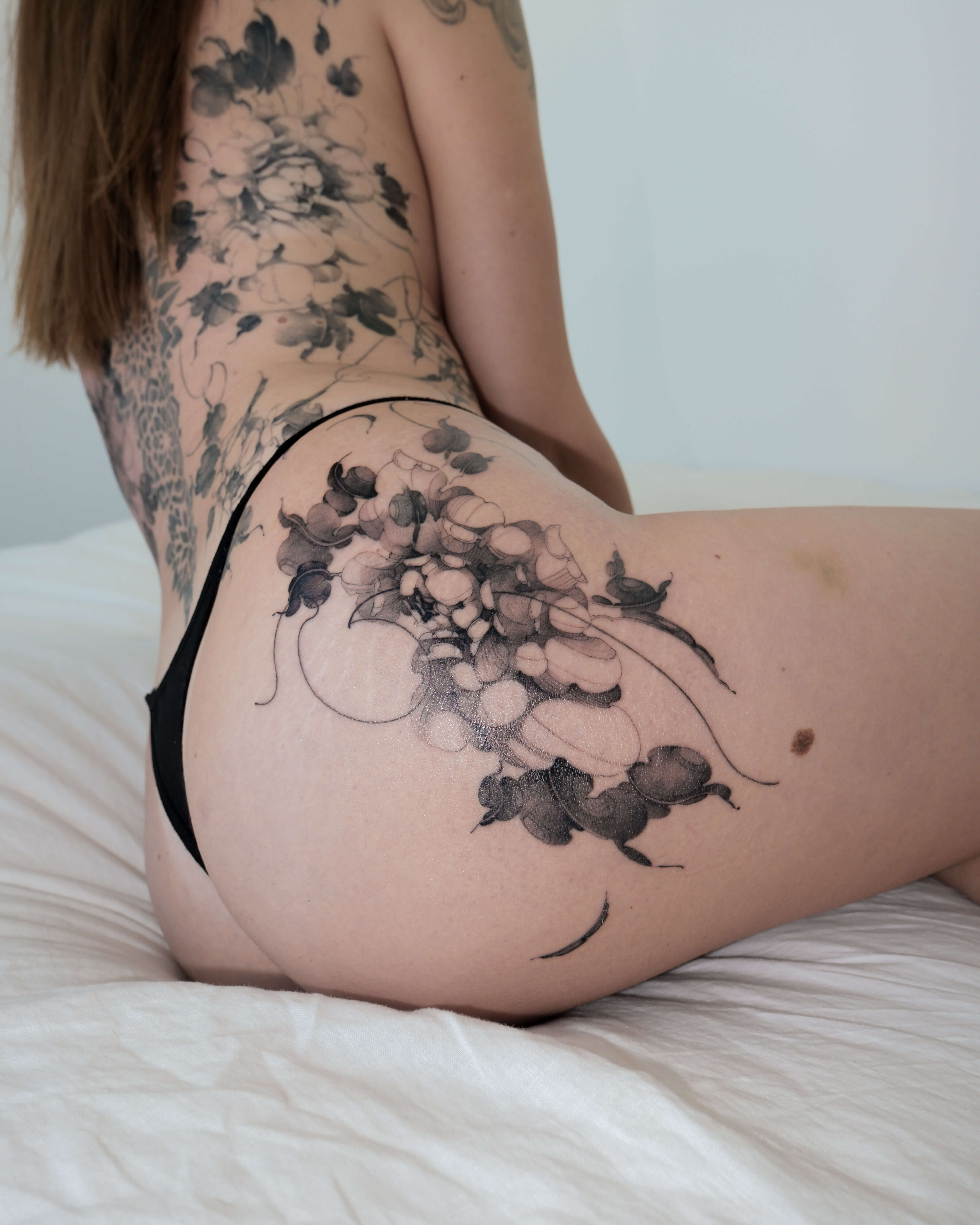
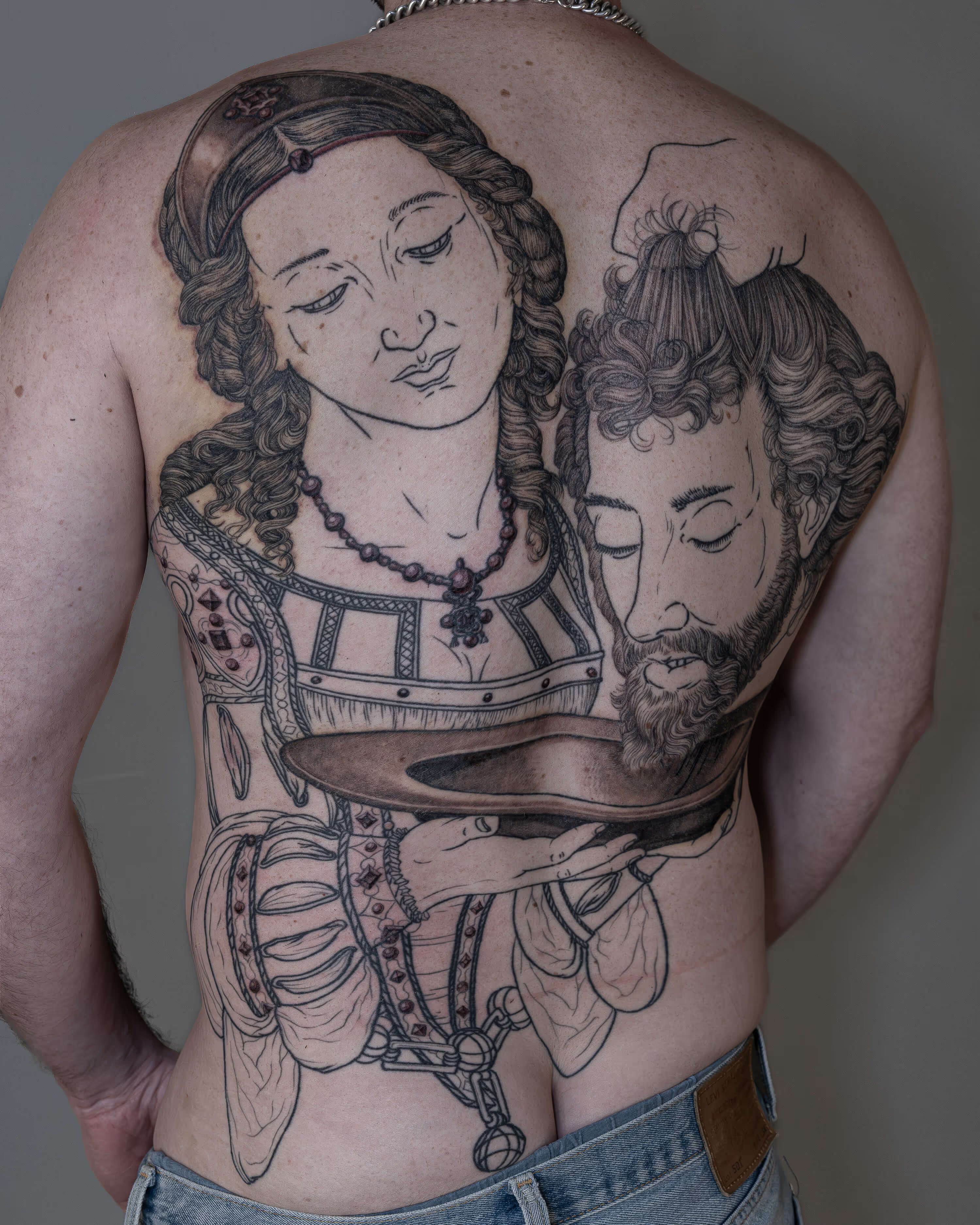
What does a stick and poke tattoo look like? Stick and poke tattoos range from simple minimal designs to complex illustrative work. The style lends itself particularly well to fine line work, geometric designs, botanical illustrations, abstract compositions, and small symbol tattoos. The hand-made quality of the technique is visible up close, giving stick and poke pieces a character that machine work cannot replicate.


Stick and Poke Tattoo Designs and Ideas
The stick and poke technique suits a specific range of aesthetic directions particularly well. Here are the most compelling design categories:
Fine Line Stick and Poke Tattoos
The single-needle nature of hand poke tattooing makes it ideal for fine line work. Botanical illustrations, delicate geometric compositions, single-needle portraits, and intricate abstract designs all translate beautifully into the hand poke medium. The slight softness of the line that stick and poke produces adds character to fine line work rather than detracting from it.
Minimalist and Symbol Tattoos
Small, meaningful symbols — single lines, simple geometric forms, personal sigils, letters, minimal figurative designs — are among the most popular stick and poke subjects. The intimate, hand-crafted quality of the technique suits these understated pieces particularly well. A simple symbol executed in stick and poke carries a different quality than the same design done by machine.
Traditional Stick and Poke Tattoos
Traditional stick and poke tattooing — drawing on the visual languages of indigenous tattooing traditions from Polynesia, Southeast Asia, Japan, and beyond — connects the technique to its deepest historical roots. These designs honor the traditions from which hand poke tattooing originates.
Abstract and Geometric Stick and Poke
Geometric compositions and abstract designs translate exceptionally well into the hand poke medium. The deliberate, point-by-point quality of the technique suits the careful accumulation of marks that geometric and abstract work requires. Dotwork, in particular, is closely related to stick and poke technique and is among the most visually striking applications of the method.
How Long Does a Stick and Poke Tattoo Last?
A professionally executed stick and poke tattoo lasts just as long as a machine tattoo — a lifetime, with proper aftercare and sun protection. The longevity of a tattoo depends on the depth of ink placement, not the method of placement. A skilled hand poke artist achieves the same consistent ink depth as a machine artist, producing results with equivalent longevity.
The difference in longevity between stick and poke and machine tattoos typically comes down to the skill of the artist, not the technique. A professionally executed hand poke tattoo from an experienced artist will last as long as any high-quality machine tattoo. An inexperienced artist using either method will produce work that fades more quickly.
Stick and Poke vs. Machine Tattoo: What's the Difference?
The primary differences between stick and poke and machine tattooing are speed, sensation, and aesthetic quality. Machine tattooing is faster and produces a more consistent, graphic line. Hand poke tattooing is slower, typically less painful, and produces a line with a distinctive softer quality. Neither is superior — they are different tools producing different results, and the right choice depends entirely on the aesthetic you want to achieve. See our fine line tattoo guide for related styles that share stick and poke's commitment to precision and delicacy.


Stick and Poke Tattoo Placement Guide
Wrist and forearm: The most popular placements for stick and poke work. The flat surface suits the technique's precision and the results are highly visible. Small to medium compositions work particularly well.
Ankle and calf: Popular placements for smaller stick and poke pieces — symbols, minimal botanical designs, small geometric compositions. The ankle in particular suits the intimate scale that hand poke work often inhabits.
Behind the ear and collarbone: Intimate, discreet placements for small hand poke designs. The deliberate, unhurried quality of stick and poke suits pieces in these personal locations well.
Ribs and spine: Larger stick and poke compositions sit beautifully on the ribs and spine, where the technique's slower pace can be an advantage — allowing the artist to work carefully across a larger area without the fatigue associated with long machine sessions.
Fingers and hands: Small stick and poke designs — simple symbols, minimal linework, geometric forms — suit finger and hand placements well, though these areas require touch-ups more frequently regardless of technique.
How Long Does a Stick and Poke Tattoo Take?

The History of Stick and Poke Tattooing
Hand poke tattooing is the original form of tattooing. The oldest known tattooed human remains, Ötzi the Iceman (c. 3300 BCE), were marked using a hand poke method. Read our Ötzi the Iceman article for the full history. The contemporary resurgence of professional stick and poke tattooing represents a return to the original craft. For related styles that share the technique's commitment to precision, see our fine line tattoo guide and minimalist tattoo guide. Browse all tattoo styles at Monolith Studio.


Stick and Poke Tattoo Studio in Brooklyn, NYC — Monolith Studio
At Monolith Studio in Brooklyn, stick and poke tattooing is practiced by artists who understand both the technique's ancient roots and its contemporary possibilities. Located at 77 Washington Avenue, Brooklyn, NYC 11205, every hand poke piece at Monolith is fully custom — designed specifically for the collector and executed with the precision and care the technique demands.
What sets Monolith's stick and poke work apart:
- Professionally trained artists with deep knowledge of hand poke technique
- Full custom designs — no flash, no shortcuts
- Specialists in fine line, geometric, botanical, and traditional hand poke designs
- Safe, sterile studio environment — professional-grade equipment and hygiene standards
- Brooklyn studio — accessible from all five boroughs and Manhattan
Looking for stick and poke tattoo near me in NYC? Book your consultation at Monolith Studio and let's begin.

Commonly asked questions about Stick and Poke tattoos:
- How to do a stick and poke tattoo?
Stick and poke tattoos are created by manually inserting ink into the skin using a sterilized needle. After preparing the workspace and planning the design, the artist carefully pokes the skin to create the tattoo. Due to the risks involved, it is recommended to have this method performed by a professional tattoo artist. - What is a stick and poke tattoo?
A stick and poke tattoo is a type of tattoo created without using a machine. It involves using a single needle to manually puncture the skin and deposit ink. - How long does a stick and poke tattoo last?
Stick and poke tattoos can last to a lifetime, depending on factors such as needle depth, ink quality, and aftercare. Although they are considered more superficial, they can sometimes heal better than machine tattoos, as they cause less trauma to the skin. - Why are stick and poke tattoos popular?
Stick and poke tattoos are popular for their simplicity, personal nature, and the unique aesthetic they offer. They are often chosen for their minimalist designs and the intimate experience they provide, making them a meaningful choice for many.


Stick and poke tattooing is one of the oldest art forms in human history — a direct, intimate connection between artist and skin that no machine can replicate. At Monolith Studio in Brooklyn, this ancient technique is practiced at the highest professional level. Book a consultation and let's create something made entirely by hand.
FAQ
A stick and poke tattoo, also called a hand poke tattoo, is made by manually inserting ink into the skin using a needle without an electric tattoo machine. The artist controls depth and rhythm entirely by hand, creating a more organic, meditative mark than machine tattooing. The technique is one of the oldest forms of tattooing in human history and has experienced a significant revival among collectors who value its intimate, handcrafted quality.
Most people find stick and poke tattoos less intense than machine tattoos. Because the needle enters the skin one poke at a time rather than thousands of times per minute, there is less cumulative trauma to the area. However, sessions tend to take longer than machine work, and fatigue in the skin can build over time. Pain levels vary significantly by placement and individual sensitivity — areas with thin skin over bone will always be more sensitive regardless of technique.
When performed by a professional tattoo artist in a licensed studio, stick and poke tattoos are completely safe. At Monolith Studio, all hand poke work is done with sterile, single-use needles and professional tattoo ink in a clean, regulated environment. The concerns around stick and poke safety apply specifically to DIY tattooing with non-sterile equipment — not to professional hand poke work.
When performed by a professional tattoo artist in a licensed studio, stick and poke tattoos are completely safe. At Monolith Studio, all hand poke work is done with sterile, single-use needles and professional tattoo ink in a clean, regulated environment. The concerns around stick and poke safety apply specifically to DIY tattooing with non-sterile equipment — not to professional hand poke work.
Stick and poke tattooing is well suited to fine line designs, minimalist compositions, small symbols, and organic forms. The hand-applied technique produces a slightly different line quality than machine work — one that many collectors specifically seek out for its softness and character. Bold, heavily shaded designs that require very fast ink saturation are generally better suited to machine tattooing, while anything delicate and precise is an excellent candidate for hand poke.
Stick and poke tattoo pricing at Monolith Studio depends on design complexity, size, and session length. Because hand poke tattooing is more time-intensive than machine work for equivalent coverage, sessions are priced accordingly. Visit monolithstudio.com/book-experience to discuss your project and receive a quote.
RK is the stick and poke specialist at Monolith Studio in Brooklyn. Her hand poke work is known for its precise, meditative quality — each piece is deeply personal and executed with the same standard as the studio's machine tattoo work. RK's approach brings a focused intentionality to hand poke tattooing that is difficult to find elsewhere.
Aftercare for a stick and poke tattoo follows the same principles as machine tattoo aftercare: keep the area clean, apply a thin layer of fragrance-free moisturizer, avoid direct sunlight, and do not pick or scratch the healing skin. Because hand poke tattoos often cause slightly less trauma to the skin initially, some people find the healing process more comfortable — but the same rules and timeline apply. Your artist will provide specific aftercare instructions at the end of your session.
Artists


Related Styles
.jpg)