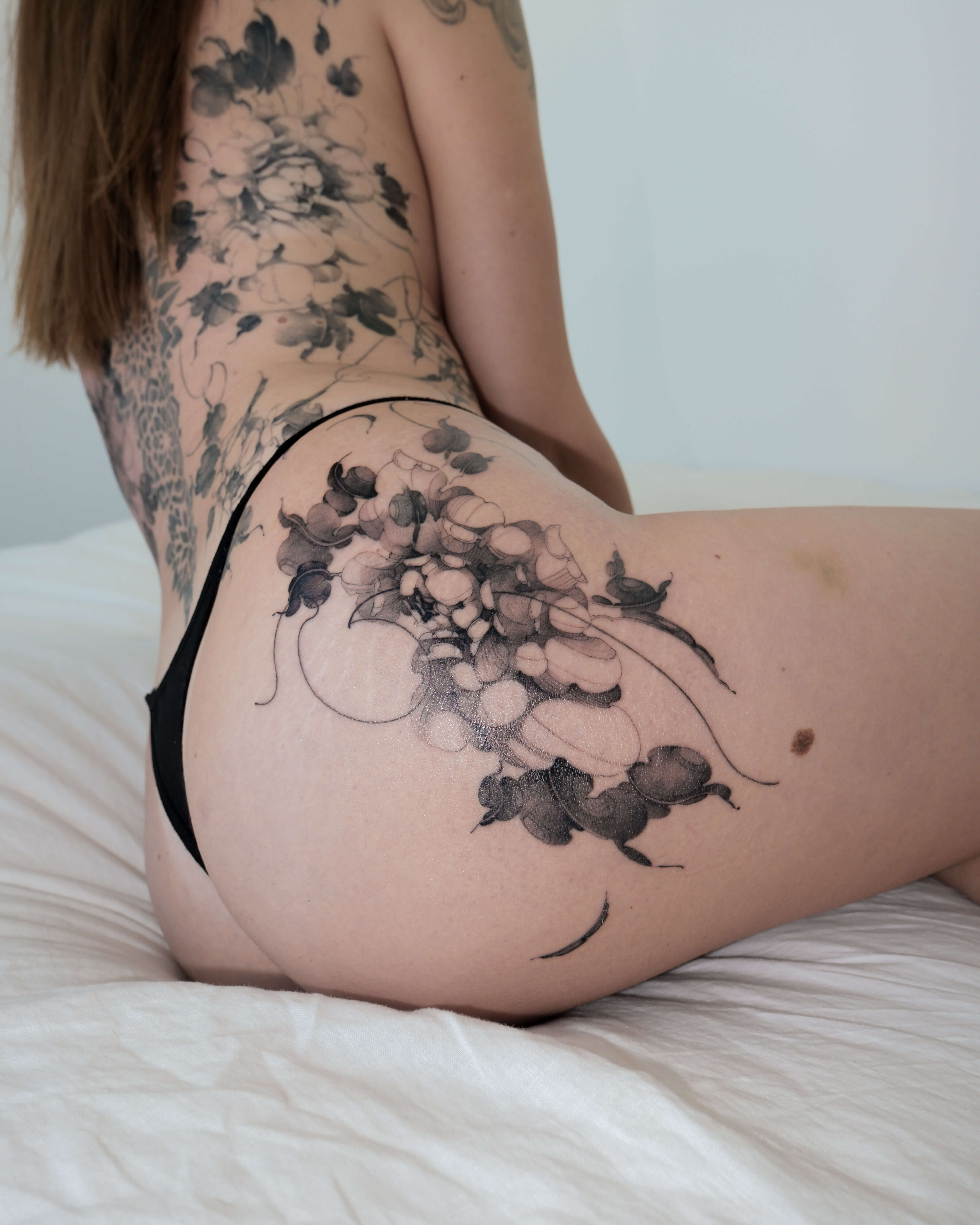
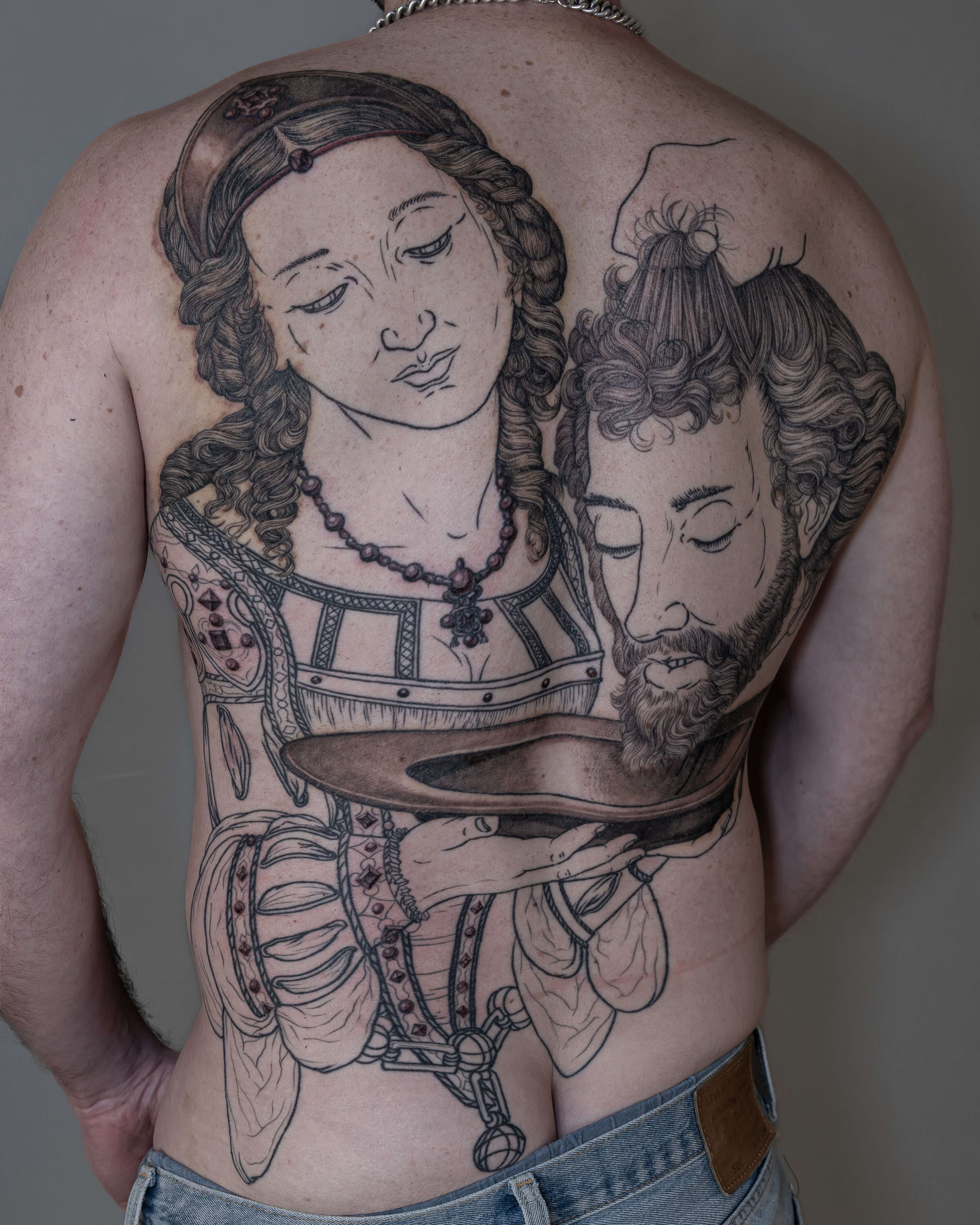
Abstract Tattoo
What is an Abstract Tattoo?

What is an Abstract Tattoo?
An abstract tattoo is any tattoo that does not represent a recognizable real-world subject — instead using non-representational form, line, color, and texture to create visual meaning. The category is broad and encompasses an enormous range of approaches, from geometric abstraction to gestural expressionism to conceptual mark-making.
Abstract tattooing draws on the full history of abstract art — from the geometric abstraction of Mondrian and Malevich, to the gestural expressionism of Pollock and de Kooning, to the color field work of Rothko and Newman — while developing its own visual language suited to the specific demands of tattooing. The result is a style that is simultaneously the most open and the most demanding in all of tattooing.
The abstract tattoo style encompasses several distinct directions:
Abstract geometric tattoos: Using mathematical forms — lines, shapes, patterns — in non-representational compositions. The abstract geometric tattoo achieves visual power through the relationships between forms rather than through the recognition of subjects.
Gestural abstract tattoos: Drawing on the expressionist tradition of gestural mark-making — the energy and intentionality of the artist's hand movement made permanent. These pieces capture the quality of a gesture: fluid, decisive, alive.
Abstract realism tattoos: A hybrid approach that begins with a recognizable subject and abstracts it — reducing it to form, line, and color without losing its essential visual character. Abstract realism occupies the space between figurative and fully non-representational tattooing.
Abstract line art tattoos: Compositions built from lines — single-needle abstract linework, flowing abstract line compositions, minimal abstract line art. These pieces achieve their effect through the quality and relationship of the lines rather than through what they represent.


Abstract Tattoo Designs and Ideas
Abstract tattooing accommodates more creative range than any other style. Here are the most compelling directions:
Abstract Arm Tattoo
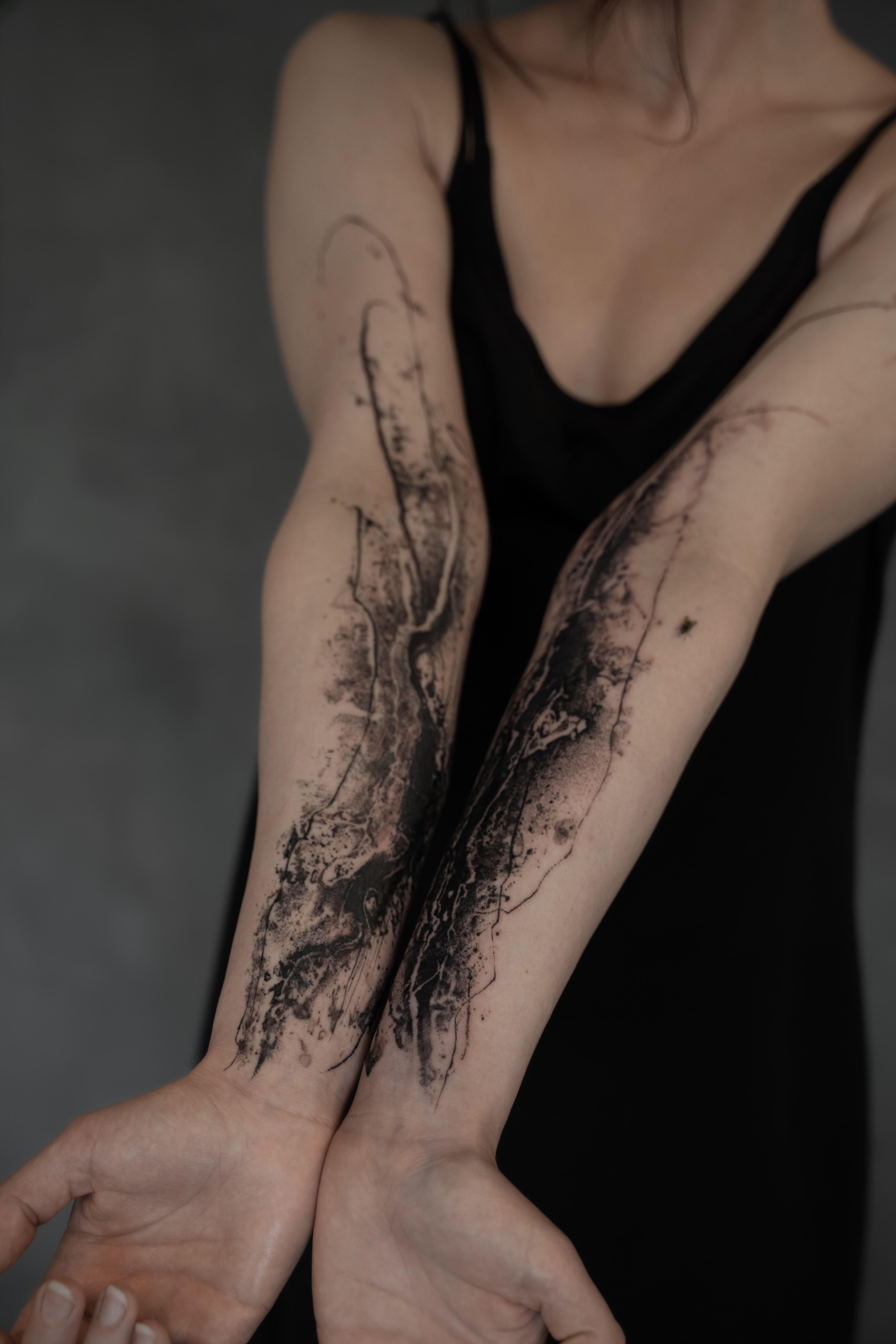
The arm is the most popular placement for abstract tattoo work. The extended canvas of the arm — from shoulder to wrist — allows for the kind of gestural, flowing compositions that abstract tattooing excels at. An abstract arm tattoo can be a single focused piece or a continuous composition that builds across the entire arm, with abstract forms responding to and interacting with the body's natural curves.
Abstract Art Tattoos
Abstract art tattoos bring the visual language of fine art directly into tattooing — compositions that reference or directly engage with specific movements in abstract art history. These pieces require artists with genuine art-historical knowledge and the technical skill to translate complex visual ideas into permanent marks. Abstract art tattoos are among the most intellectually ambitious pieces in all of contemporary tattooing.
Minimalist Abstract Tattoos
The intersection of minimalism and abstraction produces some of the most refined work in contemporary tattooing — compositions reduced to the smallest number of elements that can still carry visual and conceptual weight. A single abstract line. A minimal geometric form. A precise mark that rewards extended looking. Minimalist abstract tattoos suit collectors who want work that achieves its effect through economy and precision rather than complexity.
Abstract Color Tattoos
Abstract color tattoos use color as a primary compositional element — color field compositions, watercolor-influenced abstract work, or bold color used in non-representational ways. When color is added to abstract tattooing, the compositional relationships between hues become part of the meaning-making of the piece.
Abstract Tattoo Stencil Designs
While the most sophisticated abstract tattooing is executed freehand, abstract tattoo stencil designs provide a foundation for collectors who want the abstract aesthetic with greater compositional certainty. The best abstract stencil work is designed with genuine understanding of abstract visual principles rather than assembled from generic decorative elements.
Abstract Tattoo Meaning
Abstract tattoos carry meaning differently from representational tattoos. Where a figurative tattoo — a wolf, a rose, a portrait — carries meaning through its subject, an abstract tattoo carries meaning through its visual character: the energy of its marks, the relationships between its forms, the emotional register of its composition.
This does not mean abstract tattoos are without meaning — it means their meaning is carried by visual experience rather than symbolic association. The collector looking at an abstract tattoo is invited into a visual encounter rather than a symbolic reading. For many collectors, this is precisely what makes abstract tattooing compelling: it engages the eye and the mind in a way that representational tattooing cannot.
Abstract Tattoo Styles: Which Direction Is Right for You?
The abstract tattoo style encompasses more visual range than any other in tattooing. The right direction depends entirely on what kind of visual experience you want to carry. Geometric abstraction suits collectors who value mathematical structure and precision. Gestural work suits those drawn to the energy of the artist's mark. Abstract realism suits those who want to maintain a connection to figurative subject matter while exploring non-representational form. The best approach is to bring visual references — fine art, graphic design, other tattoos — to your consultation and work with your artist to identify the specific abstract language that resonates with you.


Abstract Tattoo Placement Guide
Arm and forearm: The most popular abstract placements. The extended surface of the arm allows for the kind of flowing, gestural compositions that abstract tattooing excels at. Abstract arm tattoos — from a focused forearm piece to a full abstract sleeve — are among the most visually striking in contemporary tattooing.
Back and ribs: Large-scale abstract compositions on the back and ribs allow for the full scale and visual complexity that ambitious abstract work requires. The generous canvas suits both geometric abstraction and gestural approaches.
Chest and sternum: Abstract compositions centered on the chest or sternum — particularly symmetric geometric abstract work — achieve powerful visual impact. The placement suits both bold and delicate abstract approaches.
Thigh: An increasingly popular placement for larger abstract pieces. The generous canvas of the thigh suits standalone abstract compositions that benefit from scale.
How Long Does an Abstract Tattoo Take?
Abstract vs. Geometric Tattoos: What's the Difference?
Geometric tattooing uses mathematical forms in precise, structured compositions. Abstract tattooing uses visual form in compositions that prioritize visual and emotional experience over mathematical structure. See our geometric tattoo guide and single line tattoo guide for closely related styles. Browse all tattoo styles at Monolith Studio.


Abstract Tattoo Studio in Brooklyn, NYC — Monolith Studio
For collectors searching for the best abstract tattoo studio in New York City, Monolith Studio in Brooklyn brings together artists with genuine grounding in fine art, design, and abstract visual language. Located at 77 Washington Avenue, Brooklyn, NYC 11205, every abstract piece at Monolith is fully custom — designed from scratch with genuine understanding of abstract visual principles and executed with the technical skill the style demands.
What sets Monolith’s abstract work apart:
- Artists with genuine fine art and design backgrounds
- Full range of abstract approaches: geometric, gestural, abstract realism, color abstract, minimal abstract
- Freehand abstract execution available — compositions developed directly on skin
- Brooklyn studio — accessible from all five boroughs and Manhattan
Looking for the best abstract tattoo artist in NYC? Book your consultation at Monolith Studio and let’s create something genuinely original.

Popular Abstract Tattoo Trends
• Blackwork Abstract Tattoos: Using only black ink, these designs focus on contrast and bold shapes.
• Abstract Tattoo Sleeves: A full arm covered in abstract designs creates a cohesive and striking look.
• Textured Abstract Tattoos: Mimicking the look of paint or pencil strokes, these tattoos add depth and dimension.
• Abstract Collages: Combine various elements, such as geometric shapes and organic patterns, into a single cohesive design.


Abstract tattooing is the most open discipline in all of tattooing — the style with the fewest rules, the greatest creative range, and the highest demands on the artist's genuine visual intelligence. At Monolith Studio in Brooklyn, abstract tattooing is practiced by artists who understand visual form from the inside. Book a consultation and let’s create something that exists nowhere else.
FAQ
An abstract tattoo is a style of body art that uses shapes, lines, colors, and free-form compositions rather than depicting recognizable subjects. Instead of a portrait or a specific animal, abstract tattoos express emotions, movement, and personal meaning through visual language that is open to interpretation. The style draws from abstract art movements and allows for complete creative freedom between the artist and collector.
The meaning of an abstract tattoo is highly personal. Unlike representational styles, abstract tattoos rarely carry a fixed or universal meaning — the significance comes from the collector. A design might represent a feeling, a memory, a life transition, or simply an aesthetic vision. This personal quality is one of the reasons abstract tattooing has grown in popularity among collectors who want something entirely unique to them.
Abstract tattoos work well on larger canvases where the composition can breathe and develop — the back, chest, full arm sleeves, and thigh are all strong placements. Smaller abstract pieces also work beautifully on the forearm, shoulder, and ribcage. Because abstract designs often rely on flow and movement, placement relative to the body's natural lines is especially important to discuss with your artist before committing to a location.
Abstract tattoos work well on larger canvases where the composition can breathe and develop — the back, chest, full arm sleeves, and thigh are all strong placements. Smaller abstract pieces also work beautifully on the forearm, shoulder, and ribcage. Because abstract designs often rely on flow and movement, placement relative to the body's natural lines is especially important to discuss with your artist before committing to a location.
Abstract tattoo pricing at Monolith Studio in Brooklyn depends on design complexity, size, and which artist you work with. Because abstract work is fully custom and requires a high level of artistic collaboration, each project is quoted individually. Visit monolithstudio.com/book-experience to submit your project and receive a personalized quote.
Abstract tattoos heal on the same timeline as other tattoo styles — typically 2 to 4 weeks for the surface to close and up to 3 months for deeper skin layers to fully settle. Abstract designs that use heavier black fills or layered shading may take slightly longer to heal than minimal line-only pieces. Following your artist's aftercare instructions carefully is the most important factor in how cleanly an abstract tattoo heals.
Abstract tattoos age well when they are executed with intentional line weight, appropriate ink saturation, and placed in areas of the body that remain relatively stable over time. Designs with clean, confident lines and strong contrast tend to hold their character as the skin ages. Sun protection and occasional touch-ups help maintain the sharpness of any tattoo, particularly those with finer details.
Monolith Studio in Brooklyn is home to several artists who specialize in abstract tattooing. Maxime Plescia Buchi is internationally recognized for geometric and abstract compositions. Edvin Tedebring is known for expressive, painterly abstract work. Each artist brings a completely distinct visual language to the style — explore their portfolios at monolithstudio.com/artists.
Artists



Related Styles
.jpg)