Ornamental Tattoos
What is an Ornamental Tattoo?

What is an Ornamental Tattoo?
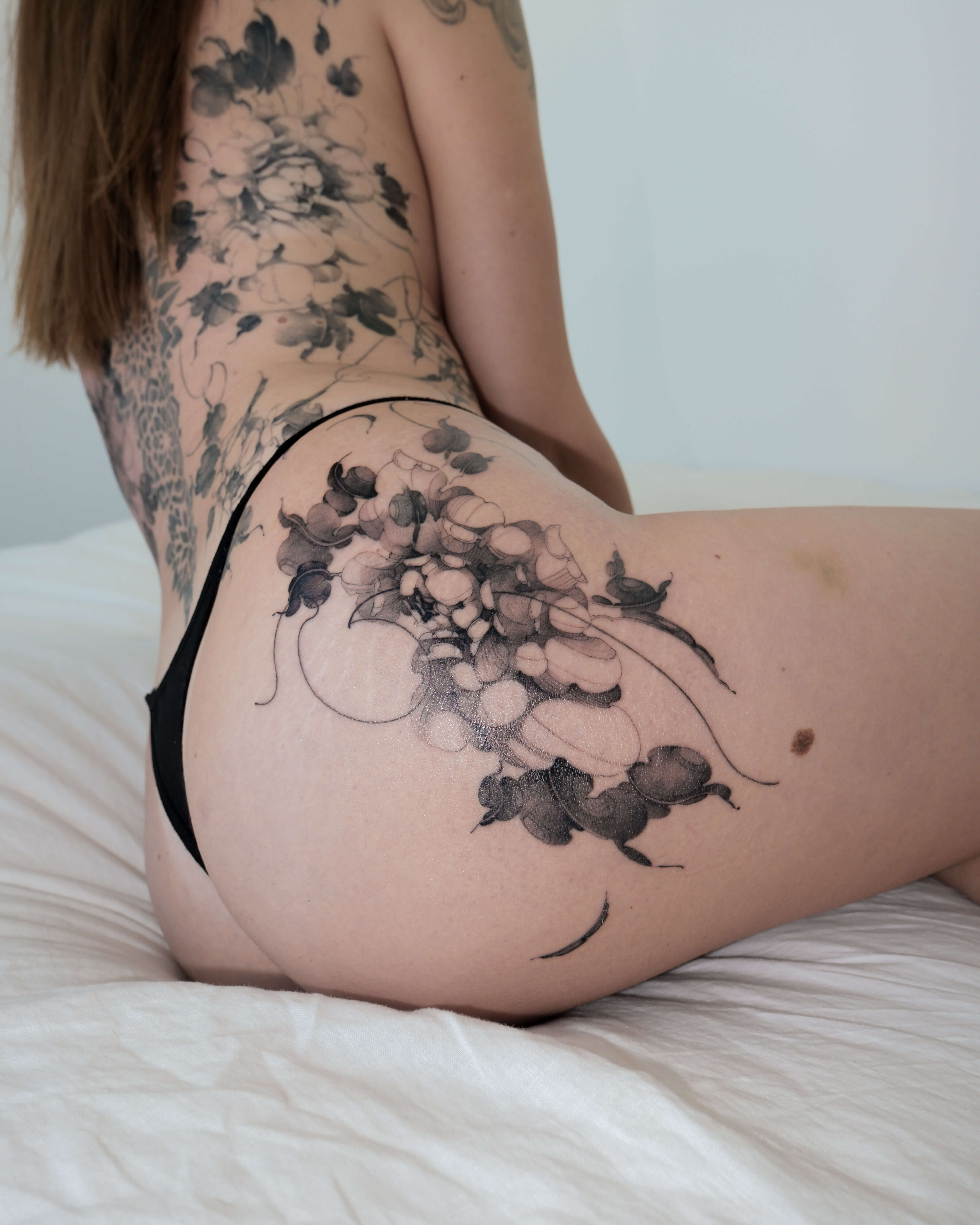
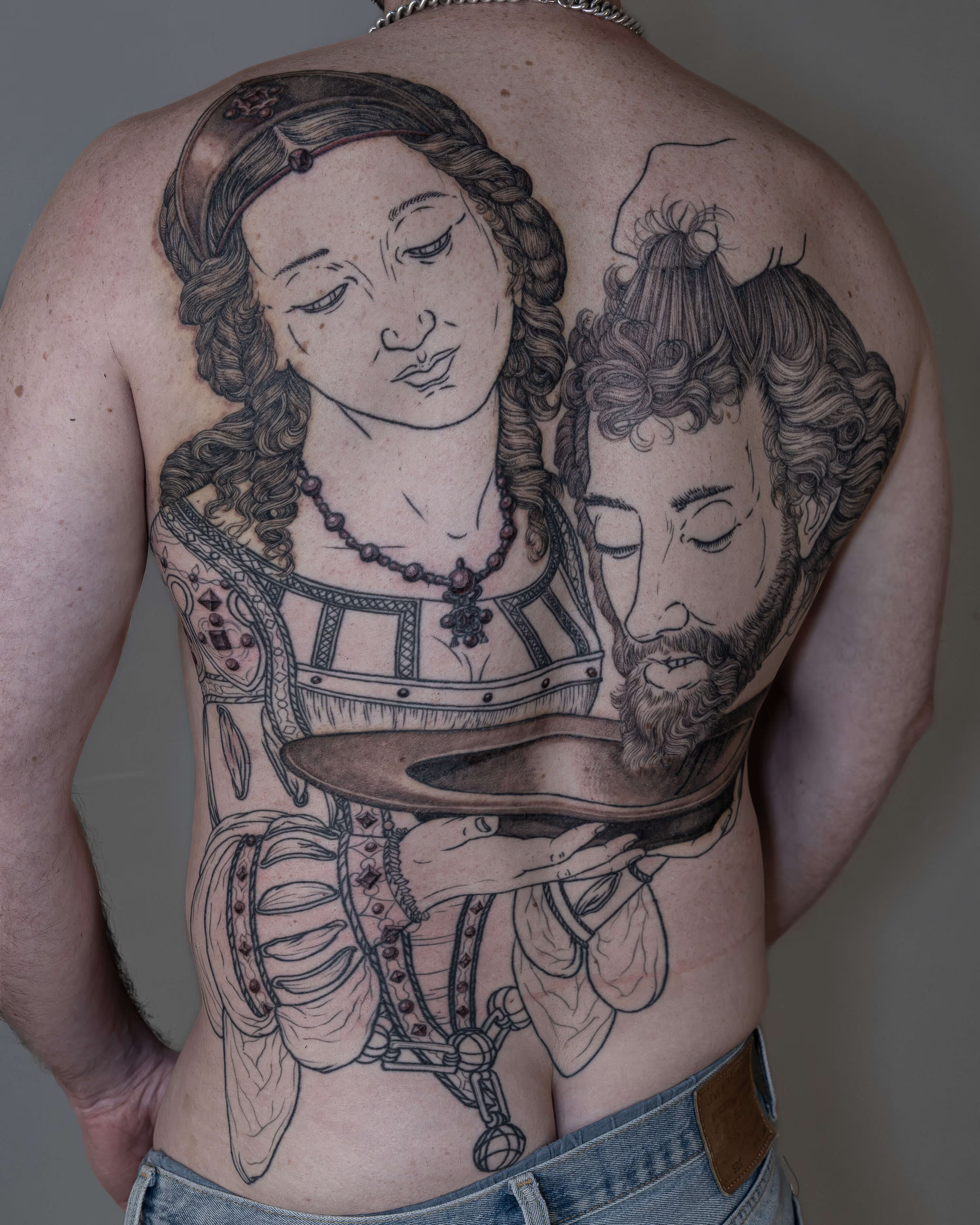
An ornamental tattoo treats the body as a surface to be adorned — decorated with patterns, forms, and visual elements drawn from the ornamental traditions of human material culture. The word "ornamental" covers an enormous range of visual traditions: the intricate geometric patterns of Islamic art, the floral scrollwork of baroque architecture, the mandala-derived designs of South Asian jewelry, the symmetrical botanical patterns of Art Nouveau.
What unites these diverse traditions is the principle of adornment: the idea that the decorative enriches rather than merely covers, that beauty has value beyond representation or symbolism, that a surface made beautiful through ornament achieves something that a plain surface cannot.
What does an ornamental tattoo mean? Ornamental tattoo meaning operates on two levels. At the symbolic level, specific ornamental motifs carry specific cultural meanings — the lotus in South Asian ornamental tradition, the evil eye in Mediterranean cultures, the sacred geometry forms of Islamic art. At the aesthetic level, the ornamental tattoo carries the meaning of adornment itself: the idea that the body is worth decorating, that beauty is a value worth expressing through permanent marks.
Ornamental tattoo designs are built from repeating patterns, symmetrical compositions, interlocking forms, and the decorative elements of specific ornamental traditions. The best ornamental tattoos are compositionally sophisticated — designed with genuine understanding of how ornamental forms create visual rhythm, balance, and elegance across body surfaces.


Ornamental Tattoo Designs and Ideas
Ornamental tattooing encompasses a rich range of design traditions. Here are the most compelling directions:
Ornamental Tattoo Meaning and Symbolism
Different ornamental traditions carry different symbolic vocabularies. Mandala-derived ornamental forms carry associations of spiritual wholeness and cosmic order. Evil eye motifs carry protective associations across Mediterranean and Middle Eastern cultures. Lotus forms carry spiritual significance in South and East Asian traditions. Floral ornamental patterns carry associations of beauty, growth, and natural abundance. Understanding the specific symbolic content of ornamental motifs allows for designs that are both visually beautiful and symbolically meaningful.
Traditional Ornamental Tattoos
Traditional ornamental tattooing draws on the longest-established ornamental traditions in human visual culture — the geometric patterns of Islamic art, the floral scrollwork of classical architecture, the symmetrical botanical designs of historical textile traditions. These designs carry centuries of accumulated visual wisdom: compositional principles refined across generations of craftspeople who understood how to make surfaces beautiful.
Ornamental Tattoo Style: Jewelry-Inspired Designs
Jewelry-inspired ornamental tattoos treat the body as a surface for permanent adornment — designs that evoke the visual character of necklaces, bracelets, rings, and body jewelry rendered in ink. These pieces occupy the intersection of fashion and tattoo art, creating a permanent version of the decorated body that precious objects achieve temporarily.
Ornamental Designs for Collarbone and Sternum
The collarbone and sternum are the most popular placements for ornamental tattoos, and with good reason: these placements suit the symmetrical, radiating compositions that ornamental design excels at. An ornamental sternum piece — radiating outward from the center of the chest with bilateral symmetry — is one of the most visually powerful ornamental compositions possible.
Ornamental Tattoo Meanings by Design
The meaning of an ornamental tattoo is carried by both its specific motifs and its compositional character. Here are the most significant ornamental meanings:
Lotus ornamental forms: Spiritual growth, purity, the capacity to rise through adversity. Among the most sacred forms in South and East Asian ornamental traditions.
Evil eye (Nazar) ornamental designs: Protection from malevolent forces. One of the most ancient and widely distributed protective symbols in human visual culture, found across Mediterranean, Middle Eastern, and South Asian traditions.
Mandala ornamental forms: Wholeness, balance, the cosmos. Mandala-derived ornamental designs carry the full symbolic weight of the mandala tradition. See our mandala guide for more on this specific tradition.
Floral ornamental patterns: Beauty, growth, the abundance of natural forms. Botanical ornamental design has been a constant in human decorative arts across virtually every culture.
Geometric ornamental patterns: Mathematical perfection, sacred order, the structured beauty of universal forms. See our geometric tattoo guide for the closely related tradition.
How Long Does an Ornamental Tattoo Take?
Ornamental tattoos vary significantly in session length depending on complexity and scale. A focused ornamental piece — a collarbone design, a wrist ornamental band — may be completed in 2–4 hours. A medium ornamental composition on the sternum, back, or arm typically requires 6–10 hours. Large-scale ornamental body suits — the most ambitious application of the style — may require many sessions spanning months or years.


Ornamental Tattoo Placement Guide
Collarbone and chest: The most popular ornamental placement. The horizontal line of the collarbone and the broad surface of the chest suit the symmetrical, radiating compositions of ornamental design perfectly. Ornamental tattoo artist NYC collectors most frequently choose this placement for their first serious ornamental piece.
Sternum: A symmetrical ornamental composition centered on the sternum — radiating outward across the chest — is one of the most visually extraordinary tattoo placements possible. The bilateral symmetry of the chest suits ornamental design's compositional logic at its most natural.
Forearm and wrist: Ornamental bands and sleeve-style compositions on the forearm and wrist suit the style's repeating patterns and symmetrical forms. These are highly visible placements where ornamental work reads with particular clarity.
Spine: Vertical ornamental compositions running the length of the spine are among the most visually striking ornamental pieces. The bilateral symmetry of spine placement suits ornamental design's characteristic vertical and radial compositions.
Shoulder and upper arm: Ornamental compositions that wrap around the shoulder suit the style's characteristic flowing, symmetrical patterns. Cap-style ornamental shoulder pieces are among the most requested ornamental compositions.
Ornamental Tattoo Artists at Monolith Studio

Ornamental vs. Mandala Tattoos: What's the Difference?
Mandala tattooing is a specific ornamental tradition characterized by radial symmetry. Ornamental tattooing is the broader category. See our mandala tattoo guide, geometric tattoo guide, and fine line tattoo guide for related traditions. Browse all tattoo styles at Monolith Studio.
Ornamental Tattoo Studio in Brooklyn, NYC — Monolith Studio
For collectors searching for the best ornamental tattoo studio in New York City, Monolith Studio in Brooklyn brings together artists whose knowledge of ornamental traditions and technical precision suits the style’s most ambitious applications. Located at 77 Washington Avenue, Brooklyn, NYC 11205, every ornamental piece at Monolith is fully custom — drawing on genuine knowledge of ornamental visual traditions from South Asian jewelry design to Mediterranean protective symbolism to classical architectural ornament.
What sets Monolith’s ornamental work apart:
- Genuine knowledge of ornamental traditions across multiple cultures
- Specialists in sternum, collarbone, spine, and full-body ornamental compositions
- Both symbolic ornamental designs and purely aesthetic decorative work
- Ornamental tattoo artist NYC with established reputation for precision and visual intelligence
- Brooklyn studio — accessible from all five boroughs and Manhattan
Looking for the best ornamental tattoo artist in NYC? Book your consultation at Monolith Studio and let’s adorn.

Commonly asked questions about Ornamental Tattoos:
- What is an ornamental tattoo?
An ornamental tattoo is a decorative style of tattoo that emphasizes intricate patterns, geometric shapes, and symmetrical designs. It is more about enhancing the body’s natural contours with beautiful and detailed motifs rather than depicting specific objects or scenes. - What does an ornamental tattoo mean?
The meaning of an ornamental tattoo can vary depending on the design and cultural influences. Often, these tattoos carry symbolic meanings related to spirituality, protection, and personal expression. For example, mandalas may symbolize balance and harmony, while geometric patterns can represent order and interconnectedness. - Why are ornamental tattoos popular?
Ornamental tattoos are popular for their versatility, visual appeal, and timeless nature. They can be adapted to fit any part of the body and tailored to reflect the wearer’s personal style or beliefs. Additionally, their focus on patterns and beauty makes them a form of wearable art that transcends passing trends.

Ornamental tattooing is one of the oldest human impulses made permanent — the desire to adorn the body with beauty, to wear decoration as a form of identity and intention. At Monolith Studio in Brooklyn, ornamental tattooing is practiced by artists who understand this tradition deeply. Book a consultation and let’s create something beautiful.
FAQ
An ornamental tattoo is a decorative style that emphasizes intricate patterns, symmetrical designs, and jewelry-like compositions. Drawing from Mandala, Polynesian, Mehndi, Celtic knotwork, and sacred geometry traditions, ornamental tattoos are designed to enhance the body's natural form rather than depict specific subjects. The style is defined by its decorative intent — these tattoos are meant to be worn like permanent jewelry on the skin.
The meaning of an ornamental tattoo varies depending on the specific design and cultural influences incorporated. In many traditions, ornamental patterns carry spiritual or protective significance — mandalas represent balance and unity, geometric forms can symbolize the underlying order of the universe, and Polynesian patterns often encode personal identity and lineage. For many collectors, ornamental tattoos are chosen as much for their aesthetic impact as for any fixed symbolic meaning.
Session length for ornamental tattoos varies significantly based on design complexity and scale. A detailed chest or back piece may require multiple sessions of several hours each. The precision required for symmetrical ornamental patterns — where small errors compound outward through the design — means this work cannot be rushed without compromising quality. Detailed ornamental tattoos are among the most technically demanding work in contemporary tattooing.
Session length for ornamental tattoos varies significantly based on design complexity and scale. A detailed chest or back piece may require multiple sessions of several hours each. The precision required for symmetrical ornamental patterns — where small errors compound outward through the design — means this work cannot be rushed without compromising quality. Detailed ornamental tattoos are among the most technically demanding work in contemporary tattooing.
Ornamental tattoos age well when executed with strong linework, appropriate ink density, and placed in areas that remain relatively stable over time. The geometric and symmetrical nature of ornamental designs means that small changes in line quality over time are more visible than in organic styles — which is why finding a specialist with proven healed work is especially important for ornamental tattooing.
Ornamental tattoo pricing at Monolith Studio in Brooklyn depends on design complexity, size, and placement. Each ornamental piece is fully custom — designed to complement the individual collector's body proportions and placement. Visit monolithstudio.com/book-experience for a personalized quote.
George Kalodimas is the ornamental, geometric, and blackwork specialist at Monolith Studio in Brooklyn. His work combines a deep mastery of symmetry, pattern, and sacred geometry with a refined compositional sensibility — making him one of the most sought-after ornamental tattoo artists in New York. Kaylee Ruiz also works in ornamental and fine line decorative styles. Explore their portfolios at monolithstudio.com/artists.
Mandala tattoos are a specific type of ornamental tattoo — circular in structure, radiating from a central point, and rooted in Hindu and Buddhist symbolism. Ornamental tattoos are the broader category that includes mandalas but also encompasses other decorative approaches: lace patterns, floral ornaments, Polynesian compositions, geometric linework, and jewelry-inspired designs. All mandala tattoos are ornamental, but not all ornamental tattoos are mandalas.
Artists


Related Styles
.jpg)