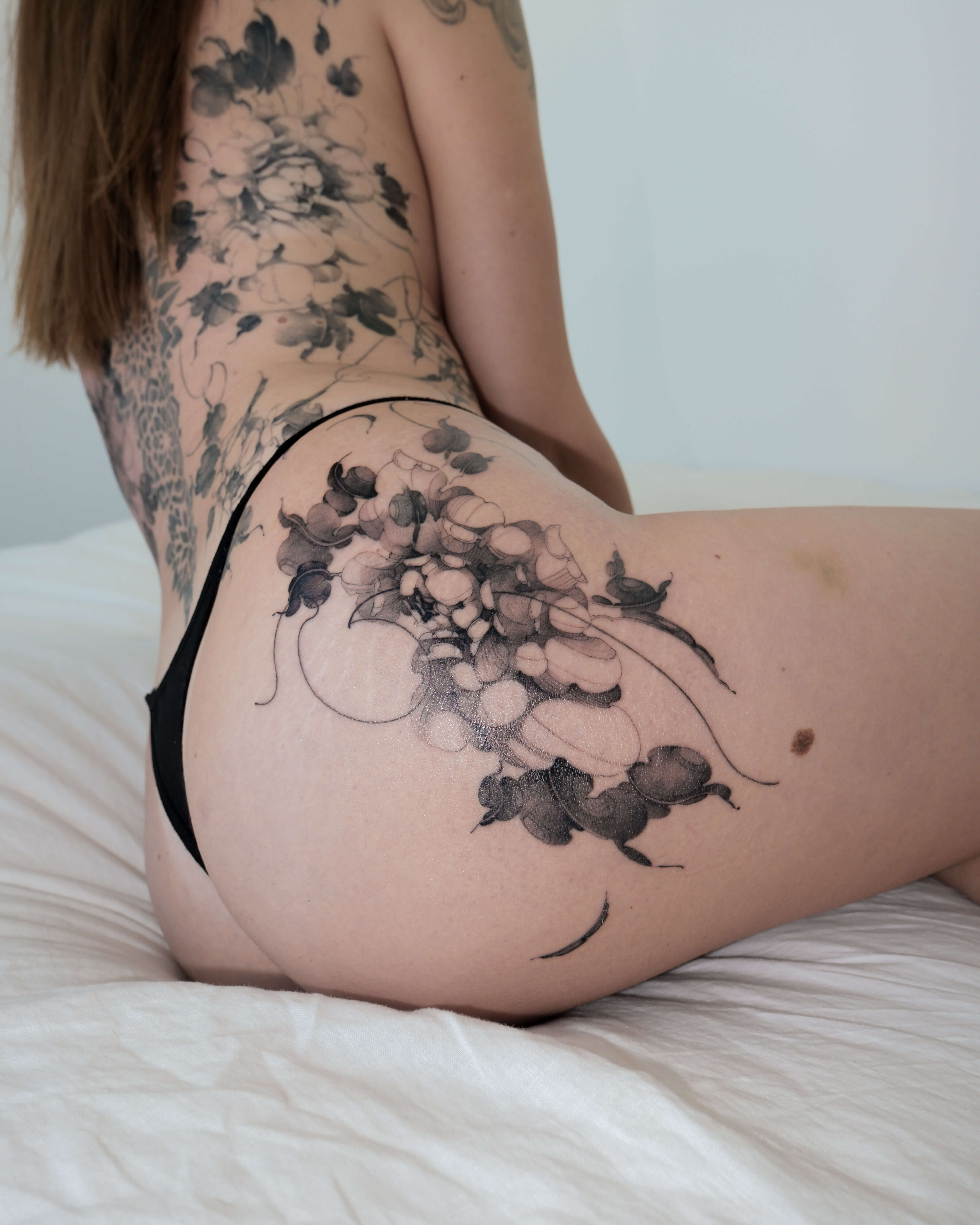
Black and Grey Realism Tattoo
What is a Black and Grey Realism Tattoo?

What is a Black and Grey Realism Tattoo?
Black and grey realism traces its roots to the Chicano tattoo culture of 1970s Los Angeles, where incarcerated artists used makeshift machines and limited materials — often just black ink diluted with water — to create stunning portraits and religious imagery. What began as a necessity evolved into one of the most respected and technically demanding tattoo styles in the world.
The beauty of black and grey realism lies in its restraint. By removing color from the equation, the artist forces the viewer to focus on composition, light, shadow, and texture. Every element must be rendered through tonal variation alone, demanding an extraordinary understanding of how light interacts with form.
Why does black and grey realism age so well? Color tattoos are subject to fading and shifting over time — reds can turn orange, greens may fade to blue, and yellows often disappear entirely. Black and grey work tends to age gracefully. The tonal range may soften slightly over the years, but the overall composition and readability of the tattoo remains intact for decades when properly executed and cared for.
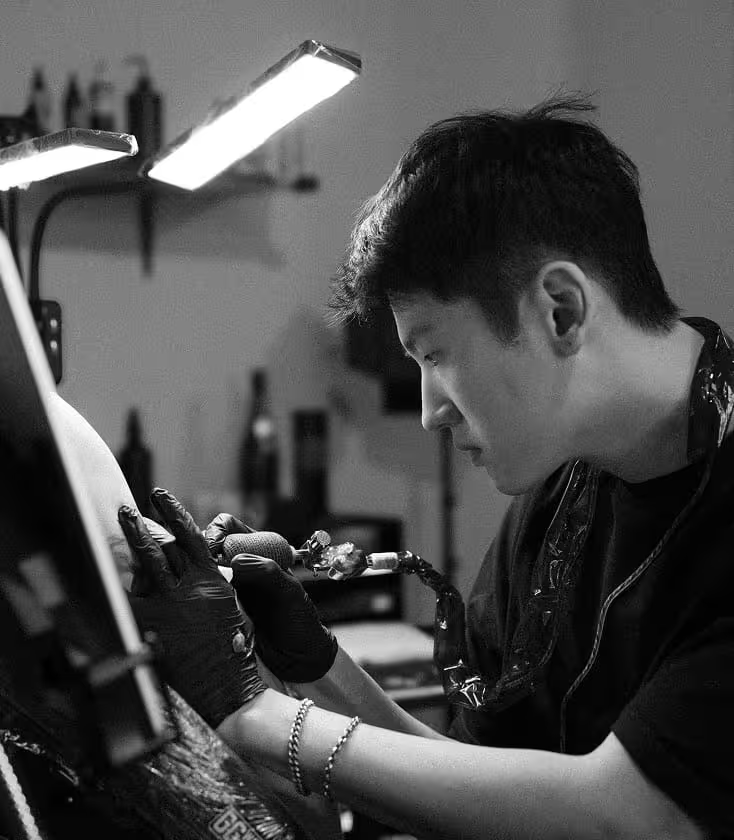
Black and grey realism artists at Monolith Studio: The studio's black and grey realism work is led by Stevo, Oksu, and DIM. Each brings deep mastery of tonal gradients, smooth shading, and the photographic precision this style demands — taking on portraits, wildlife, religious imagery, and full sleeve compositions in the Chicano-rooted tradition that defines the discipline.

Popular Black and Grey Realism Subjects
Portrait Tattoos
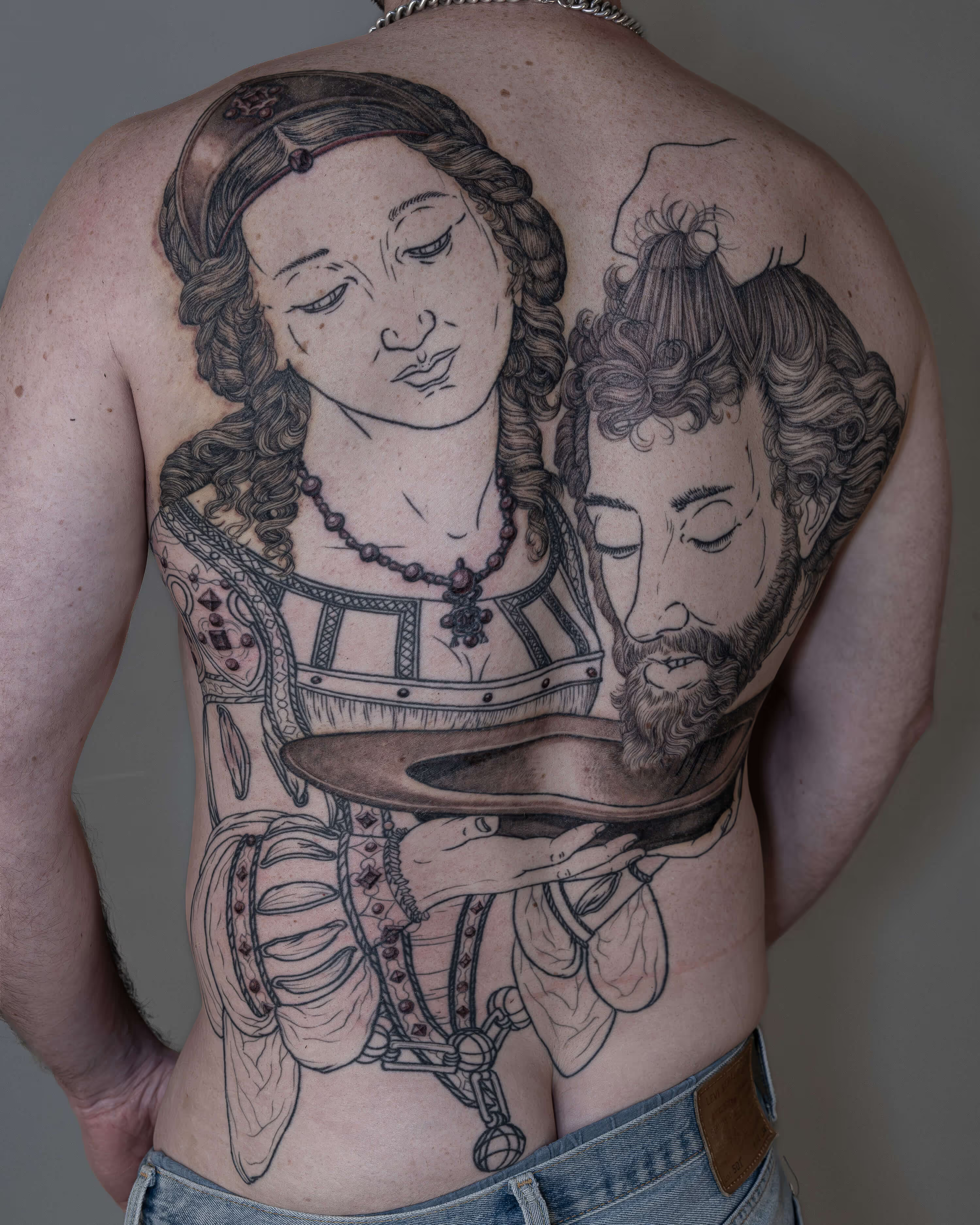
Portraits are the most iconic application of black and grey realism. Whether depicting a loved one, a cultural icon, or a historical figure, portrait tattoos demand the highest level of technical skill. The human face is incredibly complex, and even minor inaccuracies in proportion or shading can make a portrait look wrong. Memorial portraits — tattoos honoring deceased family members — are among the most meaningful commissions an artist can receive.
Animal and Wildlife Tattoos
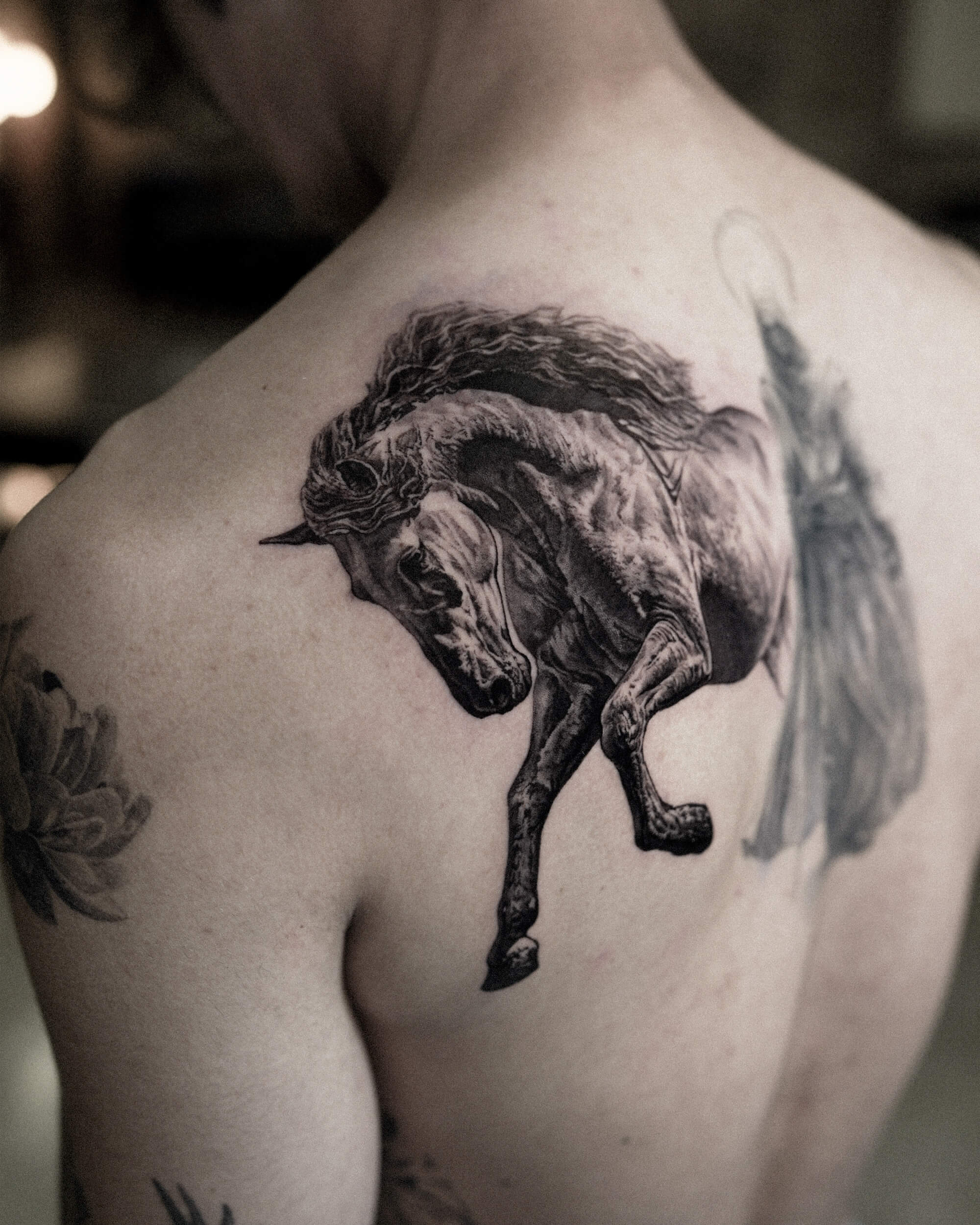
Animal portraits and wildlife scenes are another natural fit. The style excels at rendering fur texture, feather detail, scales, and the reflective quality of animal eyes. Popular subjects include lions, wolves, eagles, elephants, bears, and domestic pets whose owners want a lifelike memorial tattoo.
Skull and Dark Art
Skulls have been a cornerstone of black and grey tattooing since the style's earliest days. The human skull provides an ideal subject for exploring light, shadow, and texture in greyscale — from anatomically accurate renderings to stylized interpretations incorporating roses, clocks, or religious imagery.
Rose and Floral Designs
In the hands of a skilled realism artist, roses take on an entirely new dimension. Photorealistic petal textures, dewdrops catching light, thorns with visible surface detail — these elements transform a traditional subject into a contemporary masterpiece.
Religious and Spiritual Imagery
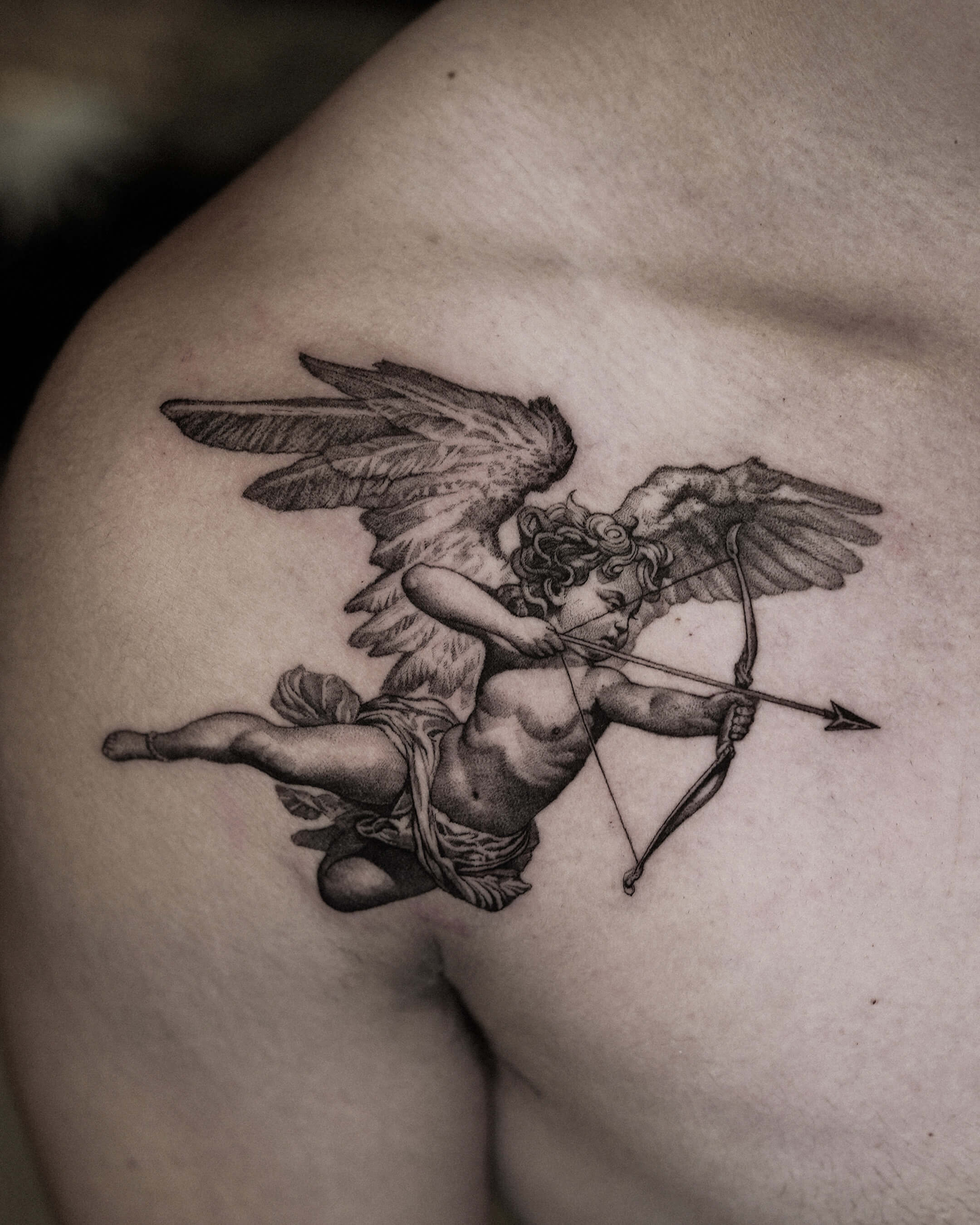
From the style's Chicano origins, religious imagery has been central to black and grey tattooing. Depictions of the Virgin Mary, Christ, praying hands, rosaries, and angels remain deeply popular, with the monochromatic palette lending solemnity and gravitas.
Techniques Behind the Style
Smooth Shading and Gradient Work: Artists use whip shading or pendulum shading, where the machine is moved in a sweeping motion to create soft gradients. Magnum needles are the workhorses of black and grey realism, allowing artists to pack large areas with consistent tone while maintaining soft transitions.
Ink Dilution and Wash Technique: Traditional artists create their own wash — a series of ink dilutions ranging from nearly pure black to an almost transparent grey. A typical setup might include five to eight different wash cups, each progressively lighter.
Contrast and Composition: Without bold darks anchoring the composition, a tattoo can appear washed out once healed. Skilled artists understand the importance of a full tonal range — from rich saturated blacks in the deepest shadows to skin breaks that serve as the brightest highlights.
Black and Grey vs. Color Realism
Black and grey tends to age better, offers a more classic aesthetic, and works exceptionally well for subjects that benefit from dramatic light-and-shadow treatment. Color realism excels at capturing the vibrancy of nature. Some artists prefer a hybrid approach, using predominantly black and grey with selective color accents. See our realism tattoo guide and micro realism guide for related styles.
Black and Grey Realism Sleeve Ideas
Themed compositions that tell a story — a timeline of life events, a journey through nature, or a tribute to cultural heritage. These sleeves combine multiple subjects unified by consistent background shading and compositional flow.
Portrait collages featuring multiple faces arranged in a visually harmonious layout. Family tribute sleeves might incorporate portraits of grandparents, parents, and children connected by shared background elements like clouds, smoke, or abstract shading.
Nature and landscape wraps that use the arm's cylindrical shape to create panoramic scenes — mountain ranges, forest corridors, ocean vistas, or desert landscapes rendered in photorealistic detail.
Dark art and horror compositions combining skulls, anatomical elements, gothic architecture, and macabre imagery in dramatic high-contrast arrangements.
Placement Considerations

The History of Black and Grey Tattooing
Black and grey realism evolved from the Chicano tattoo tradition of the American Southwest. What began as prison art using improvised tools became one of tattooing's most sophisticated disciplines. For related styles, see our realism tattoo guide, micro realism guide, and fine line tattoo guide. Browse all tattoo styles at Monolith Studio.

Black and Grey Realism Studio in Brooklyn, NYC — Monolith Studio
At Monolith Studio in Brooklyn, black and grey realism is practiced by artists who bring the highest level of technical mastery to every piece. Located at 77 Washington Avenue, Brooklyn, NYC 11205, every black and grey commission is fully custom — designed and executed to capture lifelike detail with the precision the style demands.
What sets Monolith's black and grey realism apart:
- Artists with deep mastery of tonal gradients and smooth shading
- Full custom designs from your reference — never from flash
- Specialists in portraits, wildlife, skulls, florals, and sleeve compositions
- Memorial portrait commissions handled with care and discretion
- Brooklyn studio — accessible from all five boroughs and Manhattan
Looking for the best black and grey realism tattoo artist in NYC? Book your consultation at Monolith Studio and let's begin.

Frequently Asked Questions
- How long do black and grey realism tattoos last?
With proper care and sun protection, black and grey realism tattoos maintain their quality for decades. The tonal range may soften slightly over time, but the overall composition remains striking far longer than most color work. - Do black and grey tattoos hurt more than other styles?
Pain levels relate more to placement and session length than style. The extensive shading work can make sessions feel longer, as the same area may be worked over multiple times to build up tonal layers. - How much does a black and grey realism tattoo cost?
Pricing depends on size, complexity, and session length. Realism is among the most technically demanding styles, and experienced artists typically command premium rates. Contact Monolith Studio for a personalized quote. - Can a color tattoo be converted to black and grey?
In some cases, faded or unwanted color tattoos can be reworked into black and grey pieces. This is best discussed during an in-person consultation.
Black and grey realism is where technical mastery meets emotional depth — a style that transforms skin into living photographs through nothing more than black ink and extraordinary skill. At Monolith Studio in Brooklyn, this tradition is practiced at the highest level. Book a consultation and let's create something timeless.
FAQ
A black and grey realism tattoo uses only black ink — diluted to varying densities of grey — to create photorealistic images on skin. By removing color from the equation, the artist relies entirely on tonal variation, smooth gradients, and carefully controlled contrast to achieve depth, dimension, and lifelike detail. The style traces its roots to 1970s Chicano tattoo culture in Los Angeles, where incarcerated artists used limited materials to create stunning portraits and religious imagery. Today, black and grey realism is one of the most respected and technically demanding disciplines in contemporary tattooing.
The fundamental difference is the palette. Black and grey realism uses only black ink in varying dilutions, while color realism employs the full pigment spectrum. Black and grey tends to age more gracefully because there is no color to fade or shift over time — the tonal composition remains intact for decades. Color realism captures vibrancy and chromatic accuracy that monochrome cannot, but demands more attentive long-term care. Some artists prefer a hybrid approach, working predominantly in black and grey with selective color accents — a red rose in an otherwise greyscale composition, for example.
Black and grey realism is among the most time-intensive tattoo styles. A small piece (3–4 inches) typically requires 3–5 hours. A medium forearm or upper arm composition takes 6–12 hours, often spread across two or three sessions. A large back, thigh, or full sleeve project can require 30–60+ hours over many months. Sessions are typically capped at 4–6 hours to maintain the artist's precision and the client's skin condition — the layered shading work cannot be rushed without compromising the smooth tonal transitions that define the style.
Black and grey realism is among the most time-intensive tattoo styles. A small piece (3–4 inches) typically requires 3–5 hours. A medium forearm or upper arm composition takes 6–12 hours, often spread across two or three sessions. A large back, thigh, or full sleeve project can require 30–60+ hours over many months. Sessions are typically capped at 4–6 hours to maintain the artist's precision and the client's skin condition — the layered shading work cannot be rushed without compromising the smooth tonal transitions that define the style.
Pain levels relate more to placement, session length, and individual sensitivity than to the style itself. However, the extensive shading work that defines black and grey realism can make sessions feel longer and more intense — the same area may be worked over multiple times to build up tonal layers, which compounds discomfort. Long sessions on sensitive areas like the ribs, sternum, or inner arm are typically the most demanding. Many collectors find that the result — a tattoo of extraordinary depth and longevity — fully justifies the experience.
Black and grey realism excels with subjects that benefit from dramatic light and shadow rendering. Portraits are the most iconic application — the human face's complex tonal structure is ideally suited to greyscale rendering. Wildlife and animal portraits work exceptionally well, with the style capturing fur texture, feather detail, and the reflective quality of animal eyes. Skulls have been a cornerstone subject since the style's earliest days. Religious imagery — the Virgin Mary, praying hands, rosaries, angels — carries the weight of the style's Chicano heritage. Roses and floral subjects gain dimensional depth through realistic petal rendering and dewdrop highlights.
In some cases, yes — faded or unwanted color tattoos can be reworked into black and grey realism pieces, but the process is technically demanding. The new design must work with the existing pigment underneath; lighter colors that have faded significantly are easier to incorporate than dense, saturated dark colors. Laser lightening sessions before the cover-up work begins can dramatically improve results by reducing the density of the original ink. The best approach is an in-person consultation, where the artist can assess the existing tattoo and develop a custom strategy.
Stevo, Oksu, and DIM are Monolith Studio's black and grey realism specialists in Brooklyn, NYC. Each brings deep mastery of tonal gradients, smooth shading, and the photographic precision this style demands. They take on portraits, wildlife, religious imagery, and full sleeve compositions in the Chicano-rooted tradition that defines the discipline. Explore their portfolios at monolithstudio.com/artists.
Artists

.avif)


Related Styles
.jpg)