Engraving Tattoo
What is an Engraving Tattoo?
What is an Engraving Tattoo?
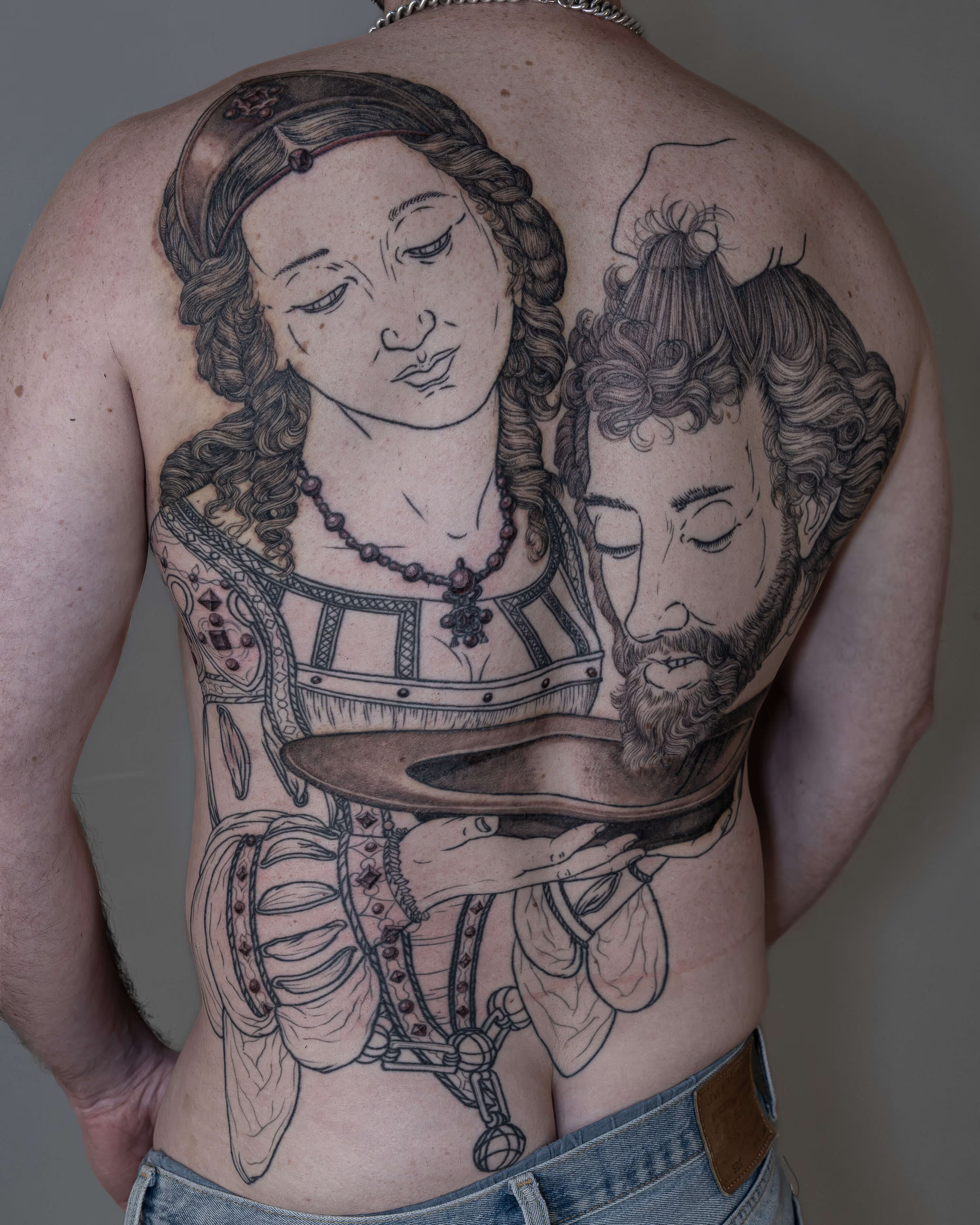
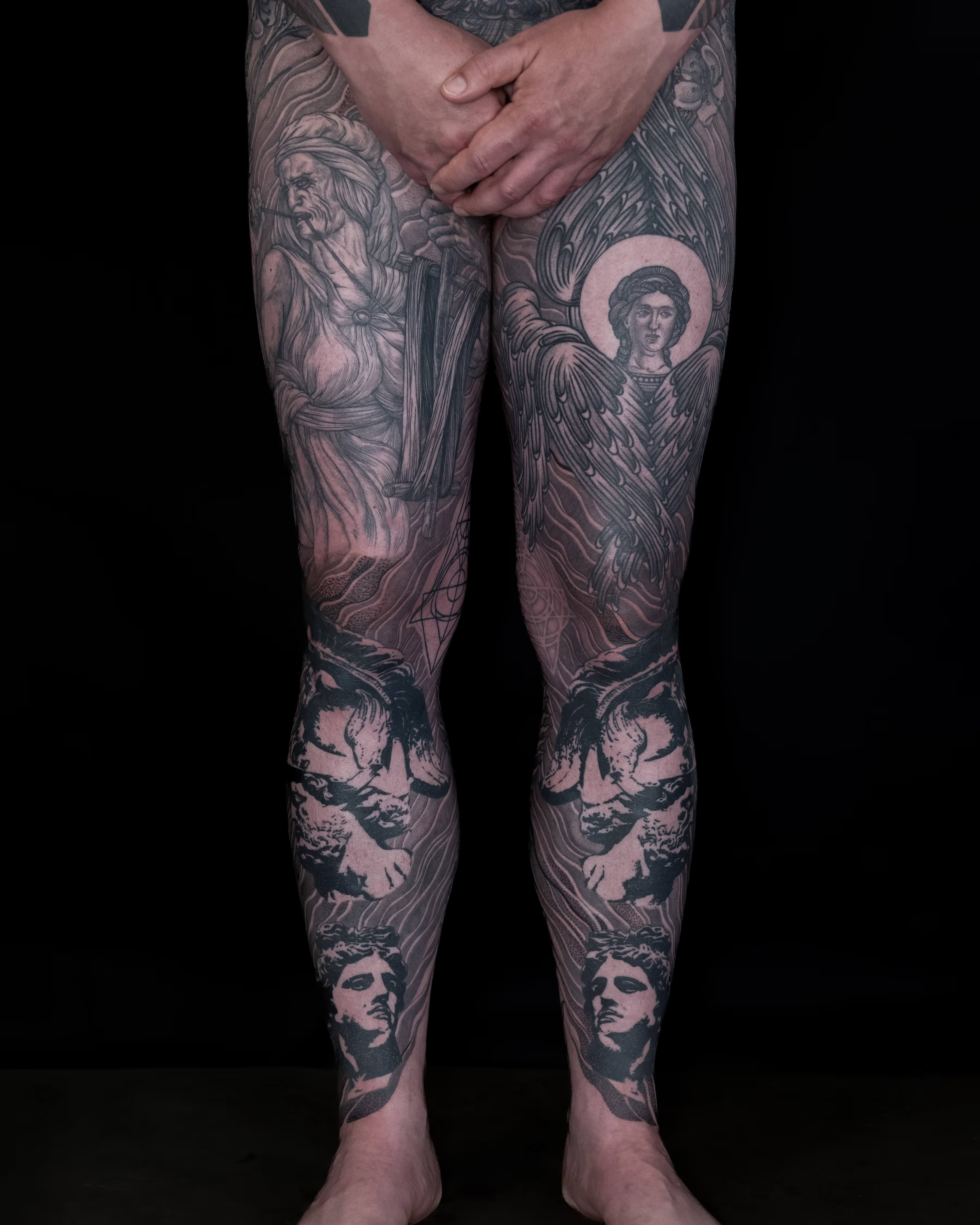
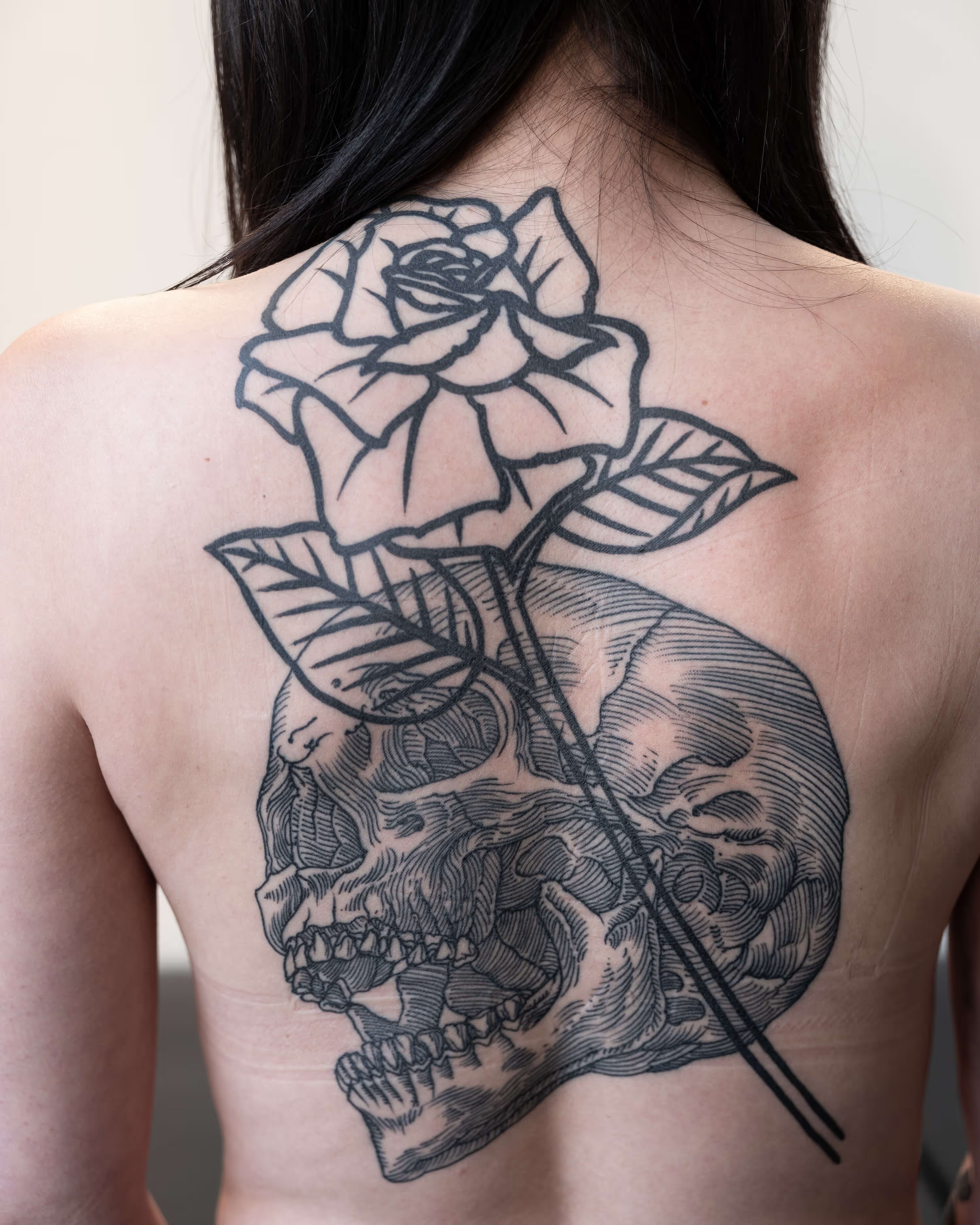
An engraving tattoo is a style of tattooing that replicates the visual language of historical printmaking techniques — woodcut prints, copper plate engravings, etching, and intaglio. These methods, developed between the 13th and 17th centuries, produced images through incised lines, dense hatching patterns, and extreme contrast between black and white. In tattoo form, the result is a piece that looks as if it was carved or pressed rather than drawn — bold, graphic, and deeply historical.
The style draws primarily from three major traditions:
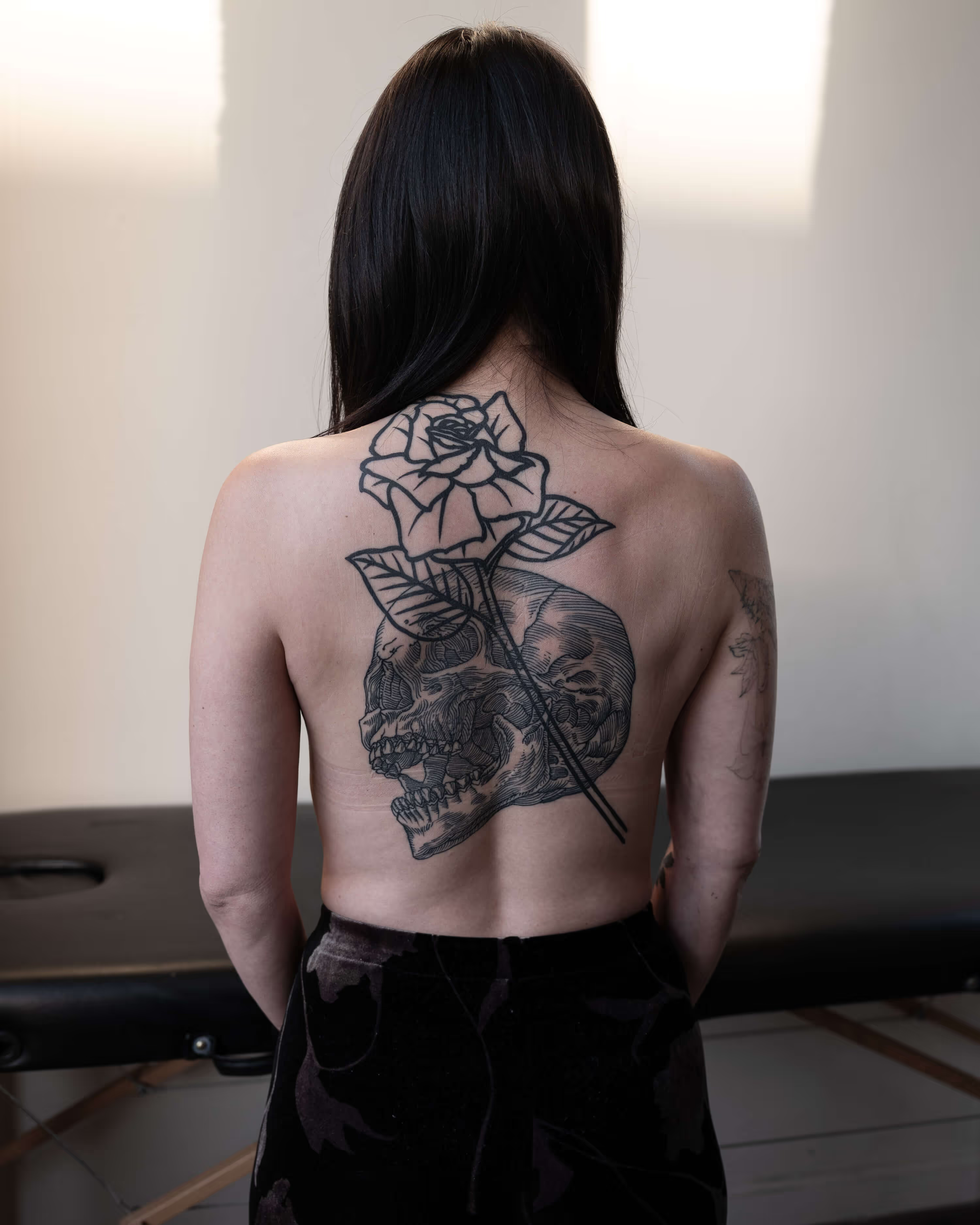
Woodcut (Woodblock printing): The oldest form, where an image is carved into a wooden block and inked for printing. Woodcut tattoos are characterized by their bold outlines, stark contrast, and the deliberate roughness of the carved line. Medieval woodcut imagery — knights, monsters, religious iconography, botanical illustrations — is a primary reference for this style.
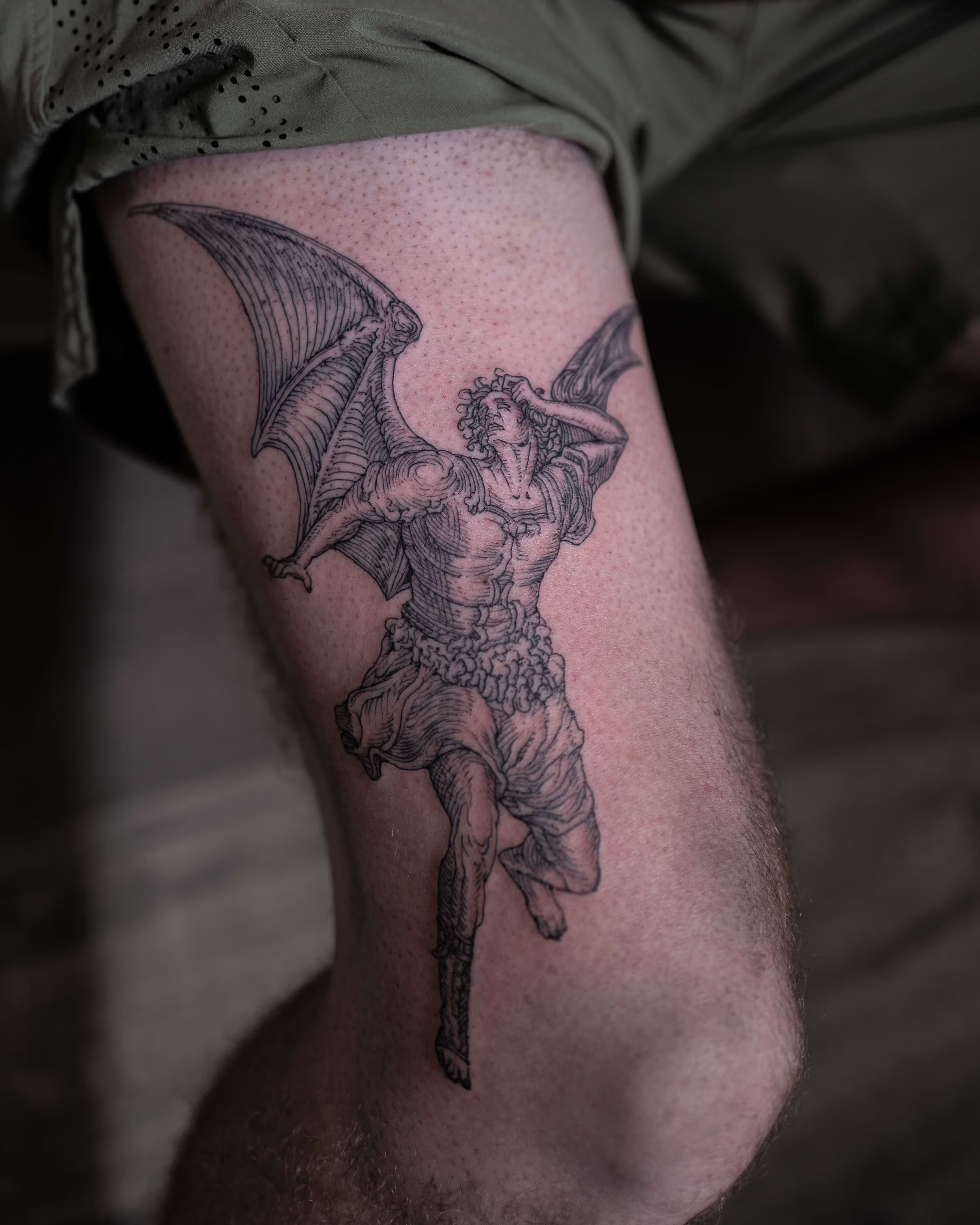
Copper engraving and etching: More refined than woodcut, copper plate engraving produces extraordinarily fine lines and dense cross-hatching that creates the illusion of shadow and volume without solid black fills. Etching tattoos capture the delicate, almost mechanical precision of this tradition.
Renaissance and Baroque printmaking: Artists like Albrecht Dürer, Rembrandt, and Francisco Goya pushed printmaking to its expressive limits. Their influence — the psychological intensity, the mastery of light and shadow through line — is central to what makes engraving-style tattoos so compelling today.
What is a Woodcut Tattoo?
A woodcut tattoo directly references the medieval and early modern woodblock printing tradition. These designs are characterized by their bold, uneven outlines, strong black-and-white contrast, simplified forms, and an intentional roughness that feels hewn rather than drawn. Woodcut tattoos often feature medieval imagery — mythological creatures, heraldic symbols, religious scenes, botanical prints, or figures from illuminated manuscripts — rendered in the graphic, stark style of 15th and 16th century European printmaking.
The woodcut tattoo has surged in popularity because it occupies a unique visual space — it feels simultaneously ancient and completely contemporary. Nothing else in modern tattooing looks quite like it.
Engraving Tattoo Designs and Ideas
The engraving tattoo style encompasses an extraordinarily wide range of subjects — almost anything can be rendered in the hatching and linework language of historical printmaking. Here are the strongest design directions:
Medieval Woodcut Tattoo
Medieval woodcut imagery draws on the visual culture of 13th–16th century Europe — knights in armor, heraldic beasts, grotesque monsters, death and mortality iconography (memento mori), religious figures, and dense botanical illustrations. The medieval woodcut tattoo has a raw, almost folk-art quality that makes it unlike any other tattoo style. The imperfections and deliberate roughness of the carved line are part of its visual power.
Renaissance Engraving Tattoo
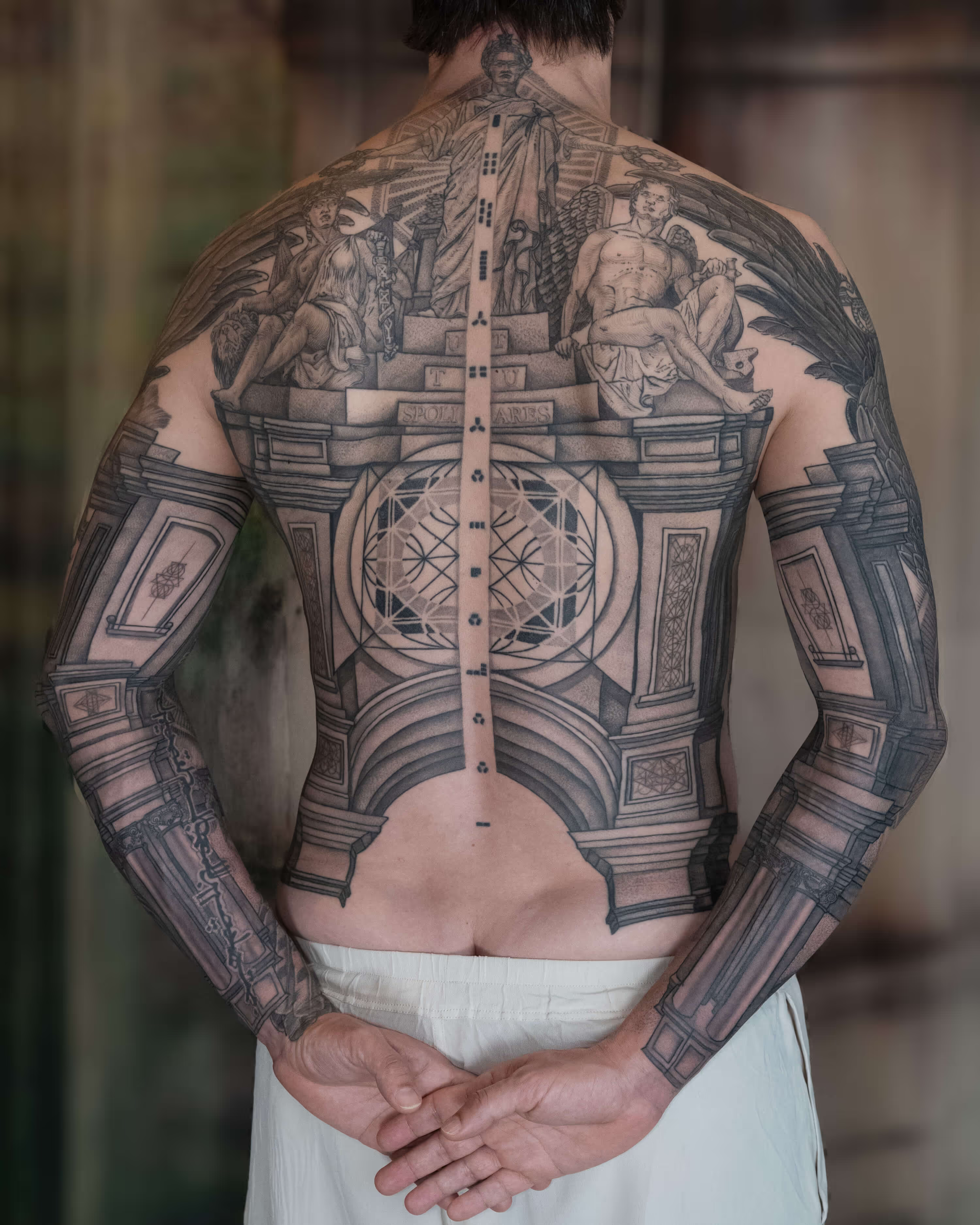
Renaissance engraving tattoos draw on the masterworks of Albrecht Dürer, Lucas Cranach, and their contemporaries — mythological scenes, anatomical studies, portraits, and the complex allegorical imagery of the period. The technical precision of Renaissance engraving allows for extraordinary detail and tonal range within a purely linear vocabulary. These tattoos feel like artifacts from another era, worn on contemporary skin.
Etching Tattoo
Etching tattoos replicate the delicate, acid-bitten line of the intaglio printing tradition. Where woodcut tends toward bold simplicity, etching allows for extraordinary fineness — layers of parallel and cross-hatched lines building tone and depth with almost mechanical precision. The result is a tattoo that rewards close inspection, revealing more detail the longer you look.
Baroque Tattoo
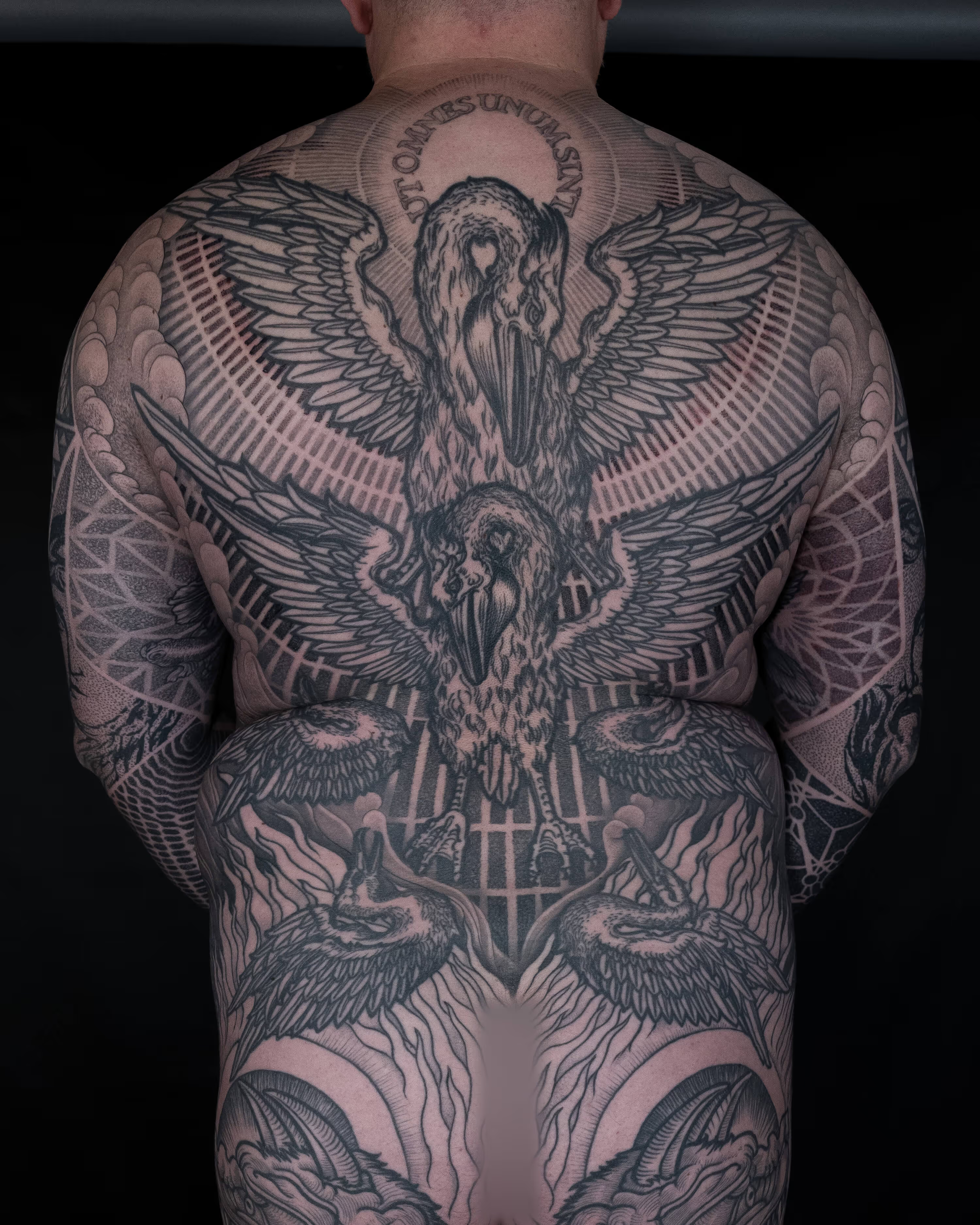
Baroque tattoos draw on the dramatic, high-contrast visual language of 17th century art — the chiaroscuro of Rembrandt, the expressive etchings of Goya, the intense psychological depth of Baroque religious imagery. These designs tend to be large, complex, and emotionally charged. A Baroque engraving tattoo is not subtle — it commands attention.
Medieval Dragon Tattoo — Engraving Style
One of the most powerful subjects for the engraving style is the medieval dragon — rendered not as a modern fantasy creature, but as it appeared in medieval bestiaries and woodcut prints: strange, angular, part-reptile and part-bird, surrounded by dense hatching that suggests scale and wing texture. A medieval dragon tattoo in engraving style carries the full weight of centuries of mythological tradition.
Gothic Engraving Tattoo
Gothic engraving tattoos draw on the darkest end of the medieval visual tradition — death iconography, skeletal figures, danse macabre imagery, gargoyles and grotesques, gothic architectural details. The combination of the engraving style's stark linework and gothic subject matter produces tattoos of extraordinary intensity and visual weight.
The Technique Behind Engraving Tattoos
Engraving tattoos require a very specific technical approach — and not every tattoo artist can execute them well. The defining visual element of the style is the controlled use of linework to build tone and volume without solid fills or gradient shading:
Hatching: Parallel lines placed at consistent spacing to suggest shadow and depth. The closer and denser the lines, the darker the perceived tone.
Cross-hatching: Two or more layers of parallel lines crossing at angles, creating a woven texture that builds even denser tonal areas. This is the signature technique of copper engraving and etching.
Stippling: Small dots used individually or in clusters to build tone — a technique closely related to the dotwork tradition but applied with the same historical vocabulary as engraving.
Bold outline variation: In woodcut-style work, the weight of the outline varies dramatically — thick where forms are in deep shadow, thinner where they meet light. This variation is central to the three-dimensional illusion of printmaking imagery.
The technical demand of this style is significant. Lines must be consistent, the spacing and pressure must be controlled with absolute precision, and the artist must have a deep understanding of how printmaking imagery builds visual weight — a knowledge that comes from studying the historical sources directly, not just referencing tattoo flash.
Medieval Tattoo Ideas
If you're drawn to the engraving style, here are the most compelling medieval tattoo ideas to consider:
Memento mori: Death's heads, hourglasses, wilting flowers — the medieval tradition of mortality imagery has never felt more resonant.
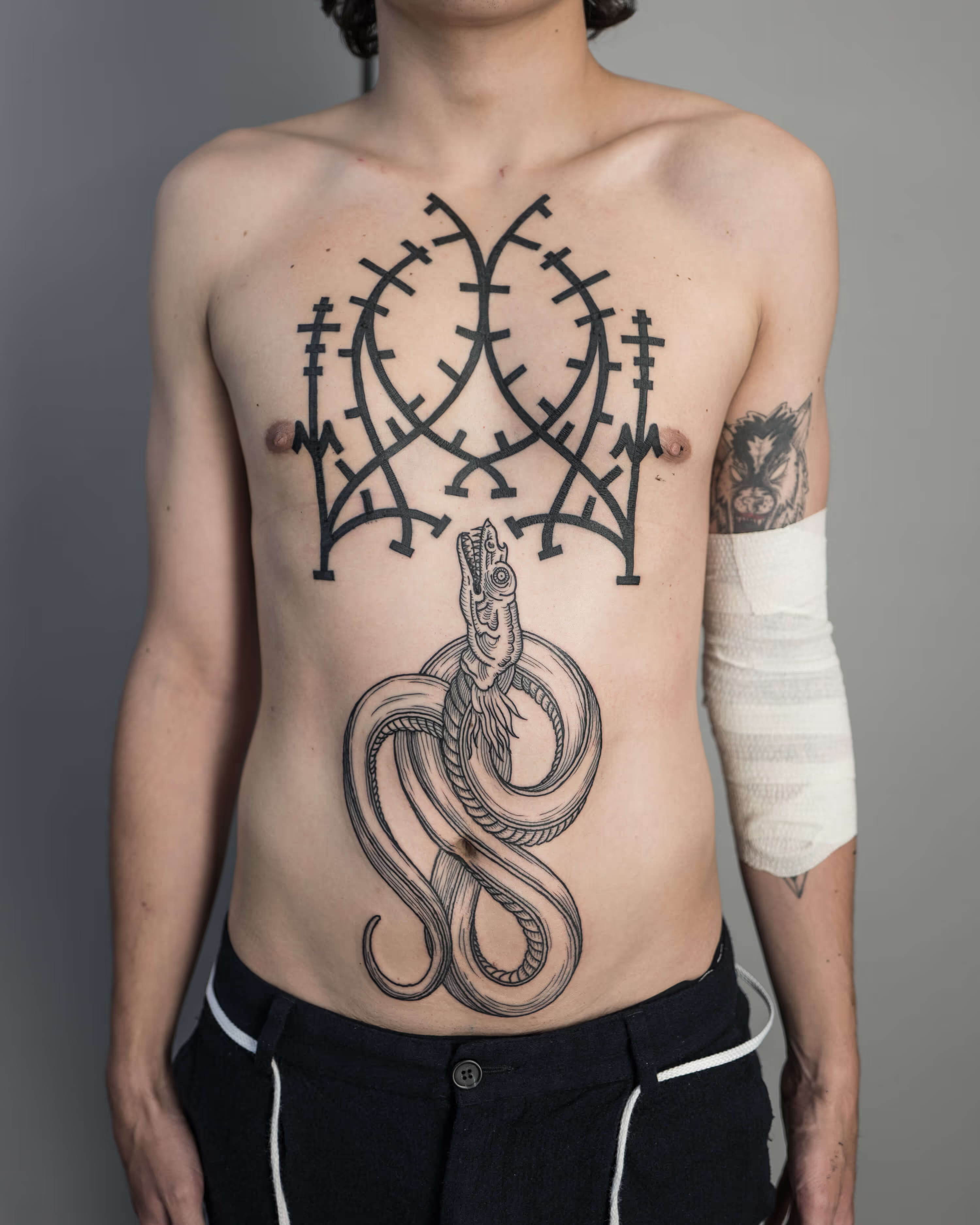
Bestiary creatures: Medieval bestiaries catalogued real and imaginary animals — the unicorn, the basilisk, the manticore, the pelican — with equal seriousness. Rendered in woodcut style, these creatures carry centuries of symbolic meaning.
Heraldic imagery: Lions rampant, eagles displayed, serpents, crossed weapons — the formal vocabulary of heraldry translates beautifully into the engraving style's bold linework.
Anatomical studies: Renaissance anatomical drawings — Vesalius, Leonardo, Dürer — are among the most visually powerful images ever created. In tattoo form, they're extraordinary.
Religious iconography: Medieval saints, angels, devils, and religious allegory carry enormous symbolic density and visual power in the engraving style.
Engraving Tattoo Placement Guide
Upper arm and forearm: The most versatile placements for engraving-style work. The flat, accessible surface of the forearm suits detailed etching and cross-hatching beautifully, while the upper arm provides canvas for larger woodcut compositions.
Back: The definitive placement for large-scale engraving work. A full back piece in woodcut or Renaissance engraving style is one of the most ambitious and visually powerful tattoo compositions possible.
Chest: Particularly suited to the symmetrical, compositional quality of medieval and Renaissance imagery. A heraldic chest piece or a baroque allegorical composition centered on the sternum works extraordinarily well.
Thigh: The thigh provides excellent canvas for large, standalone engraving compositions without the full commitment of a back piece or sleeve.
Sleeve: An engraving tattoo sleeve — building a continuous narrative of medieval or Renaissance imagery from shoulder to wrist — is among the most visually arresting tattoo projects possible. Read our tattoo sleeve guide for more on planning a large-scale composition.
How Long Does an Engraving Tattoo Take?
Why Engraving Tattoos Are Unique
No other tattoo style occupies the same visual and historical territory as the engraving style. While fine line tattooing achieves delicacy through thin linework and geometric tattooing builds precision through mathematical form, engraving tattooing achieves depth, volume, and narrative through a purely linear vocabulary inherited from five centuries of European printmaking. The result is a tattoo that looks genuinely historical — not nostalgic or derivative, but rooted. It looks like it belongs in a museum as much as on skin.
Collectors who choose engraving tattoos are typically serious about body art as a medium. They understand that what they're commissioning is not just a tattoo but a translation of one of the most powerful visual traditions in Western art into a permanent form.
Engraving Tattoo Studio in Brooklyn, NYC — Monolith Studio
If you're searching for the best engraving tattoo artist in New York City, Monolith Studio in Brooklyn brings together specialists in engraving-style tattooing whose work draws directly from the historical traditions of woodcut, copper plate engraving, and medieval printmaking.
Located at 77 Washington Avenue, Brooklyn, NYC 11205, Monolith approaches every engraving tattoo as a serious art historical commission — designs rooted in genuine knowledge of the historical sources, ensuring each piece carries authentic visual weight rather than a surface-level imitation of the style.
Engraving tattoo specialists at Monolith Studio:
- Maxime Plescia Buchi — Geometric and abstract specialist whose mastery of complex linework and structured composition translates powerfully into the engraving style's demanding technical vocabulary.
- Lescrow — Engraving style specialist. Works in the traditions of woodcut, copper plate engraving, and etching, drawing directly from medieval, Renaissance, and Baroque printmaking sources.
What sets Monolith's engraving work apart:
- Deep knowledge of historical printmaking traditions — woodcut, etching, engraving, and intaglio
- Fully custom designs drawn directly from historical sources and tailored to each collector
- Technical mastery of hatching, cross-hatching, and stipple techniques
- Studio in Brooklyn, NYC — easily accessible from all five boroughs and Manhattan
Looking for the best engraving tattoo artist in NYC? Book your consultation at Monolith Studio.

Engraving tattoos represent one of the most compelling intersections of art history and contemporary tattooing. They carry the weight of centuries — Dürer's precision, the stark power of the medieval woodcut, the psychological intensity of Baroque etching — translated into a permanent medium that is worn rather than hung. At Monolith Studio, this style is executed at the highest level by artists who understand both the technical demands and the historical depth of the tradition.
Whether you're drawn to the raw power of a medieval woodcut, the refined detail of a Renaissance copper engraving, or the atmospheric darkness of Baroque etching — book a consultation at Monolith Studio and let's begin.
FAQ
An engraving tattoo is a style inspired by historical printmaking techniques — woodcut, etching, and copper engraving — that were used to illustrate books, manuscripts, and religious texts from the Middle Ages through the Renaissance. The style replicates the visual language of these techniques on skin: bold silhouettes, directional hatching lines, cross-hatching for shadow and depth, and high-contrast compositions that recall the work of artists like Albrecht Dürer and Gustave Doré.
These terms refer to related but distinct printmaking traditions, all of which influence the engraving tattoo style. Woodcut tattoos replicate the bold, high-contrast aesthetic of carved wooden block prints — strong silhouettes, thick lines, and dramatic light-dark contrast. Etching-inspired tattoos tend toward finer, more intricate hatching lines, mimicking the delicate line work of copper plate etchings. Engraving as a broader category encompasses all of these, unified by the reference to historical printmaking aesthetics.
Session length for engraving tattoos depends on scale and complexity. The cross-hatching and directional linework that define the style are time-intensive to execute with precision — particularly in larger compositions where the hatching patterns need to remain consistent across the full design. A detailed medium-sized piece might take 4 to 6 hours. Large-scale work covering the back or chest requires multiple sessions.
Session length for engraving tattoos depends on scale and complexity. The cross-hatching and directional linework that define the style are time-intensive to execute with precision — particularly in larger compositions where the hatching patterns need to remain consistent across the full design. A detailed medium-sized piece might take 4 to 6 hours. Large-scale work covering the back or chest requires multiple sessions.
Engraving tattoos age well when executed at appropriate scale with strong contrast. Fine hatching details at very small sizes can soften over time as ink naturally spreads slightly under the skin. Designs that maintain bold outlines around the major compositional elements and use hatching for texture rather than as primary structure tend to hold their character best. UV protection is particularly important for preserving the crisp contrast that defines this style.
Engraving tattoo pricing at Monolith Studio in Brooklyn depends on the scale, complexity, and amount of detailed linework required. Because the cross-hatching and directional line technique is time-intensive to execute with precision, engraving tattoos are priced accordingly. Visit monolithstudio.com/book-experience for a personalized quote.
Most black and grey tattoos achieve depth and shadow through smooth tonal gradients — soft transitions from dark to light achieved through diluted ink washes. Engraving tattoos create the same depth through structured linework: parallel hatching lines, cross-hatching, and deliberate mark-making that references the tools and techniques of historical printmakers. The result is a tattoo that looks more like an illustration lifted from an antique book than like conventional tattooing.
Maxime Plescia Buchi is the engraving and woodcut tattoo specialist at Monolith Studio in Brooklyn. Internationally recognized for his mastery of historical printmaking aesthetics translated to skin, Maxime's work in this style is among the most technically accomplished in the world. Explore his portfolio at monolithstudio.com/artists.
Artists

.avif)

Related Styles
.jpg)