
What Does a Snake Tattoo Mean?
The honest answer is: it depends on where you're looking. The snake is one of the few symbols that appears across virtually every human culture, and the meanings attached to it vary — sometimes dramatically — depending on the tradition.
That said, a few themes show up again and again regardless of geography or era.
Transformation and renewal. Snakes shed their skin. They literally leave their old self behind and emerge new. For a lot of people, that's exactly what a snake tattoo represents — a period of personal change, a life they've moved on from, a version of themselves they've outgrown.
Duality. The snake is both healer and poison, protector and threat, life and death. In the Greek tradition, Asclepius — the god of medicine — carried a staff with a snake wrapped around it. That symbol still appears on medical logos today. The same creature that kills is the one that heals. There's something honest about that contradiction, and a lot of collectors are drawn to it.
Protection. In many traditions, snakes guard sacred places, treasures, or the threshold between worlds. A snake tattoo worn as a protective symbol is one of the oldest uses of the image.
Wisdom and hidden knowledge. The serpent in the Garden of Eden isn't evil in every reading — in Gnostic traditions, it's the one offering genuine understanding. The snake as keeper of secret knowledge runs through a lot of esoteric symbolism.
What Does a Snake Tattoo Mean on a Woman?
This question comes up a lot, and the answer is more nuanced than most articles suggest. Historically, the snake has been strongly associated with feminine power — Cleopatra, Medusa, the goddess Isis, the Minoan snake goddess of ancient Crete. These aren't passive images. They're figures of authority and danger.
For many women, a snake tattoo is precisely that kind of statement — something that doesn't apologize for its own intensity. The snake on a woman isn't decorative. It means something.
The Ouroboros — The Snake That Eats Itself
No conversation about snake tattoos is complete without the ouroboros. The image of a serpent biting its own tail — forming a perfect, unbroken circle — is one of the oldest symbols in recorded history. It appears in ancient Egyptian funerary texts around 1600 BCE, in Greek alchemical manuscripts, in Norse mythology as the World Serpent Jormungandr, and in Carl Jung's writings on the collective unconscious.
As a tattoo, the ouroboros carries a specific set of meanings that go beyond the general snake symbolism. It represents infinity and cyclical time — the idea that endings and beginnings are the same moment. It speaks to self-sufficiency, to transformation that is powered by the self rather than by external forces. For people who have been through something genuinely difficult and come out the other side, the ouroboros tends to land with a precision that other symbols don't quite match.
The ouroboros works at any scale — a small, clean circle on the wrist, a detailed fine line version on the forearm, a geometric interpretation that abstracts the serpent into faceted planes. The circular form is one of the most compositionally satisfying shapes in tattooing: contained, complete, and balanced in a way that open-ended designs rarely achieve.
If the ouroboros resonates with you specifically, it deserves its own dedicated exploration. We've put together a full guide to its meaning, history, and design directions: Ouroboros Tattoo Meaning — The Snake Eating Its Tail.
Snake Tattoo Designs — The Main Directions
Japanese Snake Tattoo
In Japanese tattooing, the snake — hebi — is one of the great classical subjects. The Japanese snake carries almost entirely positive associations: good fortune, protection, wisdom, and the capacity for fierce loyalty. Unlike the Western serpent, the Japanese snake is something you want on your side.
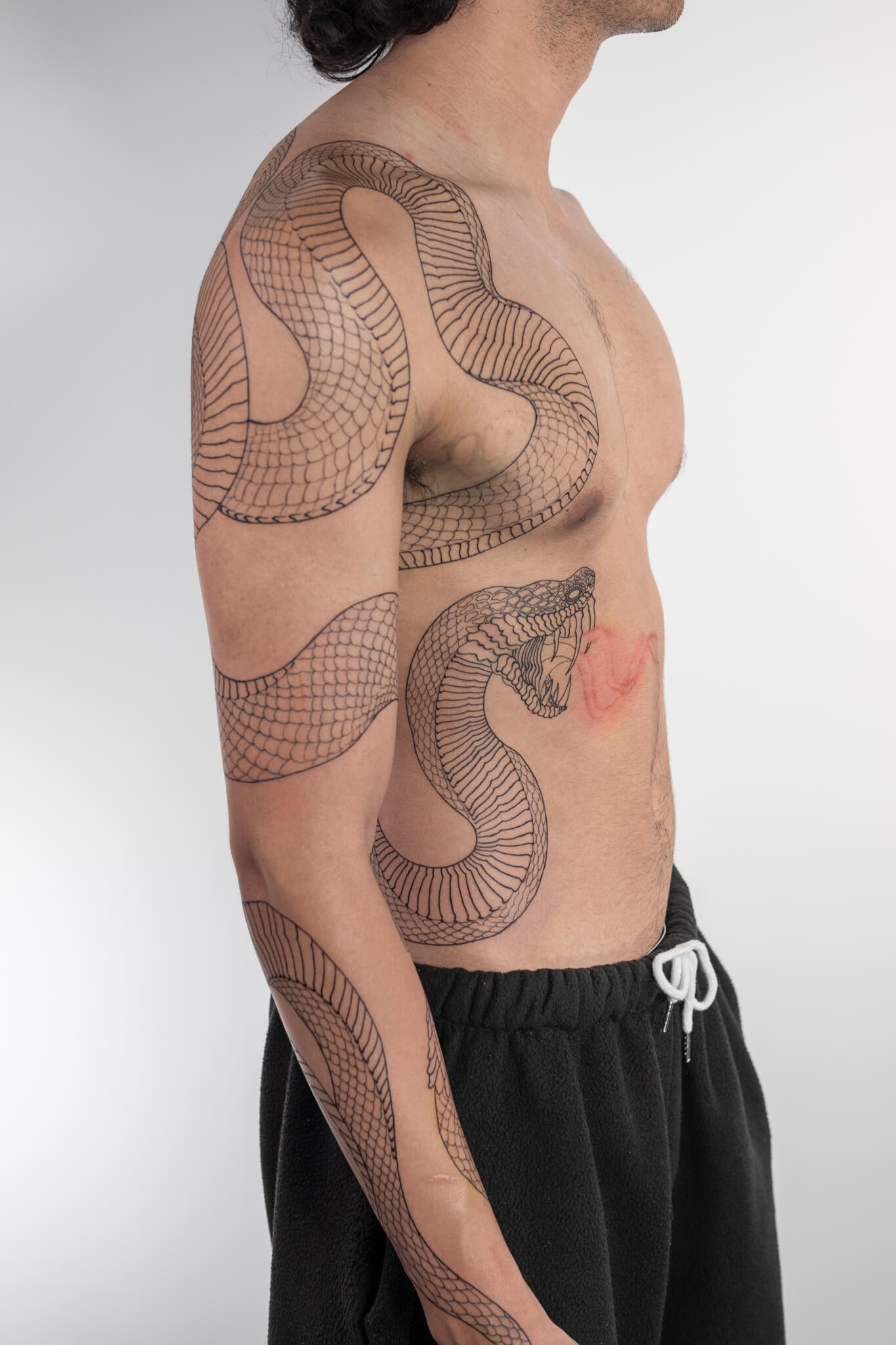
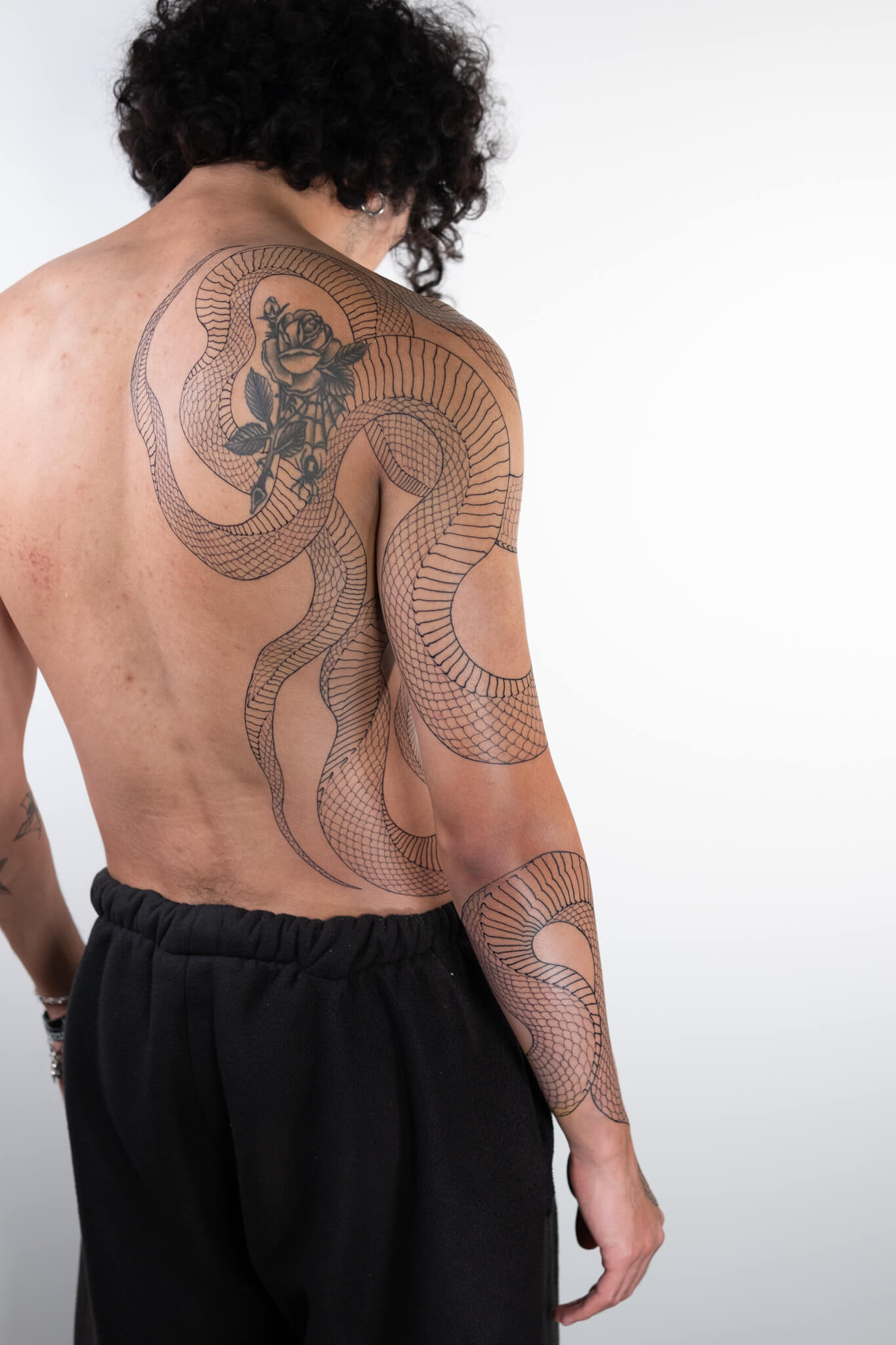
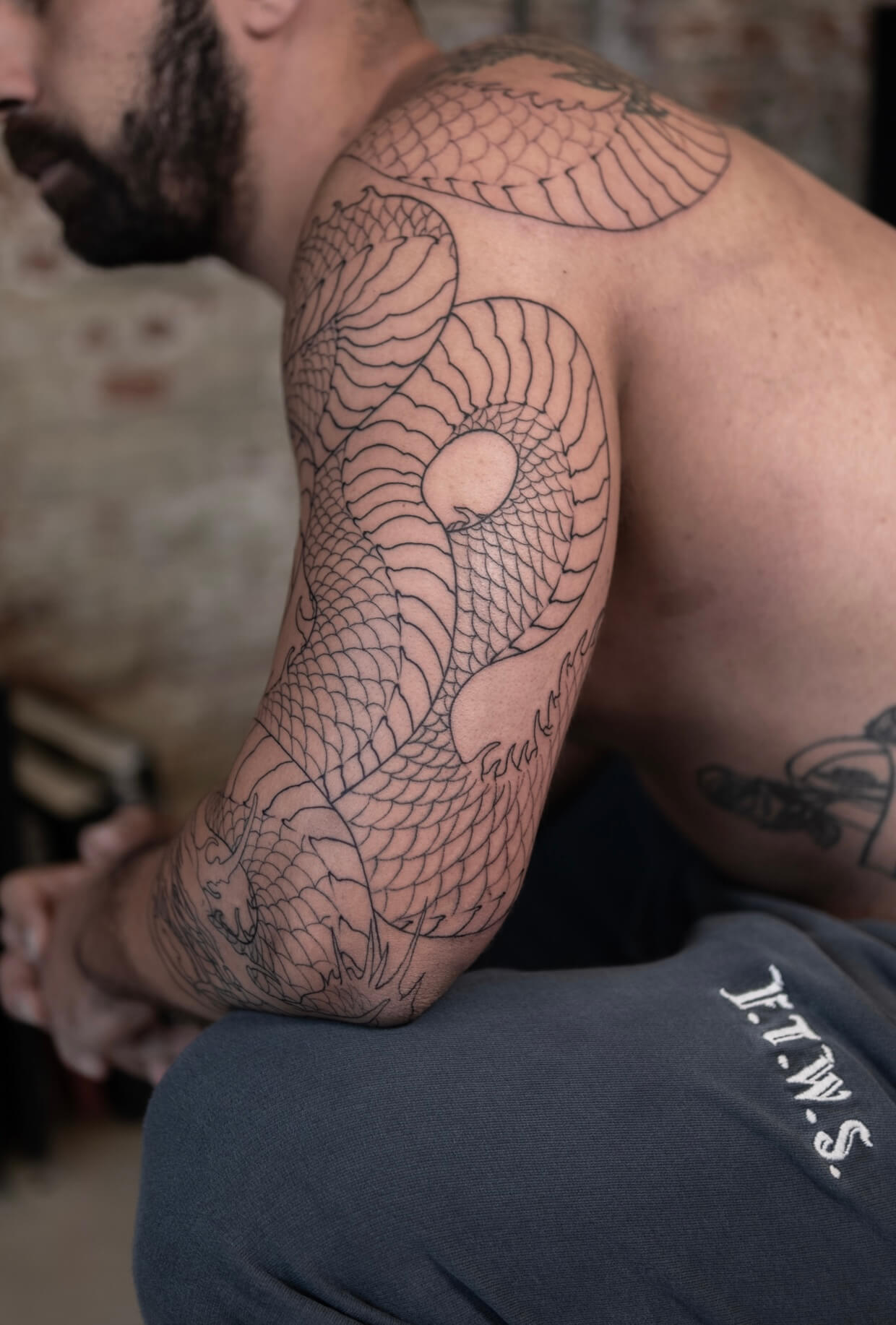
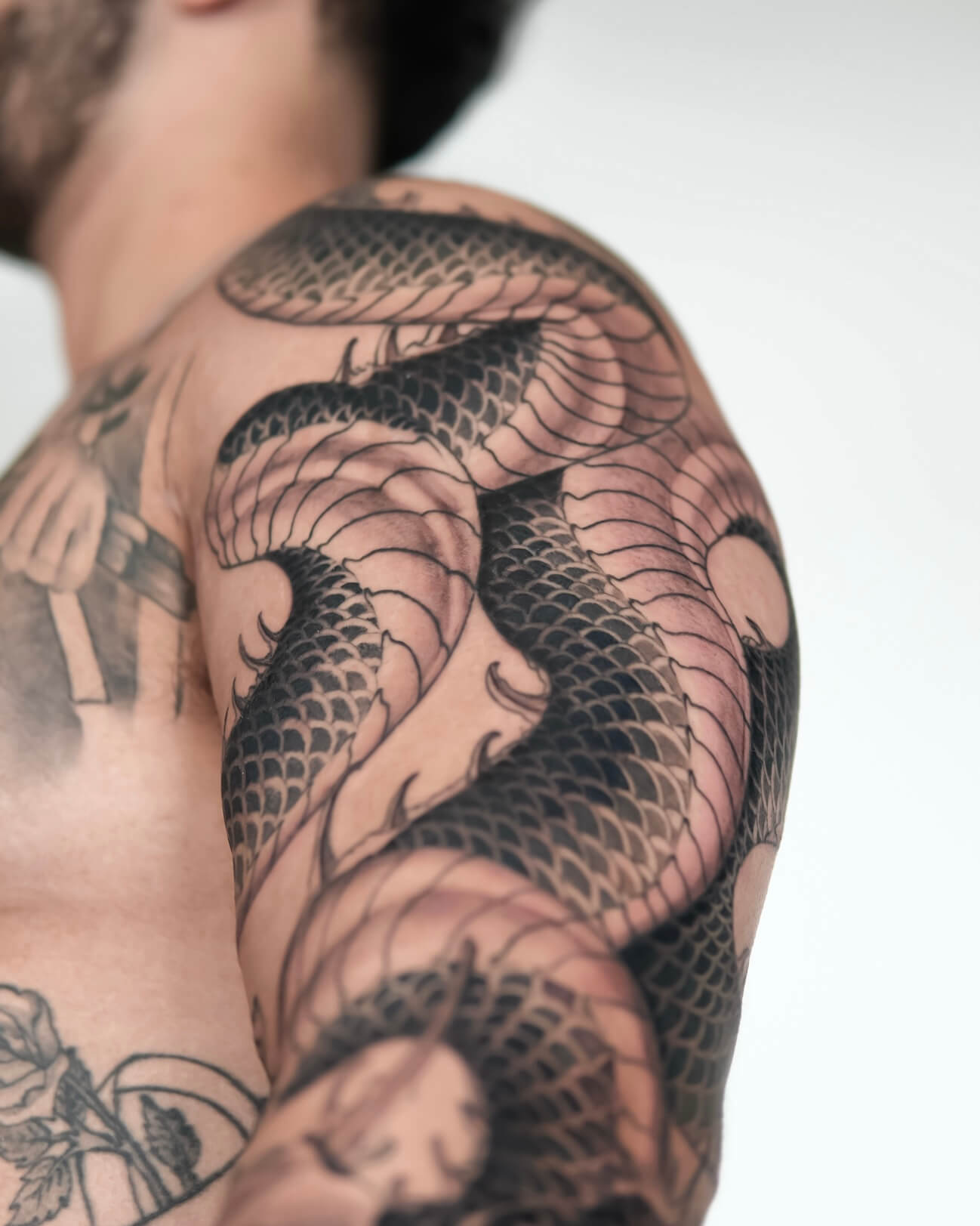
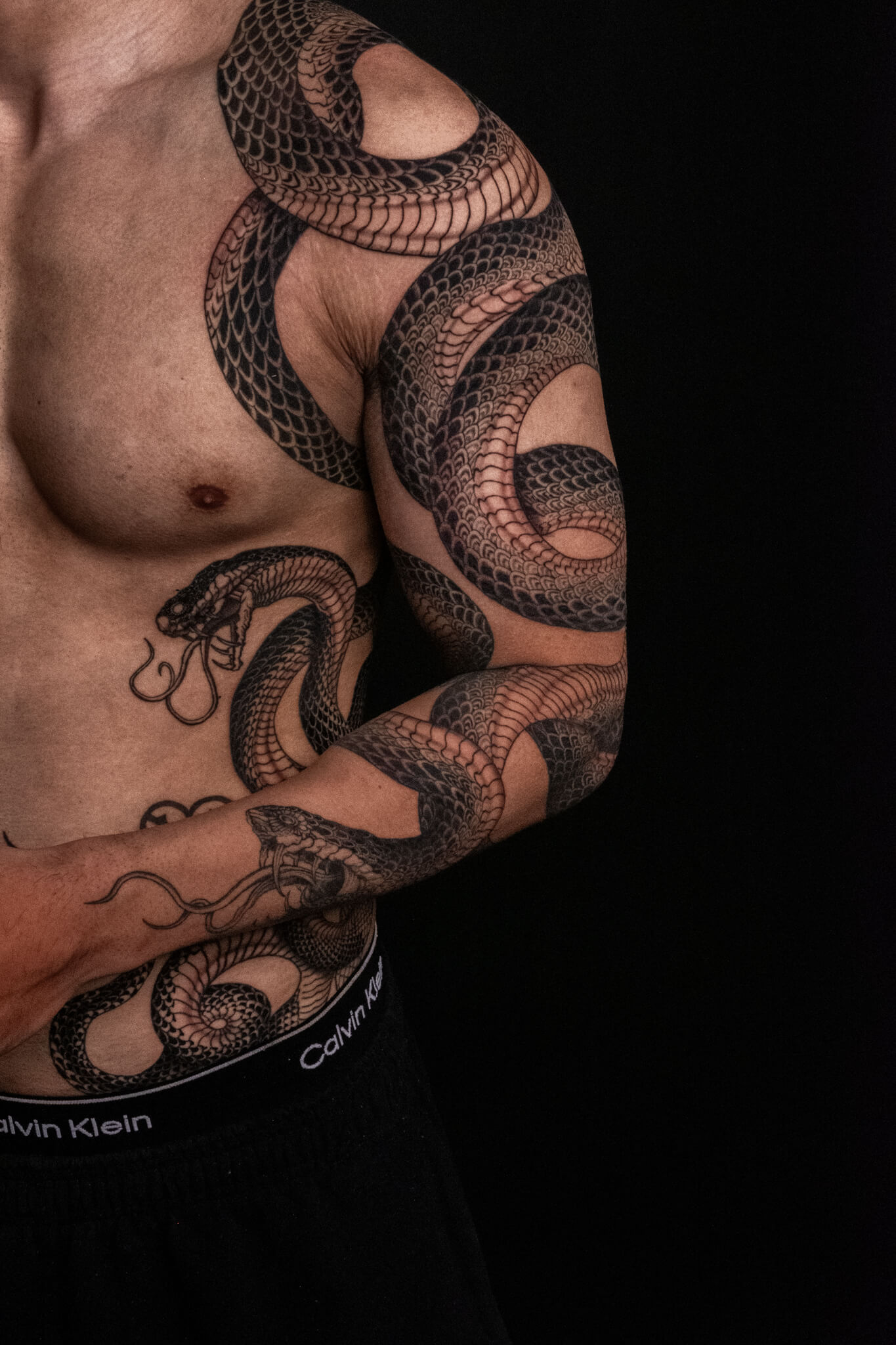
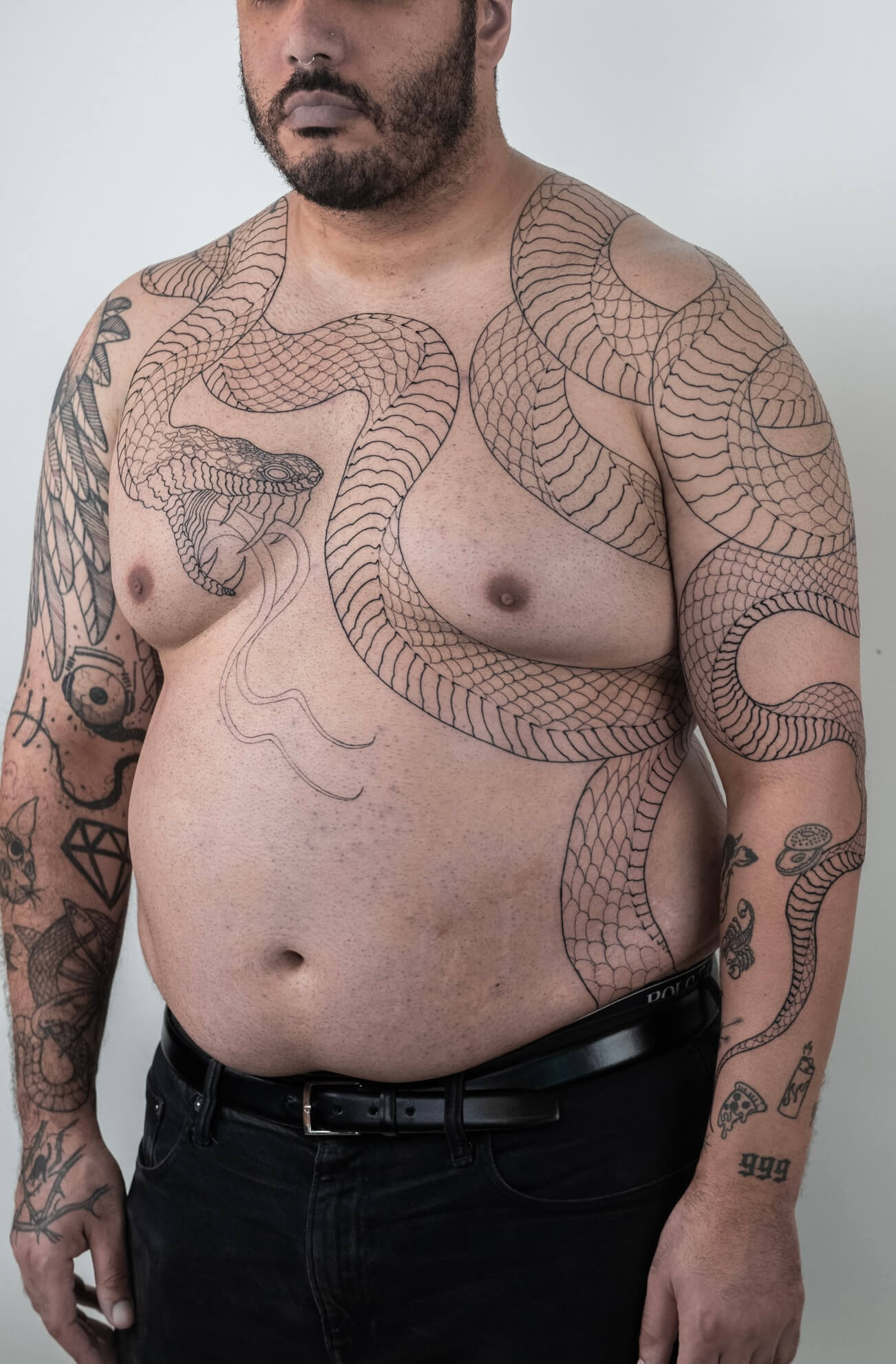
Japanese snake tattoos typically feature a serpent in motion — coiled, striking, or flowing through water and cloud imagery. The scales are rendered with extraordinary attention to pattern and texture. These pieces tend to be large, working with the body's contours rather than against them. A Japanese snake sleeve or back piece, done properly, is one of the most visually powerful things in tattooing.
Traditional Snake Tattoo
American traditional snake tattoos are bold, flat, and unambiguous. A thick-outlined serpent, often coiled around a dagger or skull, in a limited palette of black, red, and green. These designs have been in every tattoo flash book since the early 20th century, and they still work — partly because the bold lines hold up over decades in a way that more detailed styles can't always match.
Small Snake Tattoo
Not every snake tattoo needs to be a sleeve. A small, precise snake — winding around a finger, sitting on the wrist, coiling behind the ear — can be just as loaded with meaning as a large piece. Small snake tattoos work particularly well in fine line style, where the detail of the scales and the expression of the head can be captured even at a compact scale.
Snake Forearm Tattoo
The forearm is one of the best placements for a snake tattoo. The long, narrow surface maps naturally to the serpent's elongated form. A snake running from wrist to elbow, following the line of the arm, feels anatomically correct in a way that few other placements do. It's visible without being aggressive about it.
Snake Arm Tattoo
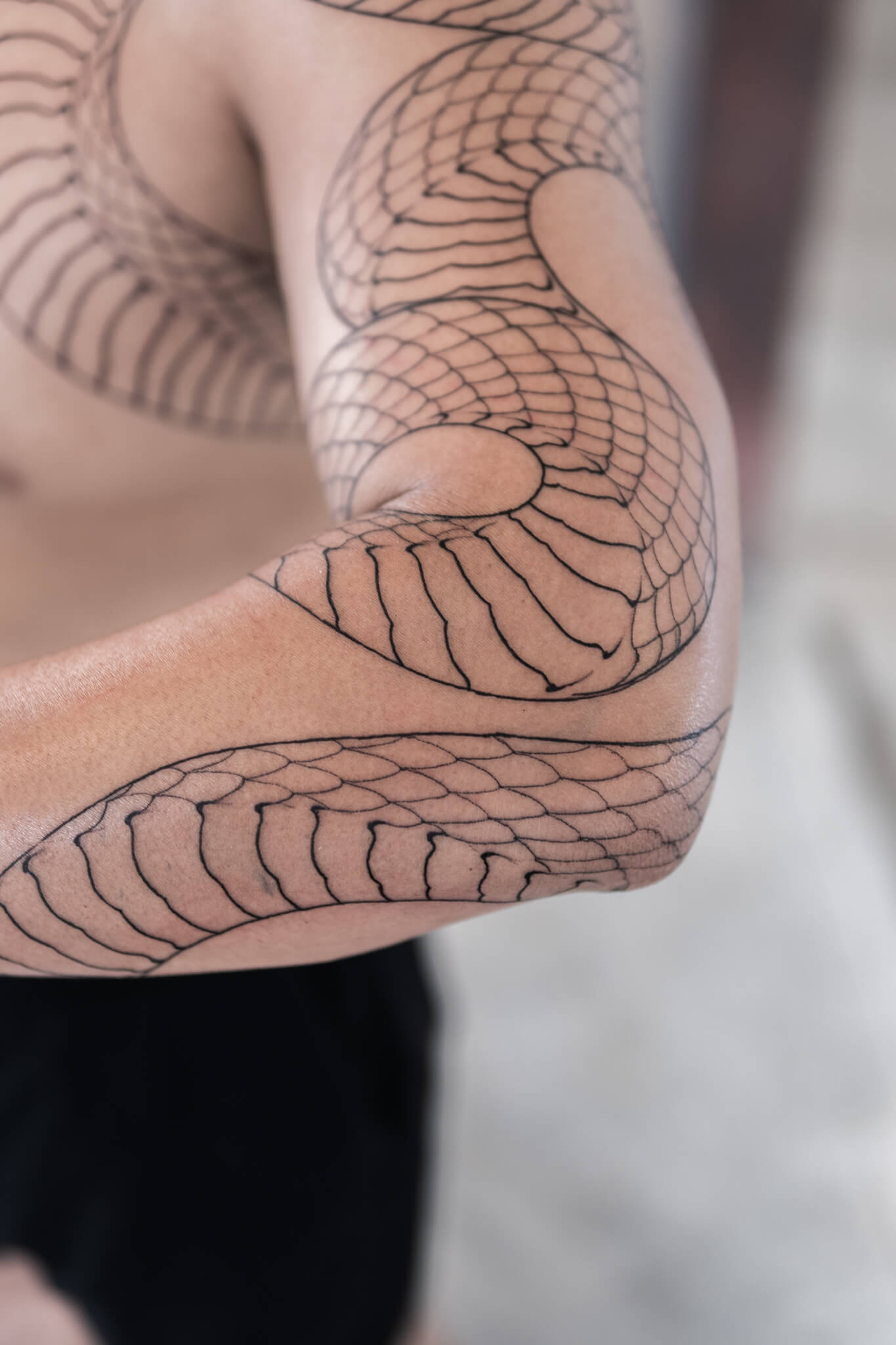
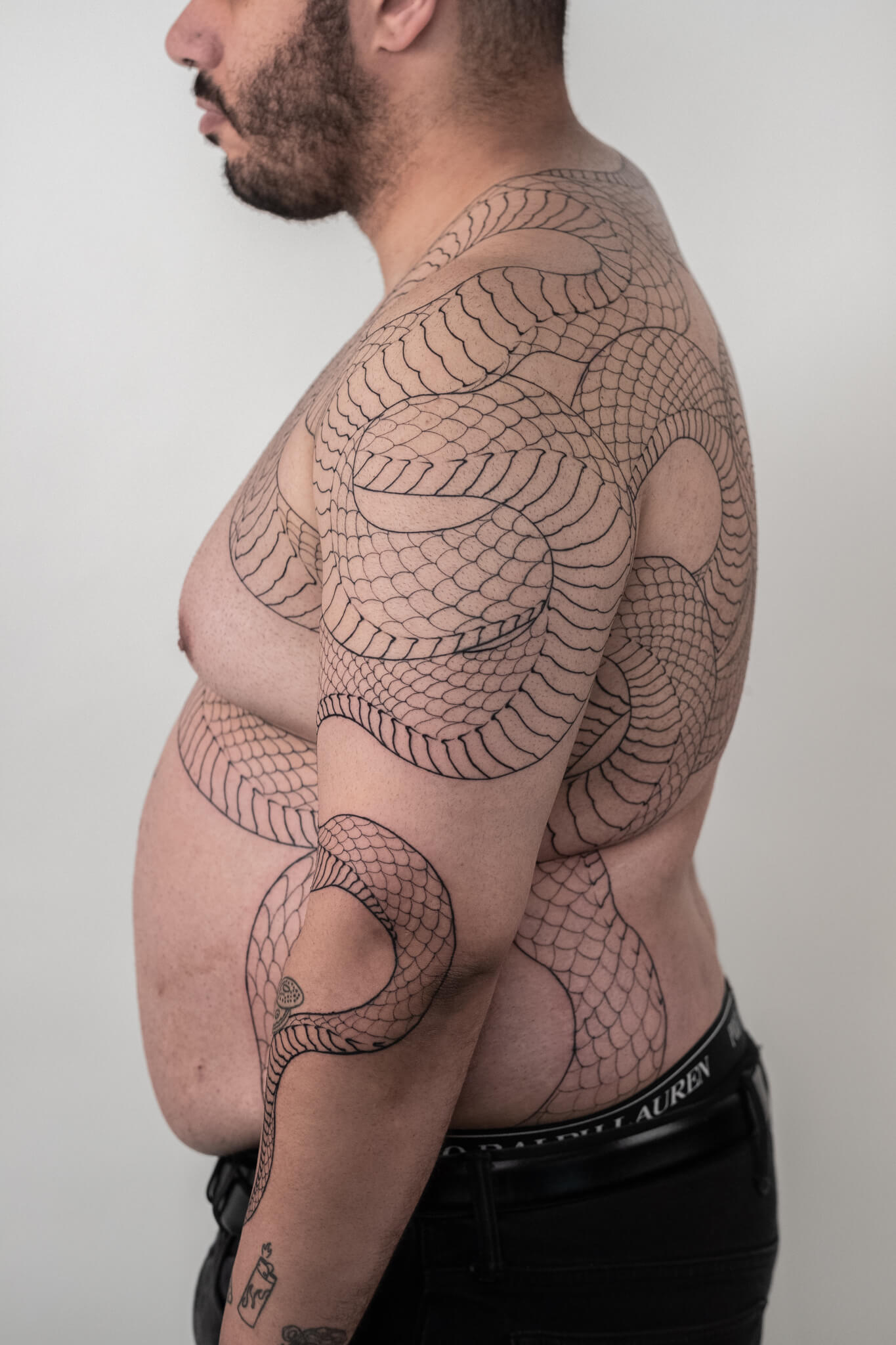
Wrapping a snake around the arm — from the wrist up to the shoulder, following the muscle — is one of the most naturally suited placements in tattooing. The snake's body works with the arm's cylindrical shape rather than sitting flat on it. Done in Japanese or fine line style, a snake wrapped around arm tattoo has a sculptural quality that other subjects rarely achieve.
Snake Hand Tattoo
A snake on the back of the hand, or coiling across the fingers, is a high-commitment placement — visible constantly, and impossible to miss. Read our hand tattoo guide for the full picture on placement, pain, and healing before committing to this one.
Snake and Rose Tattoo
The snake and rose combination is a classic for good reason. The rose brings beauty, fragility, and the suggestion of love. The snake brings danger, transformation, and knowledge. Together they create a visual tension that's been compelling tattoo collectors for over a century. The combination works in traditional, fine line, and realism styles alike.
Cobra Tattoo
The cobra carries its own specific weight — the flared hood is a universal signal of danger, but in Egyptian and South Asian traditions, the cobra is also sacred. In Egypt, the uraeus cobra was the symbol of divine authority, worn by pharaohs on their crowns. A cobra tattoo sits at the intersection of danger and divinity in a way that most other snake designs don't quite reach.

Snake Tattoo Placement Guide
The snake's form is unusually flexible in terms of placement — it can be compressed, extended, wrapped, or coiled to fit almost any surface. But some placements work better than others.
Forearm: The natural choice. The length of the forearm mirrors the snake's body perfectly. Works in almost every style.
Arm / sleeve: A snake wrapped around the arm is a classic. The cylindrical shape of the arm is ideal for a wrapping composition.
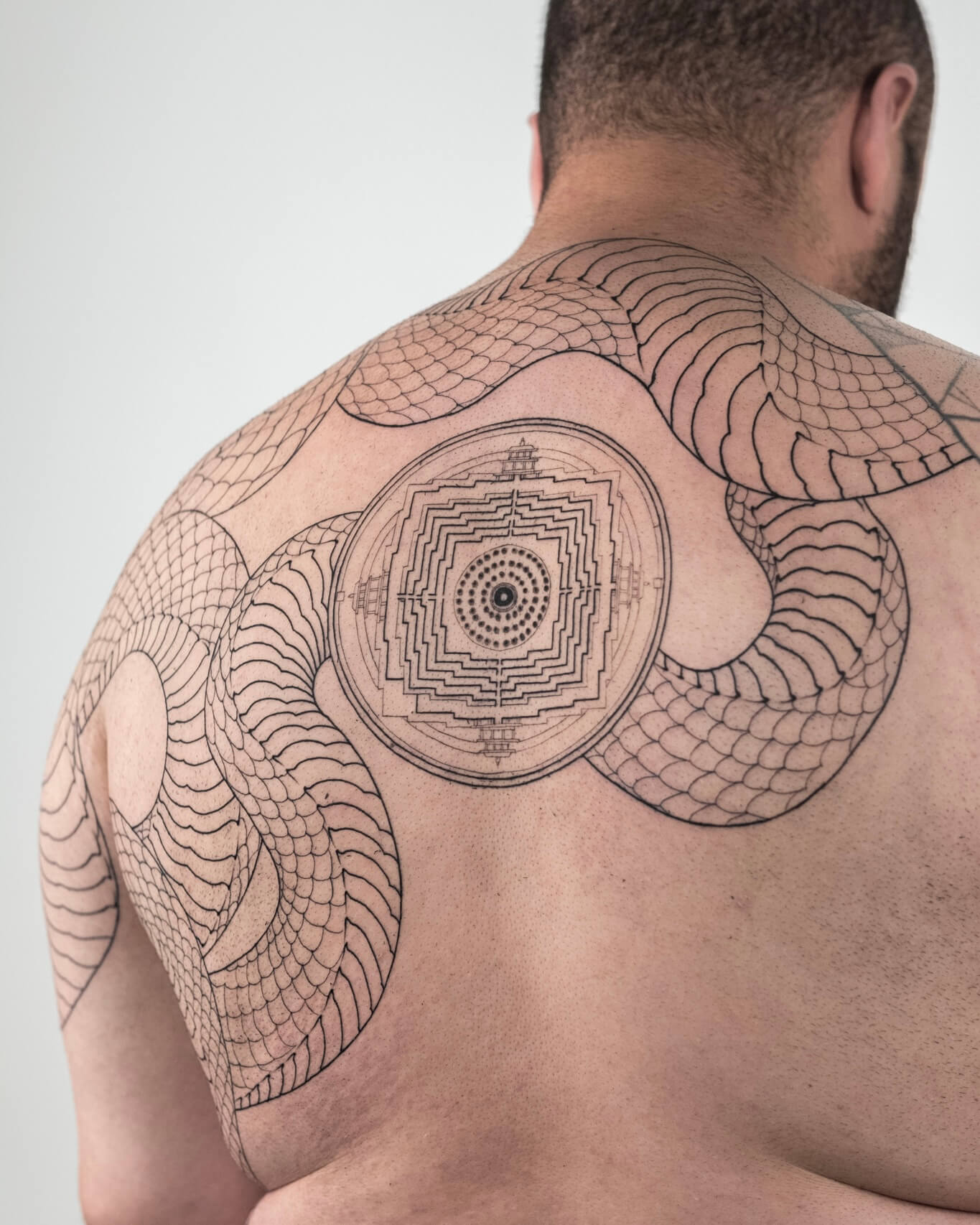
Spine: A snake running down the spine — head at the neck, tail at the lower back — is striking and anatomically coherent. The spine tattoo is painful but the placement rewards the discomfort.
Thigh: One of the least painful placements and one of the most flexible canvases. Works well for larger, more detailed snake compositions.
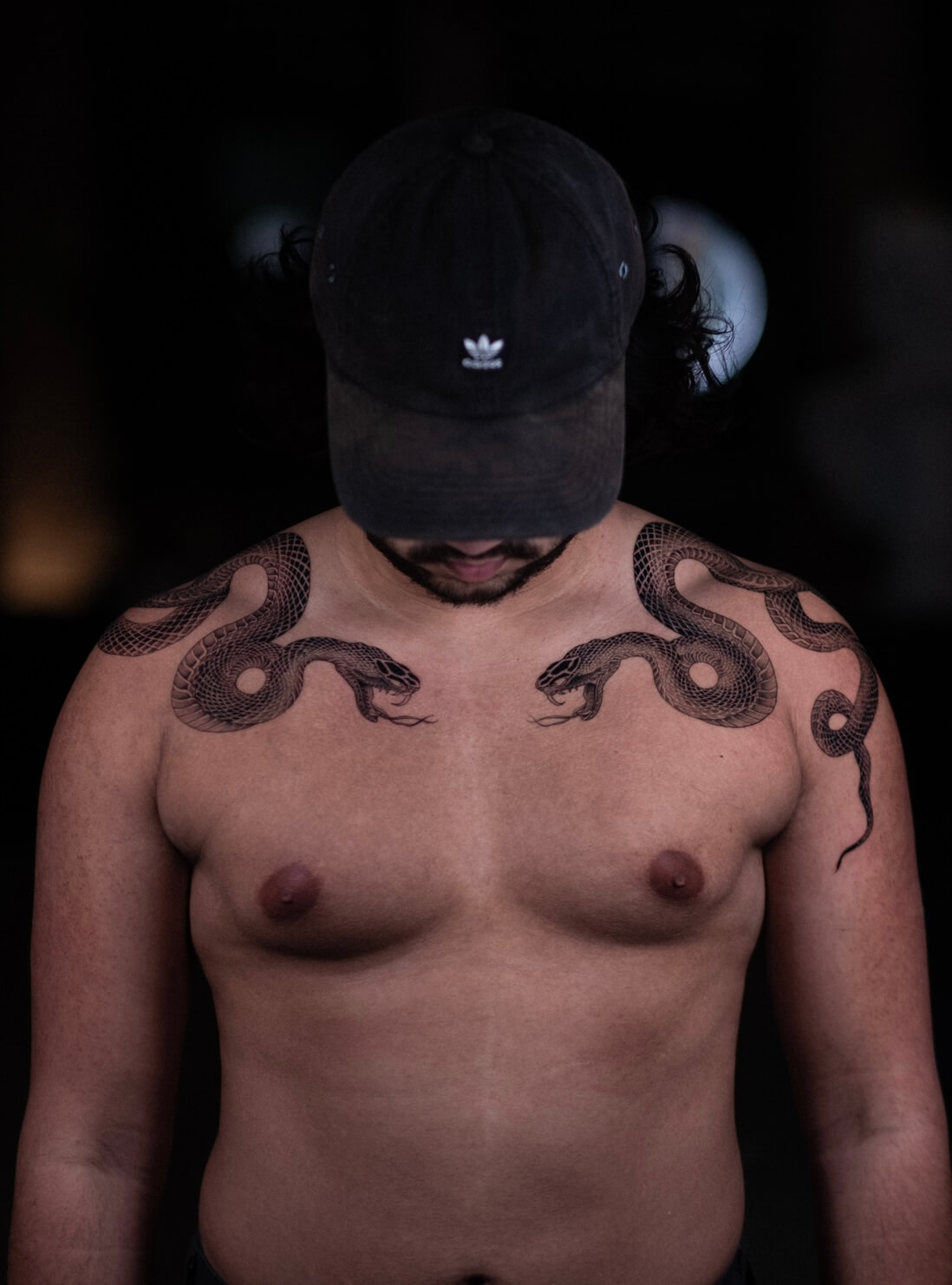
Chest: A coiled snake centered on the chest, or a serpent spreading across the chest and shoulders, creates an imposing composition.
Hand and fingers: High commitment, high visibility. A snake on the hand is a statement piece. See our hand tattoo guide for the specifics.
Snake Tattoo for Men vs Women
The snake doesn't belong to one gender. The designs differ more in scale and placement than in subject matter. Men tend toward larger compositions — sleeves, back pieces, full chest work. The Japanese snake sleeve is one of the most consistently requested large-scale pieces at tattoo studios worldwide.
Women more frequently choose placement on the forearm, spine, or thigh, and often prefer fine line or micro realism interpretations that bring out the detail of the scales and the sinuous movement of the body. But these are tendencies, not rules. The snake is too rich a subject to be reduced to gender conventions.
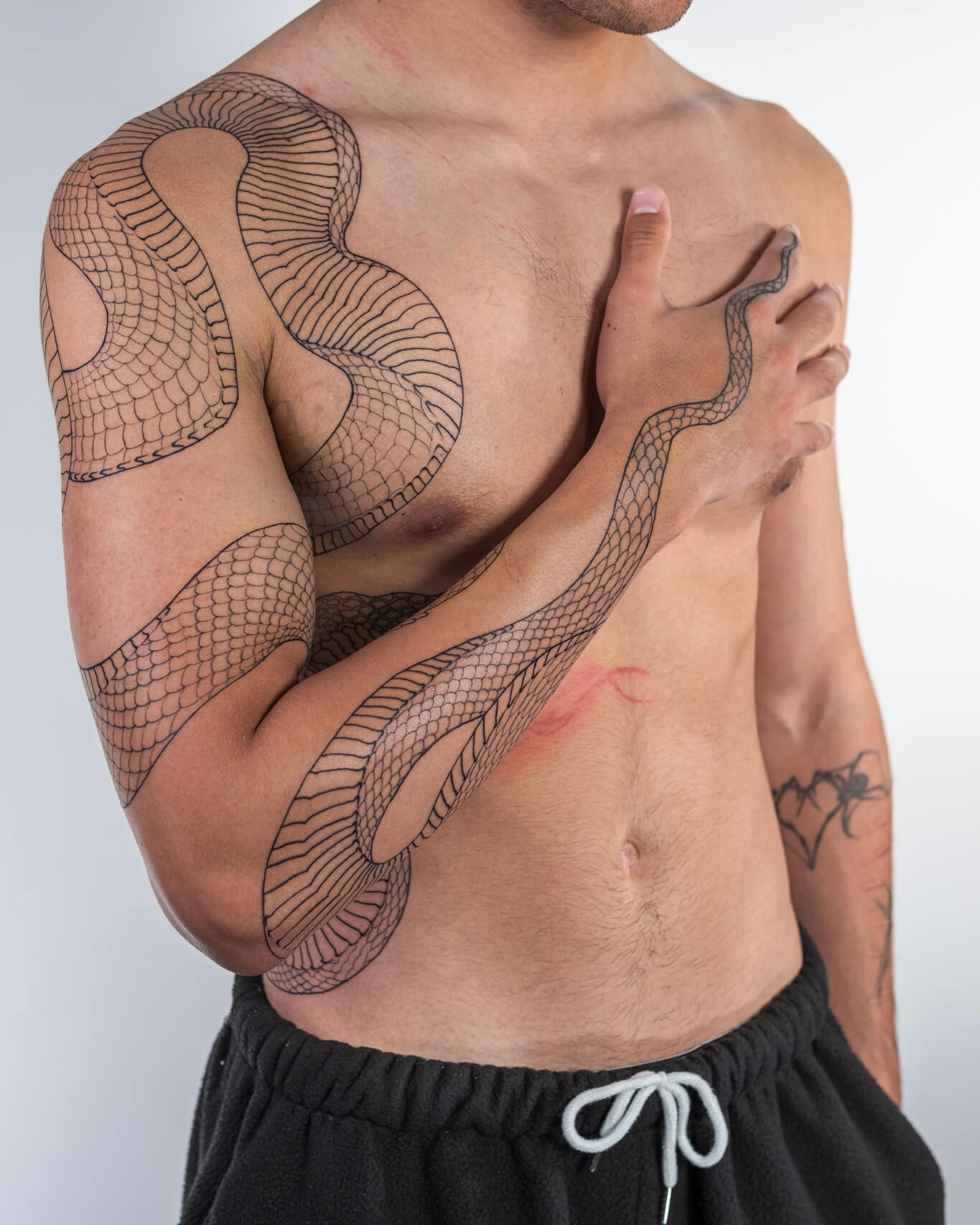
Snake Tattoo Styles at Monolith Studio
The snake works across virtually every major tattoo style, but some translations are stronger than others.
Fine line snake tattoos capture the texture and movement of the serpent with extraordinary delicacy — individual scales, the precise curve of the body, the expression of the head, all in thin linework that feels almost like botanical illustration.
Micro realism takes it further — photographic accuracy at a compact scale. The way light moves across a snake's scales, the depth of the eye, the sharpness of the tongue — all rendered with the kind of detail that makes people lean in for a closer look.
Geometric snake tattoos abstract the serpent into angular, structured form — scales becoming facets, the body becoming a series of precise planes. There's a striking visual contrast between the organic subject and the mathematical execution.
At Monolith Studio, Corey Gonzales is our specialist for snake tattoos — bringing a precise, deeply considered approach to serpent subjects across fine line and blackwork styles. If a snake tattoo is what you have in mind, Corey's portfolio is the place to start.
At Monolith Studio in Brooklyn, NYC — 77 Washington Avenue, Brooklyn, NYC 11205 — our artists approach snake tattoos with the same rigor they bring to any subject: starting from the history, understanding what the image actually means, and building a design that reflects both the tradition and the specific collector.
For placement advice, design consultation, and booking: submit a consultation request at Monolith Studio.
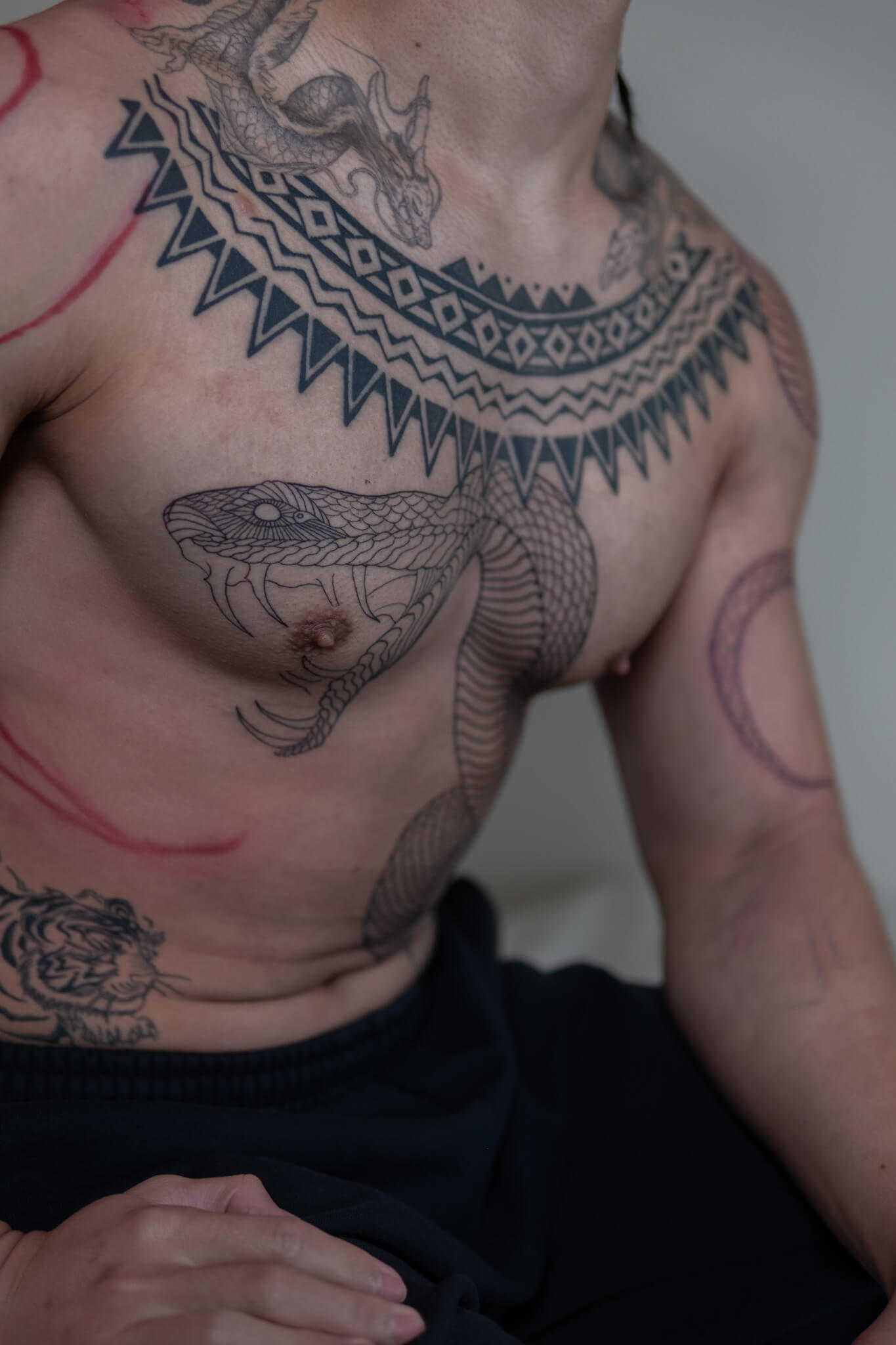
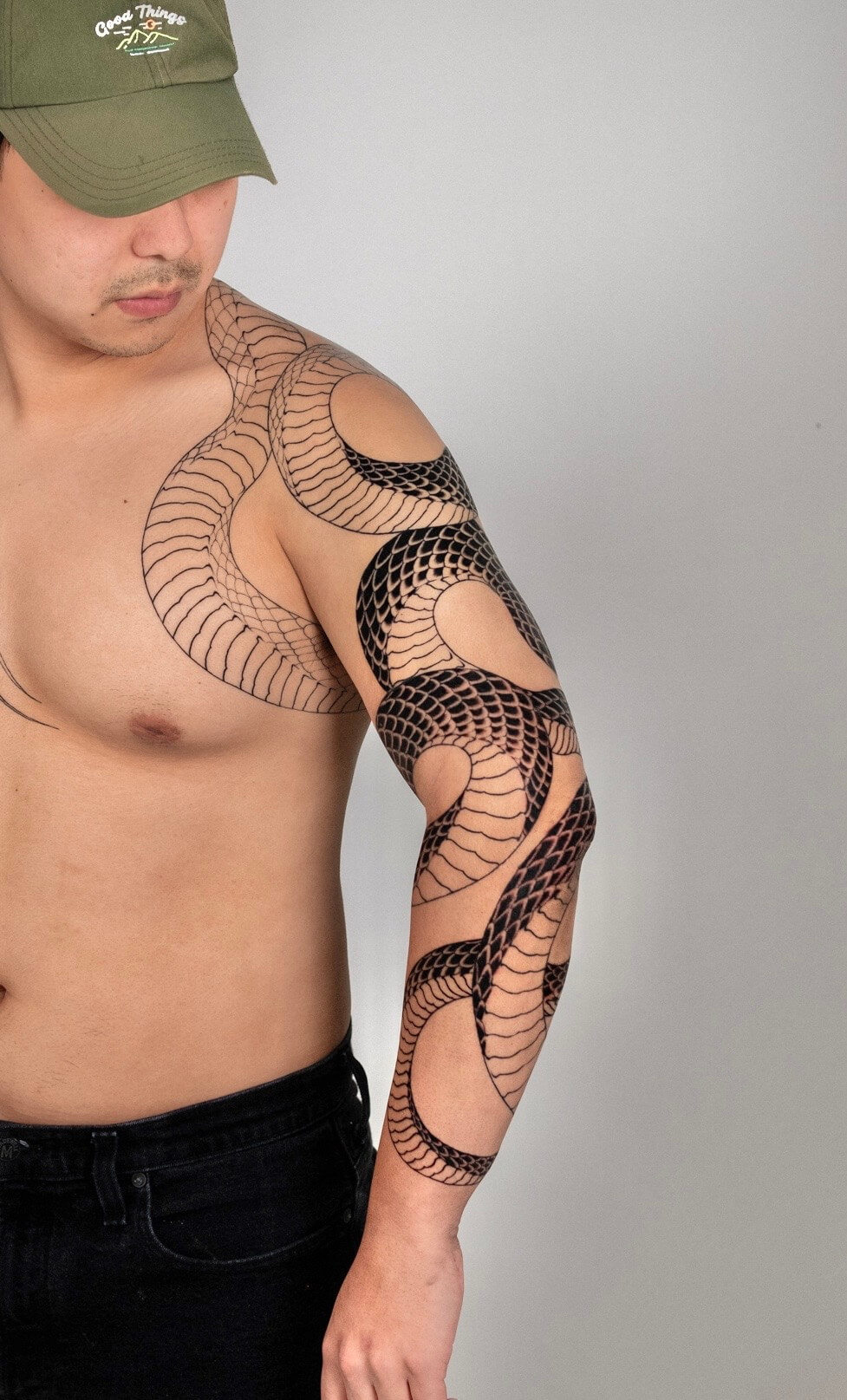
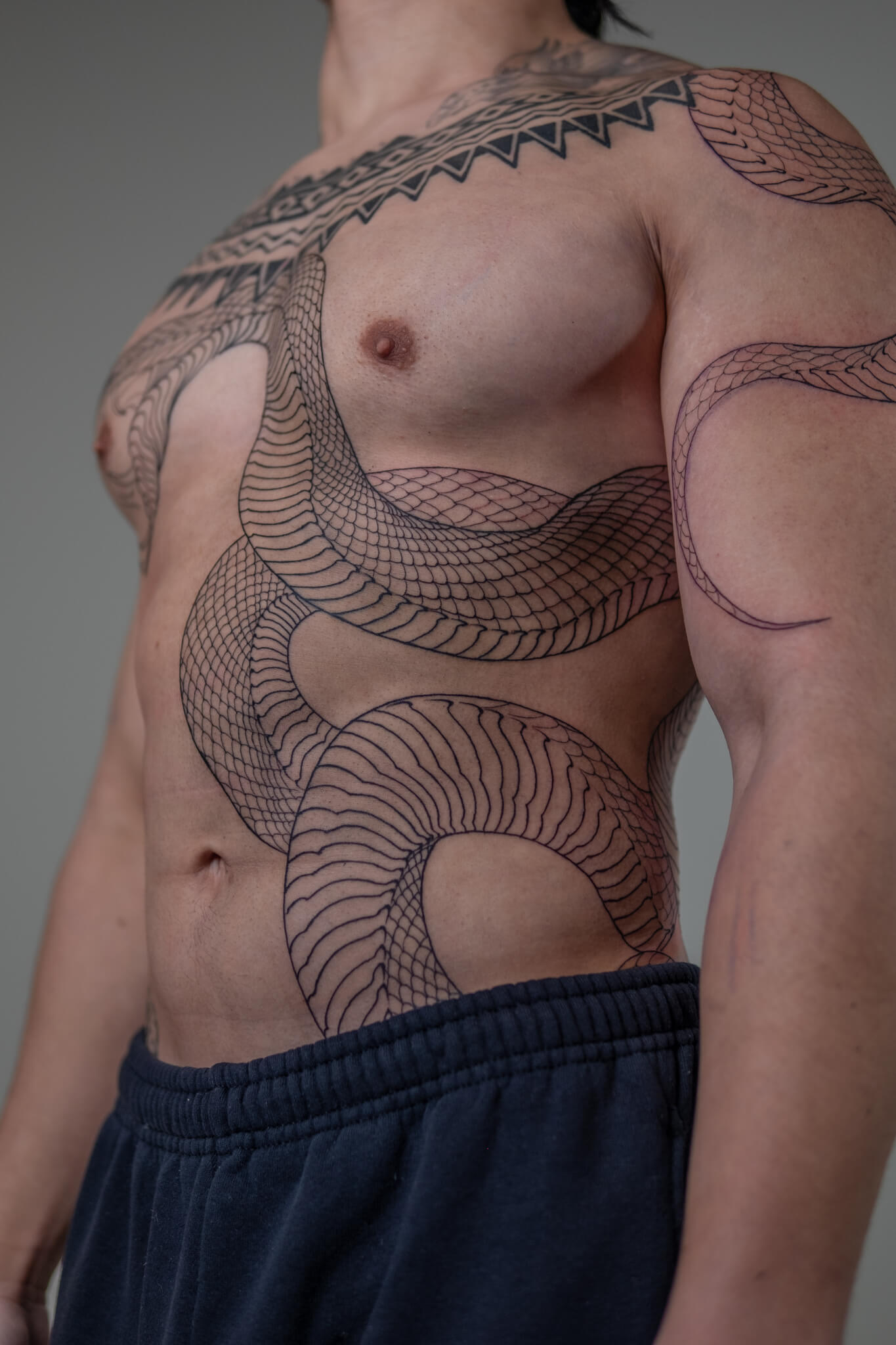
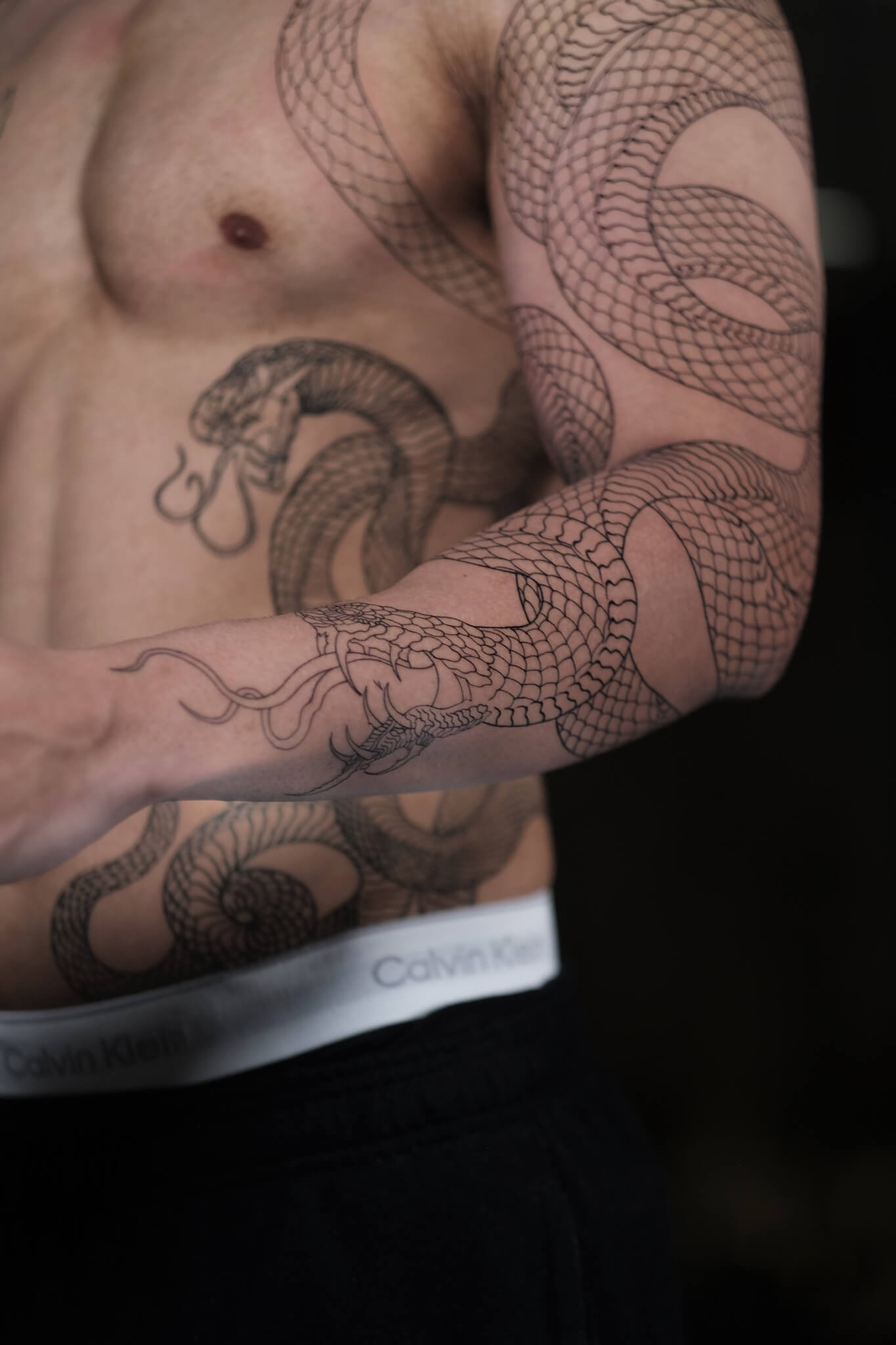
Snake Tattoo at Monolith Studio Brooklyn
Monolith Studio in Brooklyn executes snake tattoos across every style — from detailed realism portraits of specific species to bold American traditional serpents, from fine line botanical snake compositions to blackwork designs. Located at 77 Washington Avenue, Brooklyn, NYC 11205.
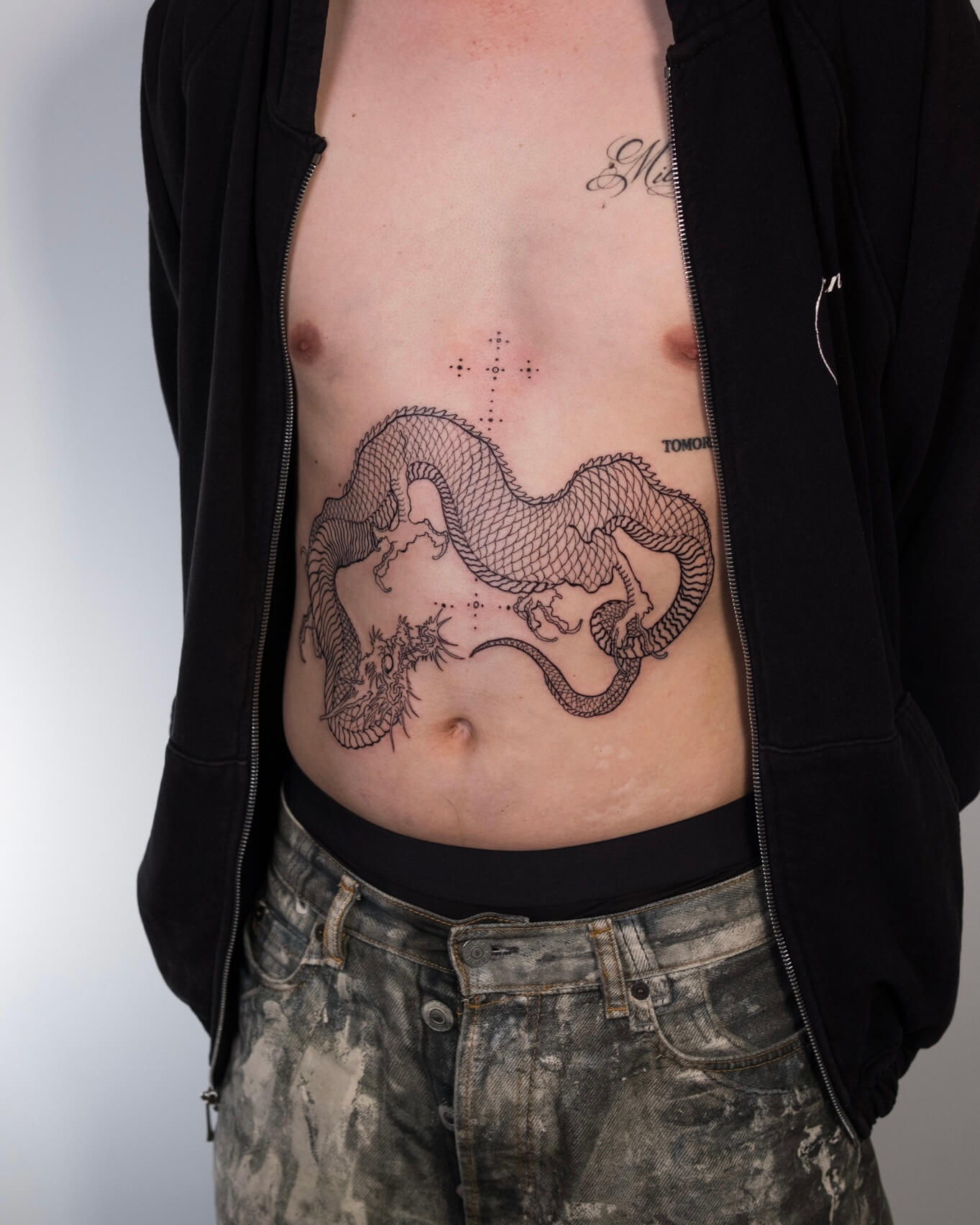
For related symbolism, see our ouroboros tattoo guide — the snake eating its own tail — and our dragon tattoo guide for related serpentine mythology. Browse all tattoo styles or book your consultation.