
How Bad Do Tattoos Hurt?
Tattoo pain is real — but it's also highly manageable, and most collectors describe it as far less intense than they feared before their first session. The experience varies significantly from person to person and from placement to placement. Understanding what drives the variation is the first step to preparing well.
The main factors that determine how much a tattoo hurts are:
Bone proximity: Areas where the skin sits directly over bone — ribs, spine, knees, elbows, ankles — are significantly more painful than areas with more tissue between skin and bone. The needle vibration transmits directly into the bone, amplifying the sensation.
Nerve density: Areas with a high concentration of nerve endings — hands, feet, neck, armpits, inner arms — are highly sensitive and tend to produce more intense pain responses.
Skin thickness: Thicker, fleshier areas like the outer thigh, upper arm, and calves absorb the needle with less trauma to the skin. Thin-skinned areas like the wrist, elbow ditch, and behind the knee are more sensitive.
Session length: Pain typically intensifies after the first 1–2 hours as the skin becomes inflamed and more sensitive. Shorter sessions are generally more tolerable than marathon sittings.
Individual pain tolerance: Genetics, stress levels, sleep quality, hydration, and even menstrual cycle timing all affect how sensitive you are on the day of your session.
Tattoo Pain Scale: How We Rate Each Area
Throughout this guide we use a 1–10 pain scale:
1–3 / Low: Mild scratching or stinging sensation. Most people find this very manageable and even meditative.
4–5 / Moderate: Noticeable discomfort, similar to a persistent sunburn or repeated scratching. Uncomfortable but very tolerable for most.
6–7 / High: Significant pain. Requires focus and breathing to manage. Most collectors push through but feel relief when the session ends.
8–9 / Very High: Intense, difficult to ignore. Short sessions are manageable but extended work is very challenging.
10 / Extreme: Reserved for the most sensitive spots — ribcage, armpit, spine. Most artists keep sessions here short for good reason.

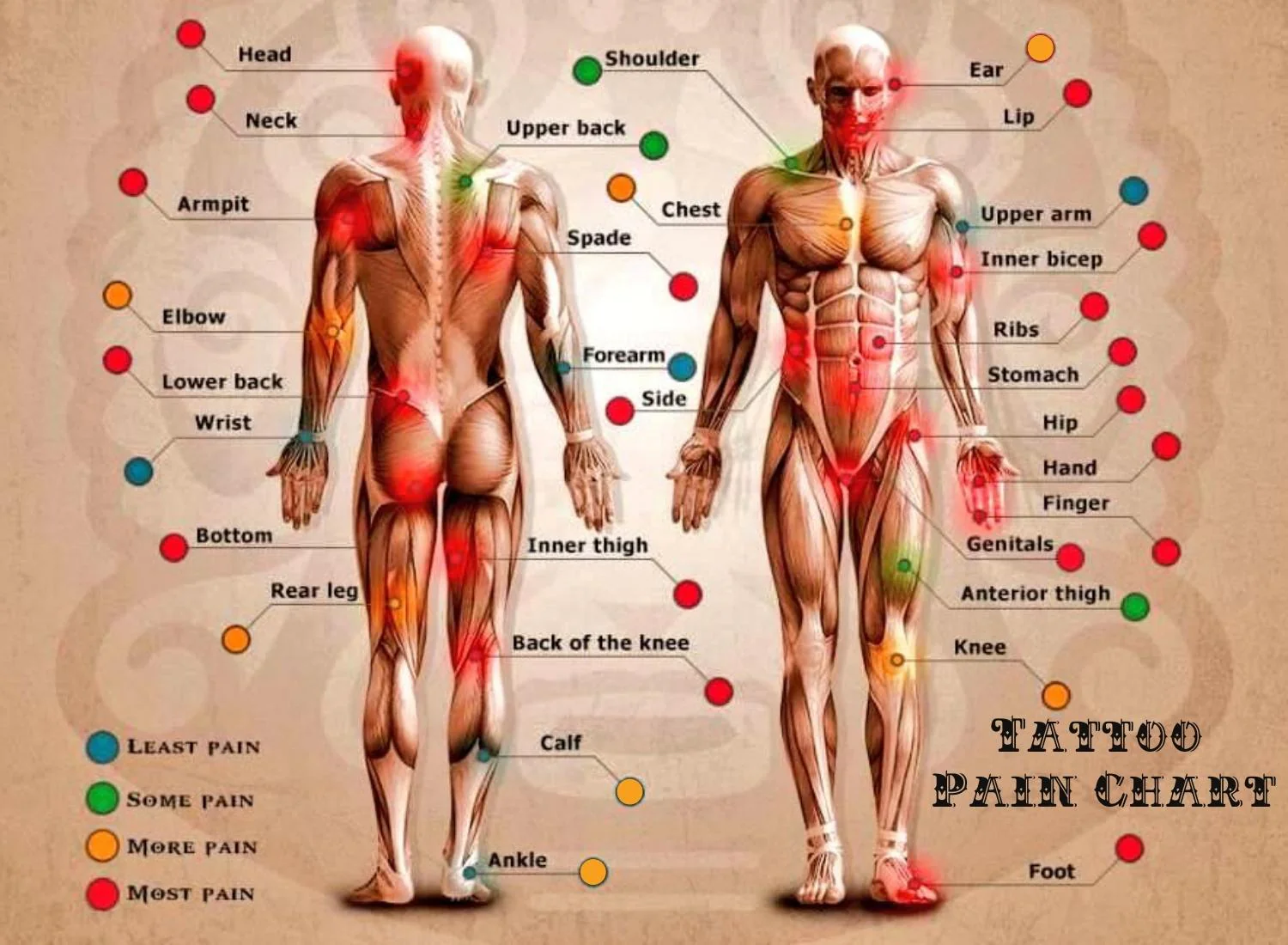
Tattoo Pain Chart — Every Placement Rated
Ribcage — 9/10
The ribcage is consistently rated as one of the most painful tattoo placements on the body. The skin here is thin, sitting almost directly over bone, and every breath moves the canvas while the needle is working. Despite the intensity, rib tattoos remain extremely popular because the placement is both intimate and visually stunning. Short sessions and an experienced artist who works efficiently make rib tattoos very achievable.
Spine — 8–9/10
The spine combines thin skin, direct bone contact, and a high concentration of nerve endings running along the vertebral column. Spine tattoo pain is particularly distinctive — many collectors describe a deep, buzzing vibration rather than a sharp surface sting. The pain radiates outward with each pass of the needle. Despite this, spine tattoos are one of the most requested placements at Monolith Studio, particularly for fine line botanical and minimalist compositions that flow naturally along the body's central line.
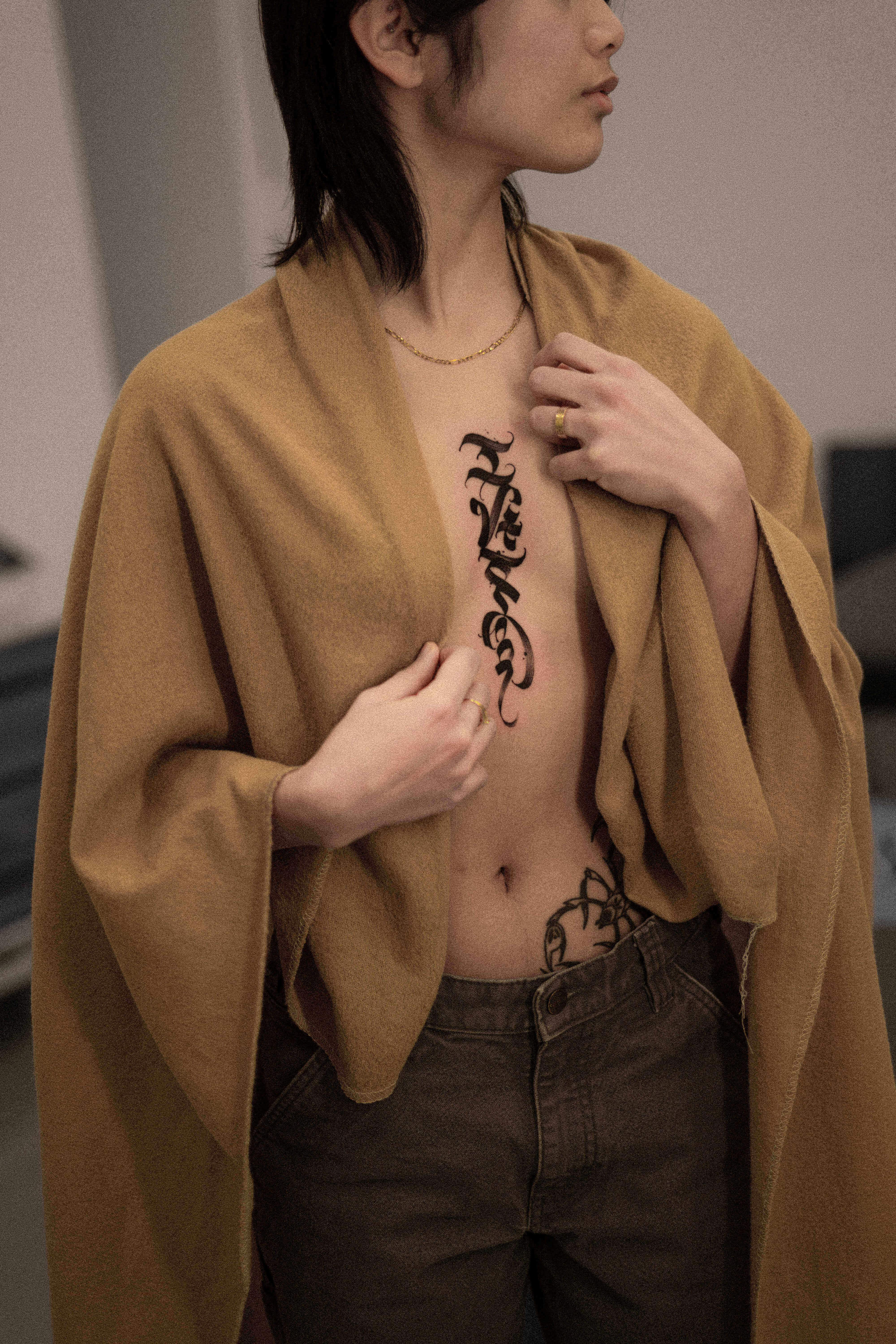
Sternum / Chest — 7–8/10
Sternum tattoo pain is driven by the same bone-proximity factor as the spine — thin skin over the breastbone with very little cushioning. The upper chest is slightly more forgiving, but the sternum itself is among the more intense placements. Women often report sternum tattoos as particularly challenging. That said, sternum and chest tattoos are among the most architecturally striking placements in body art — the discomfort is well worth it for most collectors.
Neck — 7–8/10
Neck tattoo pain varies depending on placement. The back of the neck tends to be moderately painful. The sides of the neck — particularly near the throat and collarbone — are significantly more intense due to the concentration of nerve endings in this area. The sensation here is often described as sharp and stinging rather than the dull vibration felt over larger bones.
Hands and Fingers — 6–8/10
The hands are among the more painful placements due to thin skin, prominent bones, and high nerve density. The back of the hand sits at around 5–6/10, while fingers and knuckles rise to 7–8/10. The palm is among the most painful placements on the entire body. Read our full hand tattoo guide for more detail on placement and pain.
Elbow and Knee — 7–8/10
The elbow ditch (inner elbow) and the back of the knee are notoriously sensitive — thin skin over a prominent joint with a high density of nerve endings. The outer elbow and kneecap are slightly less intense but still high on the pain scale due to bone proximity. Most artists keep sessions on these areas relatively short.
Armpit — 8–9/10
The armpit is one of the most painful tattoo placements on the body. The skin here is extremely thin and delicate, and the area is packed with lymph nodes and nerve endings. Very few collectors choose armpit tattoos, but those who do typically describe it as one of the most intense tattoo experiences. Sessions here are kept very short even by experienced collectors.
Foot and Ankle — 7/10
The foot offers very little tissue between skin and bone, making it a consistently high-pain placement. The ankle and the top of the foot are the most common spots, and both rate around 6–7/10. Healing can also be more challenging on the feet due to friction from footwear and the constant movement of walking.
Head and Scalp — 8/10
Scalp tattoos are relatively uncommon, but the sensation is intense — the vibration transmits directly through the skull. The psychological experience of having a tattoo machine working on your head also adds to the perceived intensity.

Least Painful Tattoo Spots
Not all placements are created equal — these areas are consistently rated as the most comfortable and accessible, particularly for first-time collectors.
Outer Thigh — 3–4/10
The outer thigh is widely considered the least painful major tattoo placement on the body. The area has substantial muscle and fat tissue, relatively few nerve endings, and a flat, stable surface that makes the artist's job easier. The outer thigh is a particularly popular first placement for collectors who want a larger or more ambitious piece without a difficult pain experience.
Outer Upper Arm — 3–4/10
The outer upper arm and bicep area offer good tissue cushioning and are one of the most comfortable placements for larger work. This is one of the most traditional placements in tattooing for good reason — it holds ink well, heals relatively easily, and is very tolerable for most collectors.
Calf — 4/10
The calf provides good muscle and tissue depth and is generally considered a moderate-to-low pain placement. It's a popular choice for first tattoos and for collectors who want a placement that's easy to keep private when needed.
Outer Forearm — 4/10
The outer forearm is one of the most popular placements in contemporary tattooing. The pain level is very manageable, the surface is flat and accessible, and the placement is visible without being as exposed as the hands or neck. It's an excellent choice for fine line, geometric, and minimalist work.
Upper Back and Shoulders — 4–5/10
The upper back and shoulder blade area offer good tissue depth away from the spine itself. These are comfortable placements for larger, more ambitious pieces and are particularly popular for detailed realism and ornamental work.
Tattoo Pain Chart: Men vs Women
The fundamentals are the same for everyone — bone proximity, nerve density, and skin thickness drive pain levels regardless of gender. However, there are some real differences worth understanding.
Female tattoo pain chart: Women generally report higher pain sensitivity on the ribcage, sternum, and lower back. Hormonal factors and typically lower body fat in these zones contribute to more acute sensitivity. Many women also report that timing relative to their menstrual cycle significantly affects pain experience — the week before menstruation tends to produce heightened sensitivity, while the week after tends to be the most comfortable.
Tattoo pain chart for men: Men typically report the shin, elbow, and knee areas as particularly intense, where lean muscle mass means less tissue cushioning over the bone. The inner arm and armpit are also frequently cited as unexpectedly painful by male collectors regardless of size or pain tolerance.
How to Manage Tattoo Pain
Experienced collectors develop strategies for managing pain across long or difficult sessions. Here are the most effective approaches:
Sleep well the night before: Fatigue significantly increases pain sensitivity. A full night of sleep before your session is one of the most impactful things you can do.
Eat a proper meal: Low blood sugar makes everything harder. Eat a balanced meal 1–2 hours before your appointment and bring snacks for longer sessions.
Stay hydrated: Well-hydrated skin is easier to tattoo and heals better. Drink plenty of water in the days leading up to your session.
Avoid alcohol: Alcohol thins the blood and dehydrates the skin — it makes tattooing more difficult and more painful, not less. Avoid it for at least 24 hours before your session.
Breathe deliberately: Controlled breathing is one of the most powerful tools for managing pain during a session. Slow, deep breaths help regulate your nervous system's response to pain.
Communicate with your artist: Good artists read their collectors' responses and adjust their pace accordingly. If you need a break, ask for one. Working with an experienced artist who understands this dynamic makes a significant difference.
Break longer sessions into multiple appointments: There's no shame in splitting a larger piece across multiple sessions. Your skin will heal better, your experience will be more comfortable, and the work will benefit from a rested artist and canvas.
Does Tattoo Style Affect Pain?
Yes — the tattooing technique has a real impact on how the session feels, independent of placement.
Fine line tattoos use a single or small group needle with very light ink saturation. The needle passes are lighter and less traumatic to the skin — most collectors find fine line work significantly less painful than traditional heavy shading.
Geometric tattoos use the same fine needle approach as fine line work and are similarly less painful than heavy blackwork or color packing.
Realism and blackwork involve more needle passes, heavier ink saturation, and more skin trauma. These styles are generally more painful than fine line work in the same placement.
Stick and poke tattooing is done by hand without a machine. The sensation is quite different — slower, more deliberate, and many collectors find it less jarring despite a longer session.
Book Your Tattoo at Monolith Studio Brooklyn
Now that you know what to expect, the next step is choosing your placement and style. At Monolith Studio in Brooklyn, every tattoo is fully custom — executed by artists who understand how placement affects both the tattooing experience and the final result. Located at 77 Washington Avenue, Brooklyn, NYC 11205.
For more guidance, see our forearm tattoo guide, hand tattoo guide, and tattoo aftercare guide. For style guidance, see our fine line, minimalist, and realism style pages. Browse all tattoo styles or book your consultation today.